

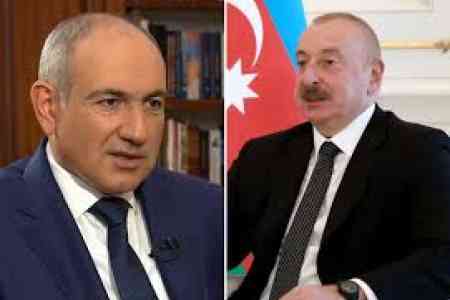
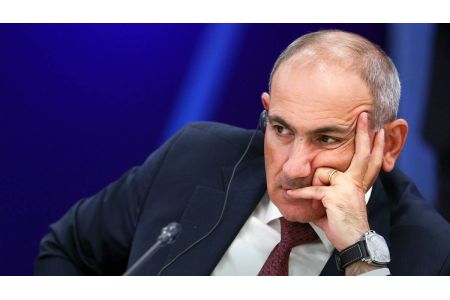
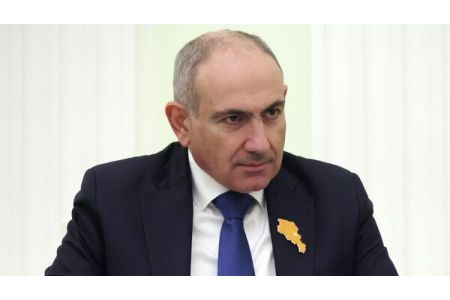
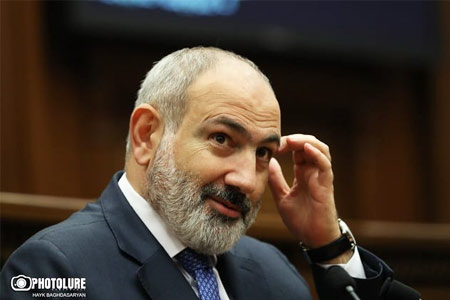
ArmInfo. Who do we want to be? Consumers of history or shapers of history? Prime Minister Nikol Pashinyan posed this question while speaking at the annual international conference "Orbeli Forum: Building Peace and Multilateral Cooperation" on November 4 in Yerevan.
"The experience of the last two years suggests that we can be creators of history, which does not mean forgetting history. Not forgetting history and creating history means, at a minimum, not being in the controversial role of narrator of history," he said.
Overall, according to Pashinyan, when referring to history, one must always understand "where is the legitimate starting point of history?" "There is 30-year history, 50-year history, 100-year history, 500-year history, 1,000-year history, 5,000-year history." "And if we try to find the justification and logic for our current actions in history, it would mean we don't believe in peace," he pointed out.
Pashinyan is convinced that "history is usually about conflicts, not peace, since there is nothing interesting in the world, from a historian's perspective."
"And why not refer to the history of that period? Incidentally, there are historians, politicians, and political leaders who refer to the history of those times, considering it a legitimate starting point, when our region, including the history of Armenia and Azerbaijan, was characterized by Kirovakans and Kirovabads, Leninakans and Leninabads, Kuibyshevs, Oktemberyan cinemas, and so on. And yes, there are political leaders who consider this the only legitimate starting point," he stated.
The Armenian prime minister believes that "we should be more careful with history." "In general, one of the most beloved and discussed topics in Armenia in recent years has been the Historical Homeland. But if we don't replace the perception of the Historical Homeland with the perception of the Real Homeland, the idea of peace will collapse altogether," Nikol Pashinyan said, once again calling for a rethinking of national thinking.
Recently, Azerbaijani President Ilham Aliyev, speaking at the Academy of Sciences, instructed scientists to substantiate the right of return, declaring that the most opportune moment had arrived for this, while Azerbaijan was at the peak of its strength. In his characteristic manner of interpreting history, the Baku leader reiterated that Armenians were allegedly resettled in Karabakh by Tsarist Russia from Iran and Anatolia, and that most toponyms in Armenia, including Lake Sevan (which he called Goycha), are of Azerbaijani origin, and that this is confirmed by maps of the Russian Empire. Speaking about the return of Azerbaijanis, Aliyev reiterated his thesis that this should not frighten Armenia, as it should happen by car, not by tank, but emphasized that the primary responsibility for implementing this idea lies with the state. The President of Azerbaijan directly called on academic circles to intensify their work to ensure that the return of Azerbaijanis to Armenia "sounds completely logical and fair" to the international community. This narrative has been promoted for many years by Baku through the organization "Western Azerbaijan Community" (formerly the "Union of Refugees"), which has been promoting the "return" agenda to the territory of the Republic of Armenia since 2022.






 Politician: With high voter turnout, current government to no chance
 Political analyst: Relatively high turnout indicates that Armenian citizens are actively and consciously shaping the country`s future
 Head of IPA CIS Council Secretariat: Extremely difficult atmosphere during parliamentary elections campaign in Armenia accompanied by mass arrests
 Pashinyan`s party leads with 51.13% based on vote counts from 533 polling stations
 Voting in parliamentary elections in Armenia ends
  Strong Armenia: Administrative Court not providing judicial decisions to citizens wishing to vote in parliamentary elections
 Russia trying to convey to Armenia that the EU has effectively transformed into a military-political union – Overchuk
 Armenian FM: Relations between Armenia and Russia need " a certain degree of healing"