
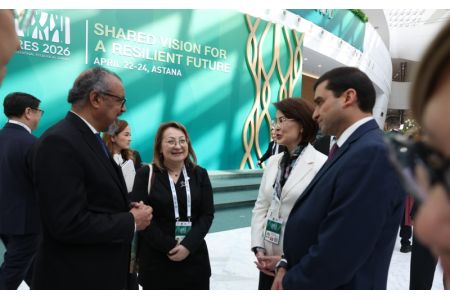
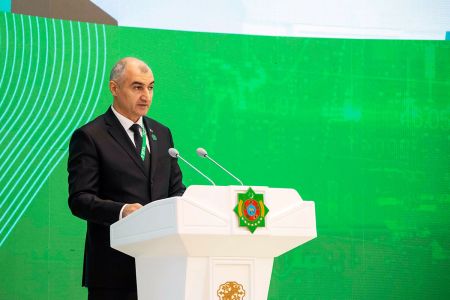
ArmInfo. The first Regional Environmental Summit (RES), the largest environmental event in Central Asia, has opened in Astana. The Kazakh capital has brought together representatives of regional states, international organizations, financial institutions, and the expert community.
The RES, which is being held under the theme "A Shared Vision for a Sustainable Future," aims to develop comprehensive policies and tools for the protection, restoration, and shared use of ecosystems, water, and land resources, as well as the conservation of biodiversity in Central Asian countries.
The goal of the summit is to develop joint solutions that reflect a regional approach to overcoming environmental challenges. These challenges require cooperation between governments, international and financial organizations, as well as the scientific and business communities. The summit is attended by the heads of state of Central Asia, the presidents of Armenia, Georgia, and Mongolia, the Prime Minister of Azerbaijan, as well as heads of UN agencies (UNDP, FAO, UNECE, UNEP, WHO, WMO, UNESCO, UNICEF, etc.), leading international organizations (OSCE, ECO, OECD, JTG, SCO, EEC, ISESCO, CICA, etc.), and financial institutions (ADB, EBRD, World Bank, Islamic Development Bank). Official delegations from 15 countries are expected to attend (Azerbaijan, Armenia, Afghanistan, Belarus, Italy, Germany, Georgia, Cambodia, China, Mongolia, Russia, Serbia, Slovakia, Croatia, and Japan), creating the opportunity to use the RES platform to conduct a series of bilateral negotiations on a wide range of issues. The substantive part of the summit is structured around eight priority areas: supporting climate transition; adaptation and economic resilience to environmental and natural risks; Food security and the region's ecosystem; sustainable management of natural resources; combating air pollution and waste management; mechanisms for achieving environmental ambitions; a just and inclusive transition; and environmental and digital competencies.
The RES program includes 58 events, including 17 high-level events, four Central Asian country sessions, and 37 thematic meetings in the form of roundtables, conferences, and seminars. The RES program also includes consultations on the establishment of an International Water Organization within the UN. Participation is expected by heads of water agencies of UN member states, agencies implementing the UN water mandate, and research institutes.
Among the outcome documents, noteworthy is the joint declaration of the Central Asian heads of state, "Environmental Solidarity of Central Asia," reflecting the political will to deepen cooperation in the field of environmentally sustainable development, as well as the Regional Action Program with UN agencies (2026-2030). A total of 51 documents are planned to be signed within the framework of the RES, including 13 memoranda, 16 joint statements, agreements, and declarations, 16 regional and country initiatives, and six investment projects.
The RES was organized by the Ministry of Ecology and Natural Resources of Kazakhstan jointly with the UN and several international organizations at the initiative of the President of Kazakhstan.











 Azerbaijani Studies Expert: While Azerbaijan Prepares Its Generation for War, Aliyev’s Aide Calls on Armenia to Prepare Armenian Society for “Peace”
 Turkologist: Azerbaijan will never, under any circumstances, stop pressuring the Armenian people
 Political scientist: We need to move away from the question of "when" and replace it with more important questions
 International Law Specialist: Azerbaijan intends to initiate legal proceedings against Armenia by sentencing Armenian prisoners
 Russian Security Council: In Armenia, they want to force Russian asset owners to dispose of their assets
 Zakharova: Russia ready to discuss with Armenia the prospects for expanding military cooperation as part of a review of bilateral ties
 Tevanyan: Armenia, like Ukraine and Moldova, is being drawn into the EU’s global war
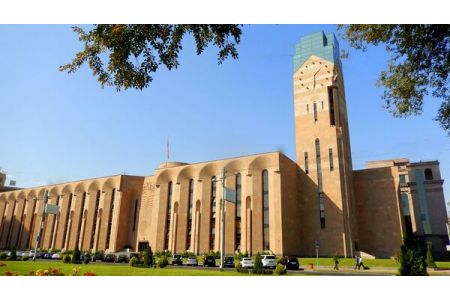 Yerevan City Hall is considering introducing a valet parking system in the city
 Expert: The circus surrounding the “Albanization” of Armenian culture in the presence of foreign ambassadors in occupied Artsakh is genocide
 Political scientist: If Russian-Armenian relations are destroyed, Turkey will take Russia`s place
 Political scientist: The Armenian public is simply obliged to significantly change the entire content of public discourse and struggle
 Cross tattoos are being removed from the skin of Christian prisoners in Azerbaijan by fire, according to a human rights activist.
 Zakharova: Armenia`s likely introduction of visas with Russia will be a step against Yerevan itself
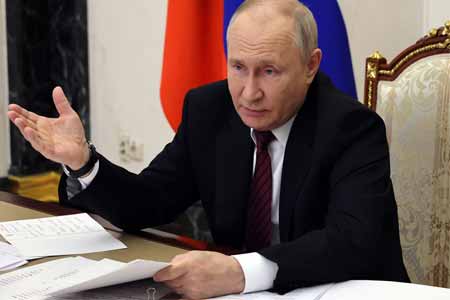 Putin: Armenia`s recognition of Karabakh as part of Azerbaijan in Prague has given Russia`s position on this issue an ambivalent character
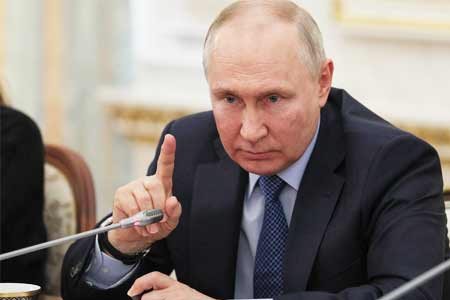 Putin: Armenia`s adoption of the law on EU accession means an announcement of its withdrawal from the Eurasian Economic Union
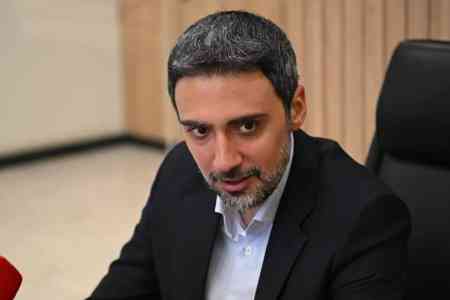 Aram Vardevanyan: Public demands solutions, not apology scandals in Parliament
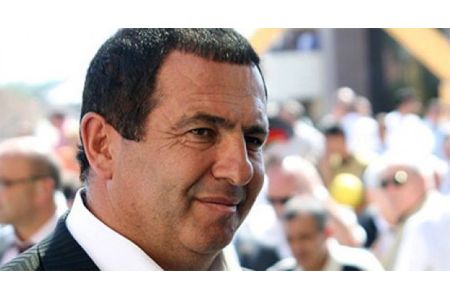 Arrested Armenian oligarch on economy and new jobs