
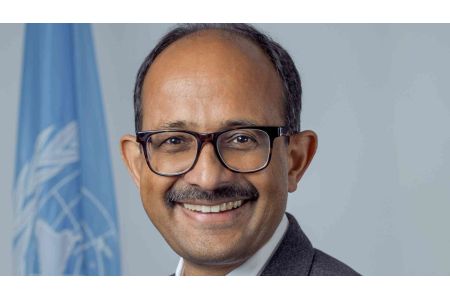
ArmInfo. The transition from political declarations to practical implementation of climate commitments is essential to ensuring the region's security, as stated by Kamal Kishore, Special Representative of the UN Secretary-General for Disaster Risk Reduction and Head of the UN Office for Disaster Risk Reduction (UNDRR), at the opening of the Central Asia Climate Change Conference (CACCC-2026) NDC 3.0: From Commitments to Action.
According to him, the updated Nationally Determined Contributions (NDC 3.0) should become a tool for developing a shared risk management system aimed at reducing vulnerability and strengthening resilience. However, despite the progress achieved by Central Asian countries and their growing climate ambitions, the effective implementation of their commitments remains a key challenge. Kishore emphasized that fragmented approaches remain a key obstacle. He noted that climate policy, disaster risk reduction programs, and development plans are often implemented in isolation. "This creates blind spots, resulting in plans not being integrated into systemic urban planning, and the most vulnerable groups are often overlooked," he said.
He added that a comprehensive approach is needed that aligns climate action, disaster risk reduction measures, and development strategies. It will minimize duplication and ensure a more effective and broad- based impact. Kishore placed special emphasis on regional cooperation, calling it a key condition for NDC implementation. He noted that climate risks in Central Asia are transboundary in nature, including shared water resources and phenomena such as dust storms, making them impossible to effectively address solely at the national level.

























 Opinion: Following Berlin talks, Baku gains expanded influence within EU and strengthens cooperation ties with main European powerhouse
 Armenian expert: Could modern Azerbaijan even exist without Russian and Soviet modernization?
 Zatulin: Pashinyan was eager to get back to Russia because he actually lost the elections
 Human rights activist Ruben Melikyan dismissed from YSU
 Pashinyan removed from INNOPROM guest list
 Zakharova: Armenia`s pro-EU pivot poses economic security risks to EAEU member states
 It`s time for South Caucasus countries to think of South Caucasus as single, unified region - RA premier
  Pashinyan: Armenia and Azerbaijan should leave each other alone
 Moscow sees situation with Armenia as attempt to attack Russia-involving integration associations - Russian presidential aid
 Zakharova: Armenia views relations with Russia as tool for financially securing reorientation toward EU
 The Armenian Minister of Justice and the EU Ambassador discussed visa liberalization issues for Yerevan.
 Azerbaijan`s aggressive plans against Armenia became possible in wake of Pashinyan`s decisions on Artsakh - expert
 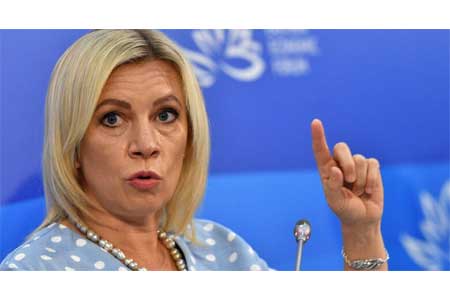 Zakharova: Russia sent a note of protest to Armenia over the act of vandalism at the "Mother Armenia" memorial in Gyumri
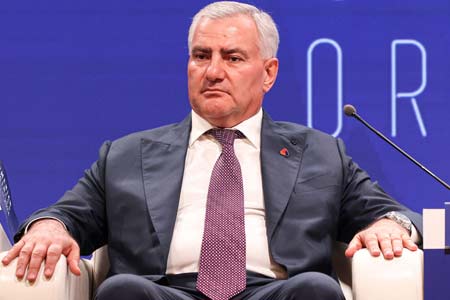 Samvel Karapetyan proposes creating a post-election opposition coalition