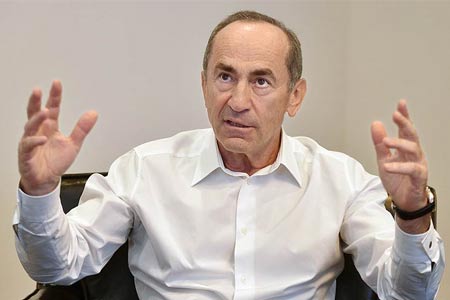
ArmInfo. Unlike previous elections, the opposition field is more competitive today, and that's a fact, as stated by Robert Kocharyan, the second president of the Republic of Armenia and leader of the opposition Armenia bloc, in an interview with RTVI.
According to him, Samvel Karapetyan's team began the election campaign much earlier; they have been promoting a new political force since September-October. "We only started a month ago. Therefore, I wouldn't get too carried away with sociology right now: the field is truly competitive. Unfortunately, sociology is becoming more of a tool for influencing public opinion than a tool for measuring, so to speak, the political temperature in the country. We'll see; the elections will tell. In this case, I simply agree that a more competitive environment is, in this regard, more interesting, perhaps for political strategists, and more tense for the participants... " He added that while the environment is "interesting" for political technologists, it is increasingly "tense" for the participants. " Therefore, 'interesting' and 'tense' are somewhat different concepts. That's the situation. We have no intention of giving up on this yet – we'll see," stated the second president of the Republic of Armenia.
Robert Kocharyan expressed disagreement with the statement that the leader of the opposition today is Samvel Karapetyan, leader of the Strong Armenia party. He argued that equating the entire opposition movement with one individual is "politically and technologically illiterate." "There are several large opposition formats, each of which is aiming for victory. You can talk about someone being ahead in the polls, but that doesn't make them the 'leader of the opposition' in the sense of uniting the entire field. That is not the case. Pashinyan claims that he is opposed by a 'three-headed war party': Robert Kocharyan, Samvel Karapetyan, and Gagik Tsarukyan," the former president noted.
When asked why the opposition remains fragmented into different blocs, Kocharyan explained that while parties share the common goal of removing the current government, they remain distinct political units. "In the last elections, I was at the forefront, but I wasn't a 'unified' leader of the opposition. You might be ahead in sociology or the scale of your rallies, but you aren't the leader for the other opposition parties. Each party has its own goal—to win. If there were a single leader, they would have unified the opposition into one political unit. Since that didn't happen in Armenia, we are participating as separate blocs," Kocharyan concluded.








 Analyst: The primary issue with Armenia`s new Parliament Speaker`s speech lies is its one-sided interpretation of the causes of the political crisis
 Expert: Gagik Tsarukyan embodies post-Soviet model of big business-state relations; this model is used in many other post-Soviet countries
 Expert: Azerbaijan promoting aggressive plans against Armenia at state level
 Iranologist: Baku`s propaganda of might masks the country`s inability to provide water to its own population
 NA Vice Speaker candidate believes his wife`s salary as director of HayPost is the lowest in the company`s history
 RF Permanent Representative: There is no CSTO-Armenia conflict
 Moscow: NATO seeking to "Pull" Armenia away from CSTO Allies
  Political analyst: Russia intends to determine which "Camp" Armenia will choose through a referendum
 Narek Karapetyan will give up his parliamentary salary in favor of charitable contributions.
 Armenia and France discuss further development of strategic partnership and EU cooperation
  To overcome risks Armenia must reduce domestic escalation - expert
 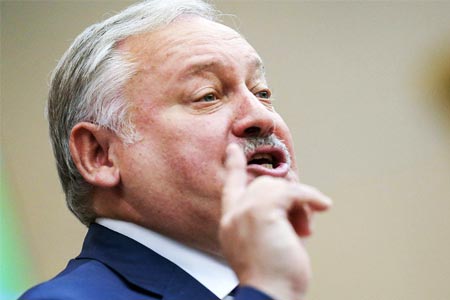 Zatulin: Pashinyan was eager to get back to Russia because he actually lost the elections
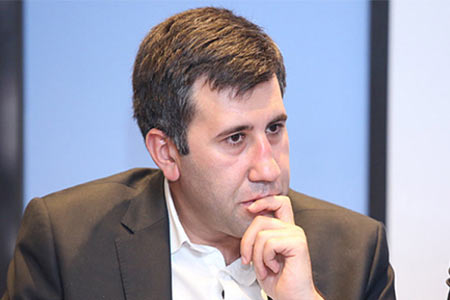 Human rights activist Ruben Melikyan dismissed from YSU
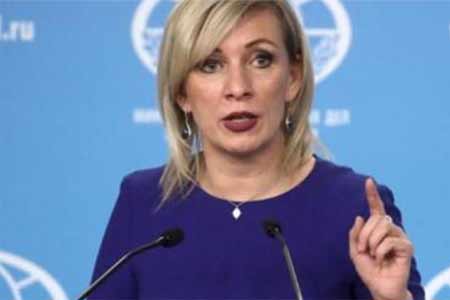 Zakharova: Armenia`s pro-EU pivot poses economic security risks to EAEU member states
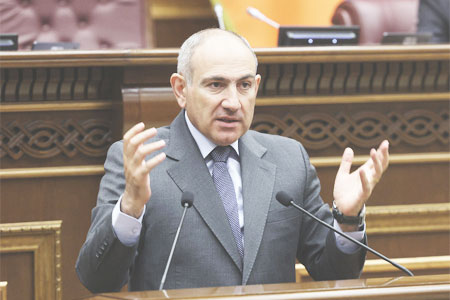 It`s time for South Caucasus countries to think of South Caucasus as single, unified region - RA premier
  Pashinyan: Armenia and Azerbaijan should leave each other alone
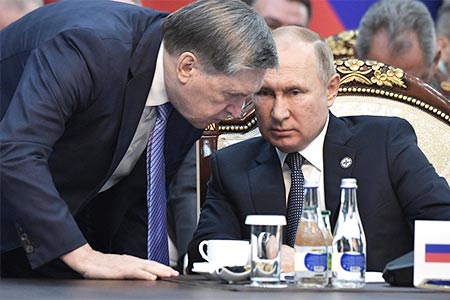 Moscow sees situation with Armenia as attempt to attack Russia-involving integration associations - Russian presidential aid