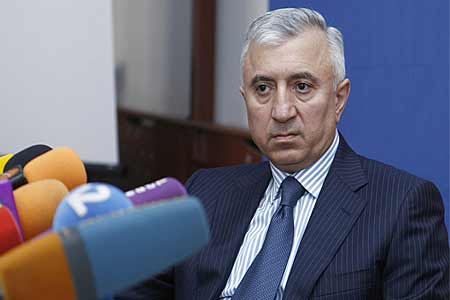
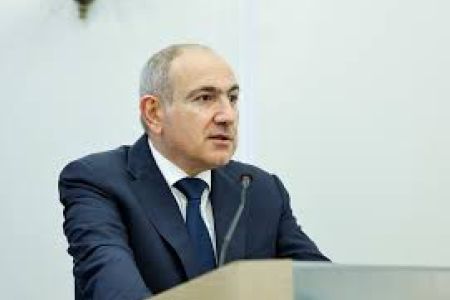
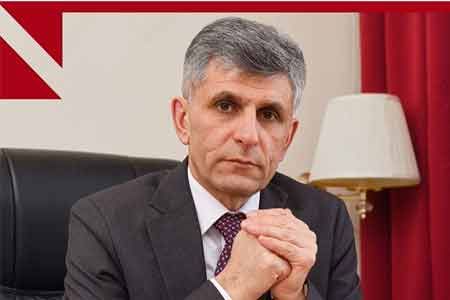
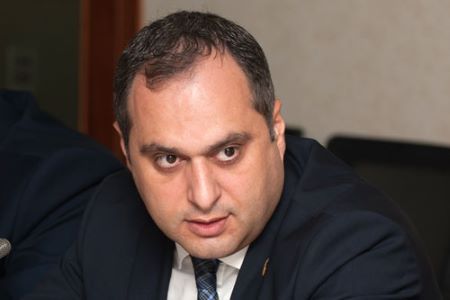
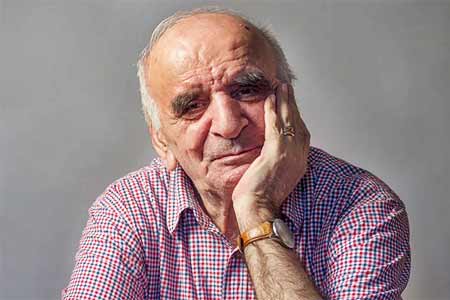
ArmInfo. The Armenian Genocide is not over, as since 1948, the Armenian people have been dealing with ongoing crimes. Professor and former Armenian Justice Minister Gevorg Danielyan wrote this on his Facebook page on the occasion of the 111th anniversary of the Armenian Genocide in the Ottoman Empire.
The former Armenian Justice Minister clarified that genocide is not simply the physical extermination of a nation, but also a crime aimed at the complete destruction of all pillars of a people's identity: the national church, culture, and history. According to him, this is done in order to unimpededly appropriate historical territories and the entire system of civilizational values. "And what cannot be appropriated, they simply barbarically destroy. This means that the Armenian Genocide is not over, and therefore there is no need to discuss the retroactive application of the 1948 Convention on the Prevention and Punishment of the Crime of Genocide (the extension of the document's provisions to crimes committed before its adoption - ed.), as since 1948 we have been dealing with an ongoing crime," Danielyan noted.
Meanwhile, as the former Minister of Justice noted, when asked why the Armenia n authorities have failed to respond to the destruction of Armenian historical and cultural sites in Artsakh, ignoring the key provisions of Part 2 of Article 19 of the Armenian Constitution, they respond that this is happening on the territory of another state and is supposedly a mirror image. "Let's leave aside for now the fact that nothing comparable to this barbarity is happening in Armenia. If we are forced to unnecessarily manipulate the false agenda of 'mirror' interests, we will never see an end to it; the Azerbaijani side will always come up with 'most serious' lies," Danielyan emphasized.
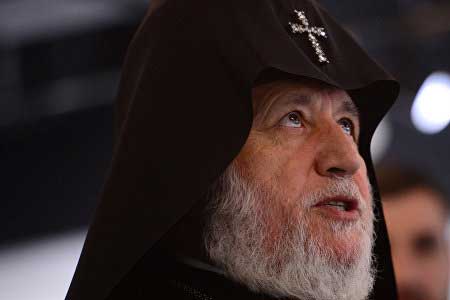
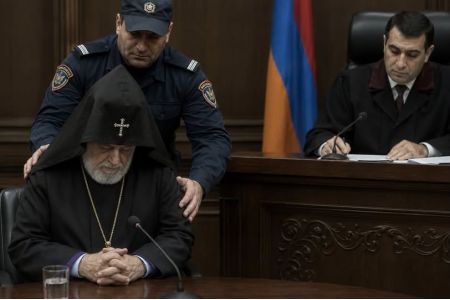
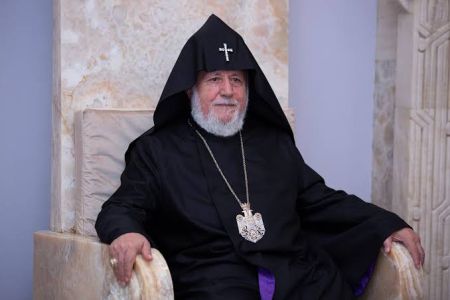
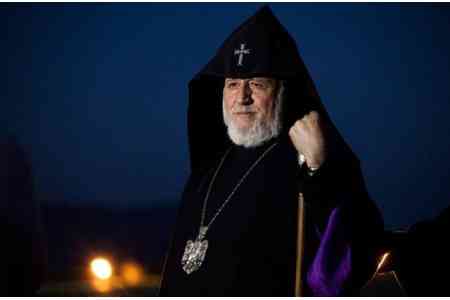
He noted that the same political force-the ruling Civil Contract party-has included in its election platform a clause calling for the forced resignation of Catholicos of All Armenians Karekin II, ignoring not only the Armenian Constitution but also the fact that this is a spiritual leader elected not only by Armenian voters, but by all Armenians, approximately two-thirds of whom are in the diaspora. "Although I am confident that even voters in Armenia already have a deep understanding of what is really happening, whose aspirations and what ultimate goals the short-sighted authorities are trying to fulfill at any cost," Danielyan concluded.






 Analyst: The primary issue with Armenia`s new Parliament Speaker`s speech lies is its one-sided interpretation of the causes of the political crisis
 Expert: Gagik Tsarukyan embodies post-Soviet model of big business-state relations; this model is used in many other post-Soviet countries
 Expert: Azerbaijan promoting aggressive plans against Armenia at state level
 Iranologist: Baku`s propaganda of might masks the country`s inability to provide water to its own population
 NA Vice Speaker candidate believes his wife`s salary as director of HayPost is the lowest in the company`s history
 RF Permanent Representative: There is no CSTO-Armenia conflict
 Moscow: NATO seeking to "Pull" Armenia away from CSTO Allies
  Political analyst: Russia intends to determine which "Camp" Armenia will choose through a referendum
 Narek Karapetyan will give up his parliamentary salary in favor of charitable contributions.
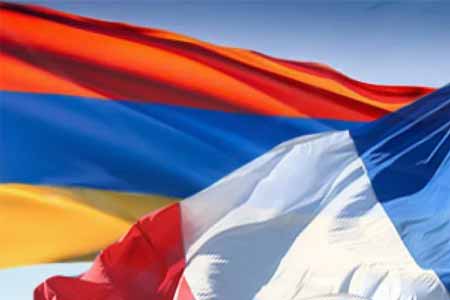 Armenia and France discuss further development of strategic partnership and EU cooperation
  To overcome risks Armenia must reduce domestic escalation - expert
  Zatulin: Pashinyan was eager to get back to Russia because he actually lost the elections
 Human rights activist Ruben Melikyan dismissed from YSU
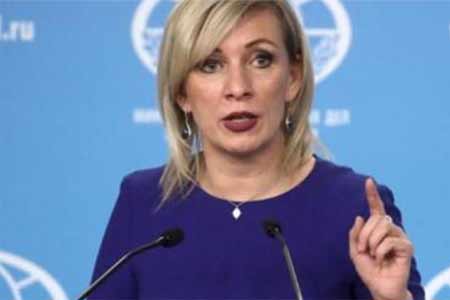 Zakharova: Armenia`s pro-EU pivot poses economic security risks to EAEU member states
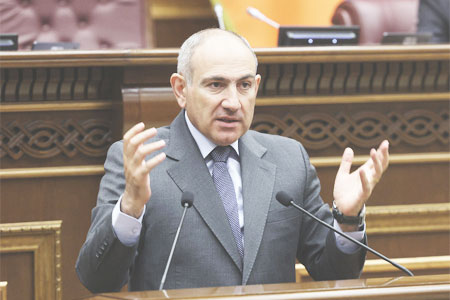 It`s time for South Caucasus countries to think of South Caucasus as single, unified region - RA premier
  Pashinyan: Armenia and Azerbaijan should leave each other alone
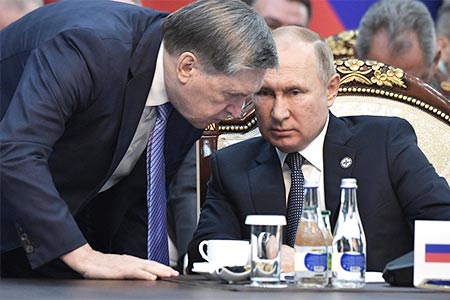 Moscow sees situation with Armenia as attempt to attack Russia-involving integration associations - Russian presidential aid