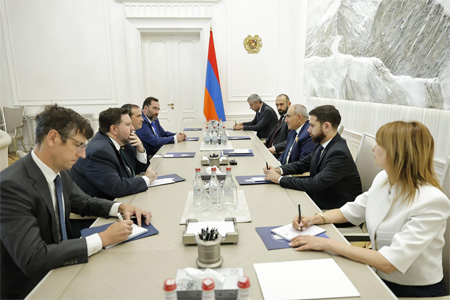
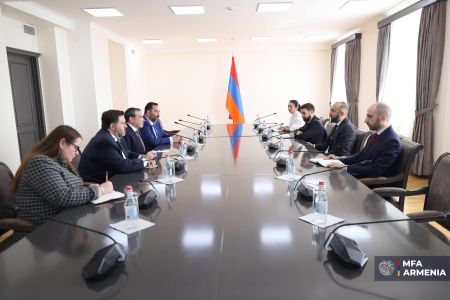
ArmInfo.On April 28, within the framewrk of the "Cooperation for Strengthening Cybersecurity" program, a tabletop exercise was held to ensure the cybersecurity of electoral processes and counter hybrid threats. Representatives from state agencies, international organizations, and sector experts participated in the event.
Welcoming the participants, Deputy Minister of High-Tech Industry of Armenia Ruben Simonyan noted that along with the cybersecurity of critical infrastructure, ensuring the information security of electoral processes is also of particular importance.
"Electoral processes are a key component of national security. If citizens have doubts that their vote can be manipulated, then trust in the state and the security system is undermined. Therefore, cybersecurity of elections is also a matter of protecting independence and sovereignty," Simonyan stated.
He added that this process is multilayered and encompasses both the protection of personal data and countering deepfake content created by artificial intelligence.
In turn, Nerses Yeritsyan, Chairman of the Information Systems Regulatory Commission, referring to the results of the exercise, noted that hybrid threats can start with minor technical signals but quickly turn into a crisis of public perception. The same incident can be interpreted differently, and if the official response is delayed, the information space is quickly filled with alternative narratives. This is why it is important that technical and communications responses are coordinated," he noted.
The participants were also welcomed by Lars Hennig, Deputy Ambassador of Germany to Armenia, and Josip Juric, Program manager at the EU Delegation. The scenario-based exercise included several stages – from cyber incident detection and initial response to crisis management and strategic decision-making.
The event was organized by the Ministry of High-Tech Industry of the Republic of Armenia and the Information Systems Agency of Armenia, with the co-financing of the Federal Foreign Office of the Federal Republic of Germany and the ISTA, and with the support of the German Agency for International Cooperation (GIZ).














 Analyst: The primary issue with Armenia`s new Parliament Speaker`s speech lies is its one-sided interpretation of the causes of the political crisis
 Expert: Gagik Tsarukyan embodies post-Soviet model of big business-state relations; this model is used in many other post-Soviet countries
 Expert: Azerbaijan promoting aggressive plans against Armenia at state level
 Iranologist: Baku`s propaganda of might masks the country`s inability to provide water to its own population
 NA Vice Speaker candidate believes his wife`s salary as director of HayPost is the lowest in the company`s history
 RF Permanent Representative: There is no CSTO-Armenia conflict
 Moscow: NATO seeking to "Pull" Armenia away from CSTO Allies
  Political analyst: Russia intends to determine which "Camp" Armenia will choose through a referendum
 Narek Karapetyan will give up his parliamentary salary in favor of charitable contributions.
 Armenia and France discuss further development of strategic partnership and EU cooperation
  To overcome risks Armenia must reduce domestic escalation - expert
  Zatulin: Pashinyan was eager to get back to Russia because he actually lost the elections
 Human rights activist Ruben Melikyan dismissed from YSU
 Zakharova: Armenia`s pro-EU pivot poses economic security risks to EAEU member states
 It`s time for South Caucasus countries to think of South Caucasus as single, unified region - RA premier
  Pashinyan: Armenia and Azerbaijan should leave each other alone
 Moscow sees situation with Armenia as attempt to attack Russia-involving integration associations - Russian presidential aid