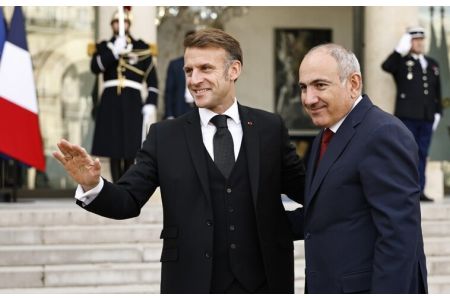
ArmInfo. European leaders continue to arrive in Armenia for the eighth European Political Community (EPC) summit, which begins on Monday, April 4. This is the largest gathering of European leaders ever in the South Caucasus.
British Prime Minister Sir Keir Starmer and Polish Prime Minister Donald Tusk were among those arriving this afternoon. Also arriving will be French President Emmanuel Macron, European Commission President Ursula von der Leyen, and European Council President Antonio Costa. A total of approximately 48 leaders are expected to gather in Yerevan.
The President of Ukraine is already in the Armenian capital. Turkish Vice President Cevdet Yilmaz will represent his country at the summit.
NATO Secretary General Mark Rutte also arrived in Yerevan.
The European Political Community (EPC) is an intergovernmental forum for political and strategic discussions on the future of Europe, established in 2022 following the outbreak of the Russia-Ukraine conflict.
According to independent observers, France, which initiated the EPC, is seriously preparing Armenia's gradual pivot toward Europe. In recent years, Yerevan has intensified its engagement with the European Union (EU) and declared its intention to deepen integration, including discussing membership prospects.
Relations between the EU and Armenia are built on the Comprehensive and Enhanced Partnership Agreement (CEPA), which entered into force in 2021, as well as the EU-Armenia Strategic Partnership Agenda, adopted at the Partnership Council meeting in December 2025. The European Union remains Armenia's key partner in implementing reforms and developing trade and investment.
On March 26, 2025, members of the Armenian parliament adopted a law initiating the country's accession process to the European Union. Pashinyan noted that this step would not automatically initiate the accession process, as the issue requires a referendum. Foreign Minister Mirzoyan, in turn, explained that the initiative regarding the law allegedly originated from citizens and had garnered the required number of signatures.
As a reminder, on April 21, 2026, the EU Council decided to deploy a new civilian mission (EUPM Armenia) to the Republic. According to a statement from the Armenian Foreign Ministry, the mission "aims to support the strengthening of the democratic resilience of the Republic of Armenia and counter hybrid threats, including efforts to combat disinformation, cyberattacks, and illicit financial flows."
According to analysts, the main factor driving the rapprochement with the EU was the shifting balance of power in the region following the Second Karabakh War and the cooling of relations between the new Armenian government and Russia, which intends to seek new security guarantees from the EU and the United States. Armenia froze its participation in the CSTO, and as the head of the Armenian government noted, relations between Armenia and the CSTO have passed the "point of no return."
Nevertheless, despite the cooling of relations with Moscow, Russia still accounts for more than half of Armenia's total foreign trade turnover. Moreover, close ties with Moscow in the energy sector also remain. Yerevan is forced to walk a fine line, but analysts believe this cannot continue for long. The balancing resource may be exhausted in the near future and the situation is moving towards a difficult dead end.







 Analyst: The primary issue with Armenia`s new Parliament Speaker`s speech lies is its one-sided interpretation of the causes of the political crisis
 Expert: Gagik Tsarukyan embodies post-Soviet model of big business-state relations; this model is used in many other post-Soviet countries
 Expert: Azerbaijan promoting aggressive plans against Armenia at state level
 Iranologist: Baku`s propaganda of might masks the country`s inability to provide water to its own population
 NA Vice Speaker candidate believes his wife`s salary as director of HayPost is the lowest in the company`s history
 RF Permanent Representative: There is no CSTO-Armenia conflict
 Moscow: NATO seeking to "Pull" Armenia away from CSTO Allies
  Political analyst: Russia intends to determine which "Camp" Armenia will choose through a referendum
 Narek Karapetyan will give up his parliamentary salary in favor of charitable contributions.
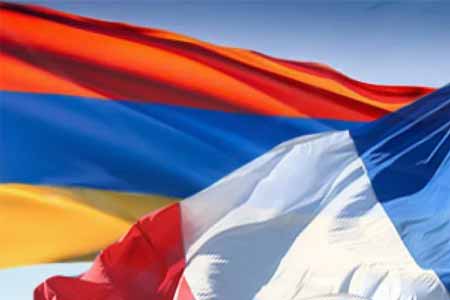 Armenia and France discuss further development of strategic partnership and EU cooperation
  To overcome risks Armenia must reduce domestic escalation - expert
  Zatulin: Pashinyan was eager to get back to Russia because he actually lost the elections
 Human rights activist Ruben Melikyan dismissed from YSU
 Zakharova: Armenia`s pro-EU pivot poses economic security risks to EAEU member states
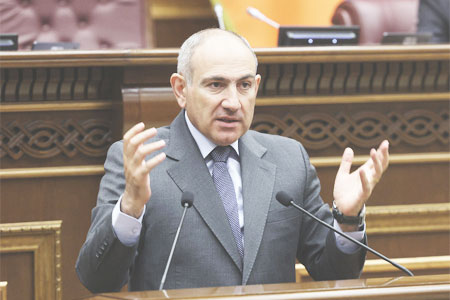 It`s time for South Caucasus countries to think of South Caucasus as single, unified region - RA premier
  Pashinyan: Armenia and Azerbaijan should leave each other alone
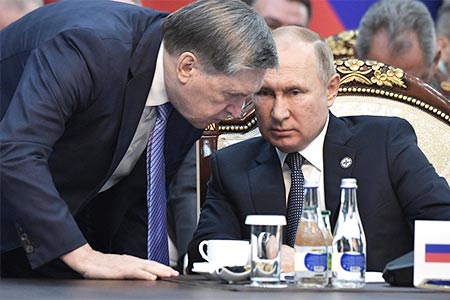 Moscow sees situation with Armenia as attempt to attack Russia-involving integration associations - Russian presidential aid