

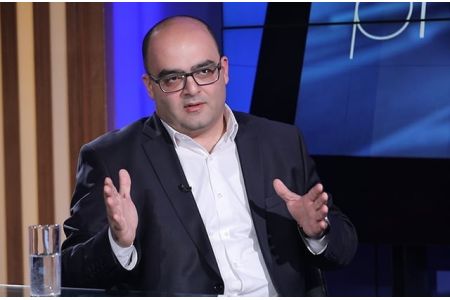
ArmInfo. The ruling Civil Contract party is attempting to present the Moldovan model as a successful example of "freeing itself from Russian influence" and "Western integration," but in reality, it's not about strengthening sovereignty, but rather about forming a new dependency. This opinion was expressed by political scientist and PhD Vahe Davtyan on his Facebook page, noting that parallels between Armenia and Moldova are becoming increasingly institutionalized.
The political scientist noted that this is now being discussed not only in the media and expert circles, but also by government officials. In this regard, he recalled the obstacles Moldova currently faces as a result of this policy. "It was recently announced that the International Monetary Fund (IMF) suspended funding to Moldova due to a lack of trust. Specifically, the IMF suspended financial resources to Moldova due to the government's failure to meet fiscal conditions and the de facto failure of reforms. One of the most dangerous political mistakes is subordinating state interests to external centers. Moldova's example is proof of this. Moldovan President Maia Sandu was promised support in exchange for severing ties with Russia. When the issue was resolved, it turned out that 'political loyalty' to the West was not enough. The IMF's decision is the most striking example of this," Davtyan noted.
The expert noted that even Sandu's harsh anti-state statements about reunification with Romania and, consequently, about creating conditions for European integration have not changed anything. According to him, the reason is simple: the West is acting according to pragmatic logic. "As long as you're useful, you're supported and patronized. When you cease to be effective or become a liability, you're simply discarded. No sentimentality, no fairy tales about 'brotherhood based on a shared system of values.' And the price of such a policy is paid by ordinary Moldovans - inflation, social oppression, growing public debt, and economic instability," the political scientist explained.
This is precisely the path Armenia is taking today, he said. "It's enough to simply change some names and geographical designations. The rest is almost identical," Davtyan concluded.













 Expert: Even OSCE observers recorded numerous violations during elections in Armenia
  Armenia`s ex-minister of justice calls on opposition to honestly answer questions troubling Armenian citizens
 Lawyer: according to preliminary results, Pashinyan`s party lacks 2/3 majority necessary to amend Armenia`s Constitution
 Moscow to await official results of Armenian elections - Peskov
 Antonio Costa: EU to deepen its partnership with Armenia, expanding cooperation in energy, trade, and digitalization
 Israeli MFA congratulates Pashinyan
 Turkish MFA comments on results of Armenian elections
  Zakharova: International observers cannot ignore `flagrant violations` in Armenian elections
 Strong Armenia to issue statement after vote count completed - Narek Karapetyan
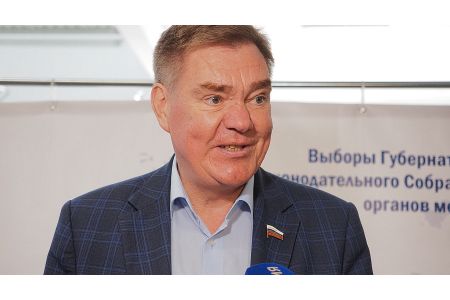 Russian Senator: Opposition complaints regarding election violations by ruling party remain unanswered
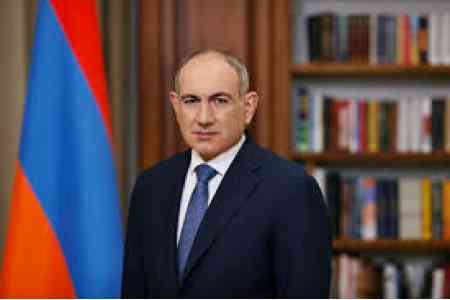 RA premier receiving congratulations on his victory in parliamentary elections
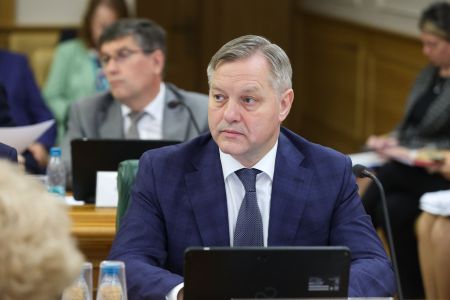 Head of IPA CIS Council Secretariat: Extremely difficult atmosphere during parliamentary elections campaign in Armenia accompanied by mass arrests
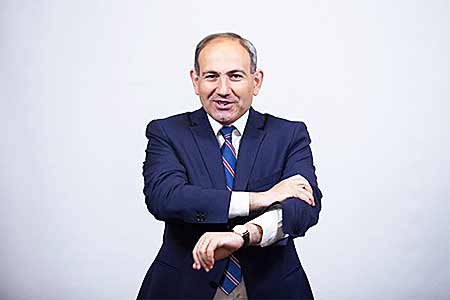 Pashinyan`s party leads with 51.13% based on vote counts from 533 polling stations
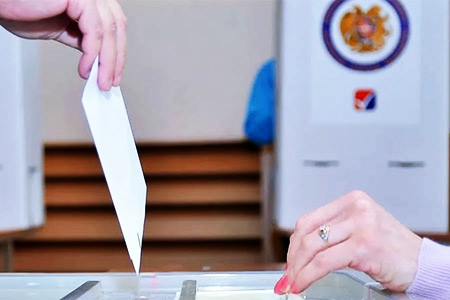 Voting in parliamentary elections in Armenia ends
  Strong Armenia: Administrative Court not providing judicial decisions to citizens wishing to vote in parliamentary elections