
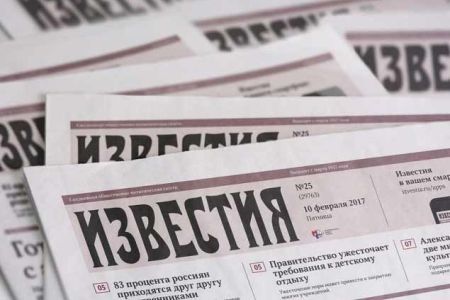
ArmInfo. When analyzing the potential outcome of the elections, it is necessary to take into account the specifics of Armenian politics. Even the most unfavorable forecasts for the authorities may fail to materialize: the ruling party still retains administrative resources, high brand recognition, and, according to Izvestia sources, a significant financial advantage. This was highlighted in an article published yesterday in the Russian newspaper Izvestia by Elena Sinyavskaya.
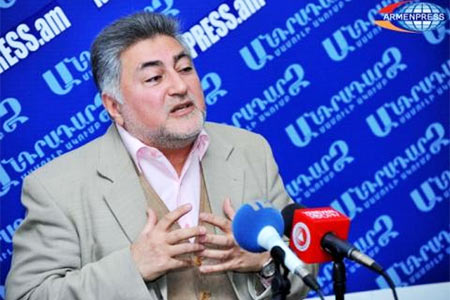
According to her, the "Civil Contract" party is currently stronger than most of its competitors. This is reflected, among other things, in the amount of funds Pashinyan is allocating to promote the party. Rumor has it that the figure could exceed $50 million. In this regard, perhaps only Karapetyan's bloc is capable of competing with it, although it is spending less on its campaign. "The other parties compensate for their lack of resources with the personal authority of their leaders, but so far they can only claim 8-10% of public support," Artur Avakov, an associate professor of political science at the State Academic University of Humanities, told Izvestia.
According to the expert, it's too early to talk about Pashinyan's failure, especially since polling data varies significantly. Sociologists considered more loyal to the government give "Civil Contract" around 35% and more, whereas studies more often cited by the opposition estimate the ruling party's support at around 18- 20%. However, even by these estimates, "Civil Contract" remains one of the most popular political forces in the country.
"At the same time," the article notes, "the opposition's main problem is that none of its parties yet appear capable of forming a government single-handedly. The "Strong Armenia" bloc is either closely following the ruling party or lagging behind it by 10-15%. But even in a more favorable scenario for the opposition, it's more a matter of strengthening its position in parliament than a guaranteed change of power."
"However, even if Pashinyan's party wins, a sharp reversal in foreign policy should not be expected. In the foreseeable future, Armenia will not join the EU, will not with draw from the EAEU, and will most likely formally remain a member of the CSTO, although its participation in the organization may remain frozen. Yerevan has neither a viable alternative to its relations with Russia nor any serious reasons to completely sever them. It's one thing to talk about a European course, and quite another to restructure the country's entire security, economic, and logistical systems," Avakov noted.











 Expert: The arrest of opposition figures in Armenia for social media posts is a systematic attempt to intimidate the public and suppress dissent.
 Azerbaijani Studies Expert: While Azerbaijan Prepares Its Generation for War, Aliyev’s Aide Calls on Armenia to Prepare Armenian Society for “Peace”
 Turkologist: Azerbaijan will never, under any circumstances, stop pressuring the Armenian people
 Political scientist: We need to move away from the question of "when" and replace it with more important questions
 Lukashenko called for Armenia to assume the CIS presidency in 2029
 Dmitry Medvedev predicted a Ukrainian-like fate for Armenia amid the country`s shift in foreign policy
 Russian Security Council: In Armenia, they want to force Russian asset owners to dispose of their assets
 Zakharova: Russia ready to discuss with Armenia the prospects for expanding military cooperation as part of a review of bilateral ties
 Tevanyan: Armenia, like Ukraine and Moldova, is being drawn into the EU’s global war
 Yerevan City Hall is considering introducing a valet parking system in the city
 Expert: The circus surrounding the “Albanization” of Armenian culture in the presence of foreign ambassadors in occupied Artsakh is genocide
 Political scientist: If Russian-Armenian relations are destroyed, Turkey will take Russia`s place
 Political scientist: The Armenian public is simply obliged to significantly change the entire content of public discourse and struggle
 Cross tattoos are being removed from the skin of Christian prisoners in Azerbaijan by fire, according to a human rights activist.
 Zakharova: Armenia`s likely introduction of visas with Russia will be a step against Yerevan itself
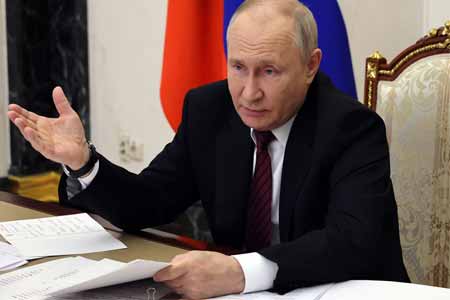 Putin: Armenia`s recognition of Karabakh as part of Azerbaijan in Prague has given Russia`s position on this issue an ambivalent character
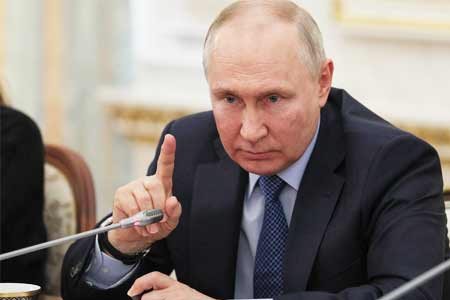 Putin: Armenia`s adoption of the law on EU accession means an announcement of its withdrawal from the Eurasian Economic Union