

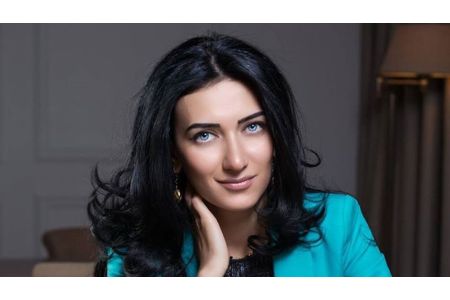
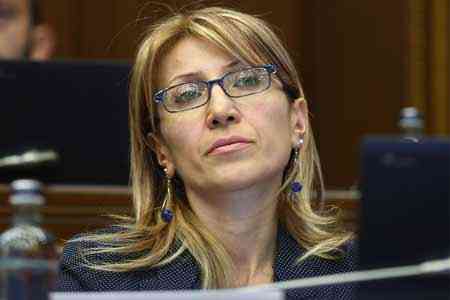
ArmInfo. For the political opposition to accept parliamentary mandates despite widespread violations during the June 7 elections is, to put it mildly, illogical, according to Arpine Hovhannisyan, former Vice-Speaker of the Armenian Parliament and former Minister of Justice.
She noted that the entire public is currently debating whether the opposition will accept their mandates and enter parliament. She also added that the opposition forces that cleared the threshold do not have any good options; the situation is highly complex, and under any scenario, they will pay a very steep political price.
"However, it is crucial that the decisions being made are not driven by external impulses, but are political decisions that are communicated to their own voters with absolute honesty and maturity," Hovhannisyan said. At the same time, the legal expert dismissed as unrealistic, to put it mildly, the narrative being floated that if the opposition forces backed by the public refuse their mandates, incumbent Prime Minister Nikol Pashinyan will initiate legislative amendments to allow runner-up parties that failed to secure enough votes into parliament instead. According to her, this scenario became particularly implausible after pro- government figures, specifically Parliament Speaker Alen Simonyan, began circulating these talking points.
"This looks more like a propaganda lifeline thrown to the opposition, as if to say, 'We are passing the ball to you—take it and legitimize your mandates.' But I find this unrealistic and would even rule it out, because Pashinyan will never cross his own red lines regarding his core propaganda narratives—and his main narrative centers on the fairness and legitimacy of these elections. Passing such legislation would mean falsifying the election results by force of law or by a Constitutional Court ruling, essentially fabricating the election and distorting the will of the people," Hovhannisyan concluded.
According to her, this would cast such a shadow over the elections and their legitimacy that no one would even remember who received which votes during the electoral process. At the same time, Hovhannisyan believes a more realistic scenario would unfold if, by some miracle, the opposition decided not to accept their mandates. "In that case, the authorities would use every possible means to pressure and demoralize the extra-parliamentary opposition. As a result, within six months or a year, they would head to snap elections, which would then produce a parliament with a completely different political landscape," she noted.
The legal expert believes that the opposition is currently more inclined to accept the mandates. "However, when there is talk of mass election fraud, and when the 'Country to Live' party—a de jure member of the 'Strong Armenia' bloc—states that it does not consider the formation of the government to be legitimate, pushing such narratives while simultaneously debating whether to take the mandates is, to put it mildly, alogical under such conditions of electoral fraud," Hovhannisyan said.
She also dismissed talks about the possibility of poaching members of the ruling faction over to the opposition camp as unserious.









 Expert: The arrest of opposition figures in Armenia for social media posts is a systematic attempt to intimidate the public and suppress dissent.
 Azerbaijani Studies Expert: While Azerbaijan Prepares Its Generation for War, Aliyev’s Aide Calls on Armenia to Prepare Armenian Society for “Peace”
 Turkologist: Azerbaijan will never, under any circumstances, stop pressuring the Armenian people
 Political scientist: We need to move away from the question of "when" and replace it with more important questions
 International Law Specialist: Azerbaijan intends to initiate legal proceedings against Armenia by sentencing Armenian prisoners
 Dmitry Medvedev predicted a Ukrainian-like fate for Armenia amid the country`s shift in foreign policy
 Russian Security Council: In Armenia, they want to force Russian asset owners to dispose of their assets
 Zakharova: Russia ready to discuss with Armenia the prospects for expanding military cooperation as part of a review of bilateral ties
 Tevanyan: Armenia, like Ukraine and Moldova, is being drawn into the EU’s global war
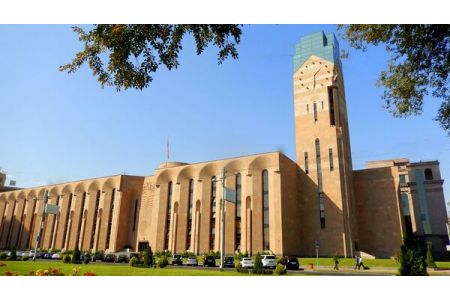 Yerevan City Hall is considering introducing a valet parking system in the city
 Expert: The circus surrounding the “Albanization” of Armenian culture in the presence of foreign ambassadors in occupied Artsakh is genocide
 Political scientist: If Russian-Armenian relations are destroyed, Turkey will take Russia`s place
 Political scientist: The Armenian public is simply obliged to significantly change the entire content of public discourse and struggle
 Cross tattoos are being removed from the skin of Christian prisoners in Azerbaijan by fire, according to a human rights activist.
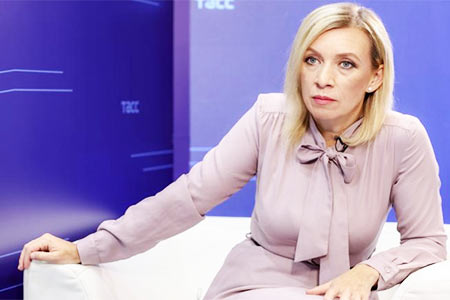 Zakharova: Armenia`s likely introduction of visas with Russia will be a step against Yerevan itself
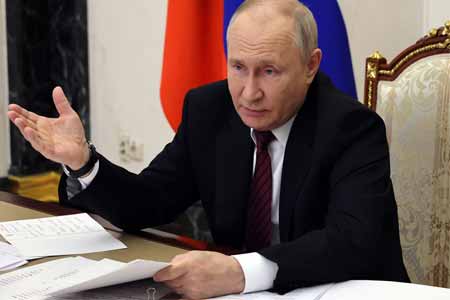 Putin: Armenia`s recognition of Karabakh as part of Azerbaijan in Prague has given Russia`s position on this issue an ambivalent character
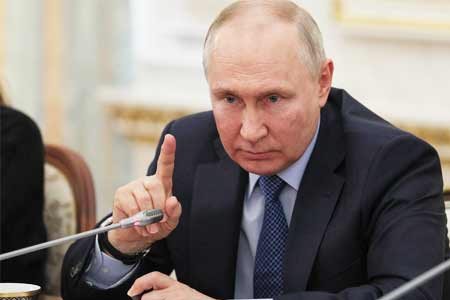 Putin: Armenia`s adoption of the law on EU accession means an announcement of its withdrawal from the Eurasian Economic Union