
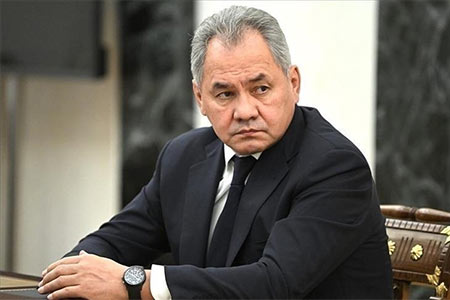
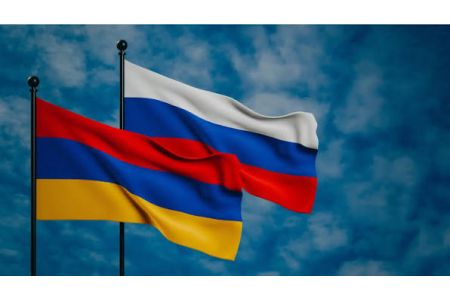
ArmInfo. The West widely uses fake news to change political regimes in so-called target countries and creates communication mechanisms to control people. This method was also used in Armenia in 2018. This was stated by Sergei Shoigu, Secretary of the Russian Security Council (SC).
"Effective communication mechanisms are being created to mobilize and control the masses, as well as to manipulate public opinion," Shoigu wrote in a column for Izvestia, describing the West's methods for organizing "color revolutions." According to the Secretary of the Security Council of the Russian Federation, "the dissemination of fake news through media and social media controlled by external curators is widely used to discredit the government (primarily through accusations of corruption) and to foster a false sense of injustice and anxiety among the population."
"This practice was widely used during the protests in Armenia in 2018 aimed at overthrowing President Serzh Sargsyan, during attempts to discredit the leadership of Serbia and the Republika Srpska of Bosnia and Herzegovina, as well as following the results of the parliamentary elections in Georgia in 2024 and during the election campaign in Hungary from February to April 2026," Shoigu noted.
He added that the implementation of the plans of the organizers of "color revolutions" is facilitated by the difficulties and mistakes of the leadership of the target countries. Shoigu also emphasized the importance of taking into account that, despite the significant internal challenges to the stability of target countries, external forces are the key organizers of "color revolutions." According to him, Western non-governmental organizations (NGOs)-foundations, think tanks, volunteer movements, religious communities, and sects- play a special role among the tools they use. Foreign curators task NGOs with monitoring and destabilizing the domestic political situation, developing strategies to pressure the government, creating so-called information noise, recruiting and training protesters, interacting with the opposition and pro-Western civil society organizations, raising and distributing funds, and coordinating protest actions.
"With the active role of NGOs, each 'color revolution' develops its own visual propaganda and symbol systems that are attractive to the public, including universal signs, gestures, and colors (the 'Velvet Revolution' in Armenia, the 'Bloody Hand' sign, and the chant 'Pumpay!' during the protests in Serbia)," Shoigu continued.
He added that the beginning of a "color revolution" is marked by coordinated mass protests in major cities and increased external pressure on government leaders, demanding concessions to the opposition and their resignation. "Informational pressure on the government is becoming more radical, aimed at dehumanizing and demonizing it to morally justify violence against members of the ruling regime.
Direct calls for its change are spreading. Those who orchestrate it are choosing high-profile events, often tragic ones, as triggers for escalating anti-government protests," he concluded.













 Analyst: The primary issue with Armenia`s new Parliament Speaker`s speech lies is its one-sided interpretation of the causes of the political crisis
 Expert: Gagik Tsarukyan embodies post-Soviet model of big business-state relations; this model is used in many other post-Soviet countries
 Expert: Azerbaijan promoting aggressive plans against Armenia at state level
 Iranologist: Baku`s propaganda of might masks the country`s inability to provide water to its own population
 NA Vice Speaker candidate believes his wife`s salary as director of HayPost is the lowest in the company`s history
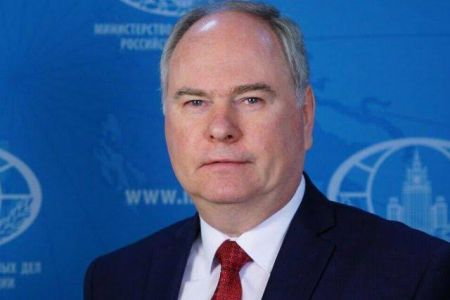 RF Permanent Representative: There is no CSTO-Armenia conflict
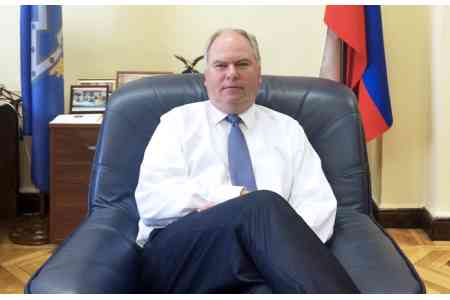 Moscow: NATO seeking to "Pull" Armenia away from CSTO Allies
 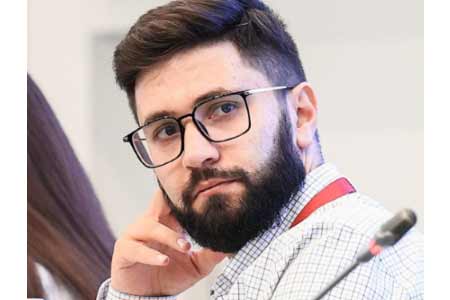 Political analyst: Russia intends to determine which "Camp" Armenia will choose through a referendum
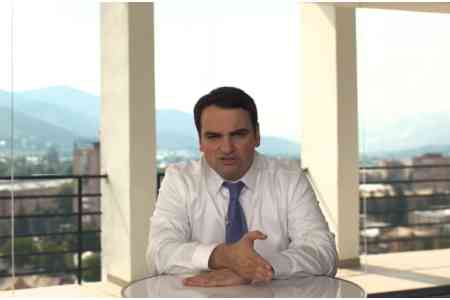 Narek Karapetyan will give up his parliamentary salary in favor of charitable contributions.
 Armenia and France discuss further development of strategic partnership and EU cooperation
  To overcome risks Armenia must reduce domestic escalation - expert
  Zatulin: Pashinyan was eager to get back to Russia because he actually lost the elections
 Human rights activist Ruben Melikyan dismissed from YSU
 Zakharova: Armenia`s pro-EU pivot poses economic security risks to EAEU member states
 It`s time for South Caucasus countries to think of South Caucasus as single, unified region - RA premier
  Pashinyan: Armenia and Azerbaijan should leave each other alone
 Moscow sees situation with Armenia as attempt to attack Russia-involving integration associations - Russian presidential aid