
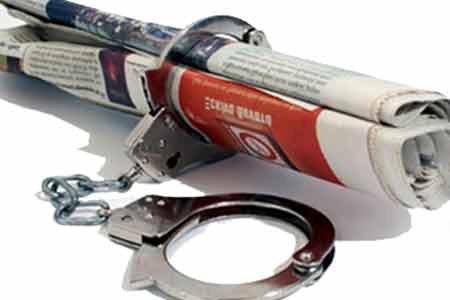
ArmInfo. In the second quarter of 2026, 42 cases of violations of the rights of journalists and mass media outlets were recorded. According to a report received by ArmInfo, this is stated in the Q2 2026 report by the Committee to Protect Freedom of Expression.
As the report notes, the second quarter of 2026 proved to be a tense period for journalists and media outlets due to the parliamentary elections held on June 7. "Particularly during the pre-election period, Armenia faced both external—primarily Russian—and domestic information challenges. The most dangerous of these were hybrid campaigns, accompanied by the spread of disinformation, fake news, and manipulative narratives, including through a significant portion of the Armenian media landscape. The extreme polarization of the media and their financial dependence on various political forces provided fertile ground for this. In effect, a situation has developed where the public's right to receive reliable information is being violated," the Committee stated.
According to the Committee to Protect Freedom of Expression, the dangerous impact of large-scale disinformation has been mitigated to a certain extent thanks to the ever-increasing number of fact-checking platforms, as well as the high-quality work of some media outlets. The Committee also noted that the polarization of the Armenian media was also recorded by international observers monitoring the parliamentary elections, in particular the OSCE/ODIHR mission, which noted in its report that the media predominantly disseminated rhetoric contributing to social division.
"Overall, in the second quarter of 2026, 42 cases of violations of the rights of journalists and media were recorded, of which 1 case concerned physical violence; 30 cases involved various forms of pressure; 11 cases involved violations of the right to receive and disseminate information. Almost a quarter of these 42 cases occurred during the election campaign and voting day of the parliamentary elections on June 7. In particular, from May 8 to June 7, the Committee to Protect Freedom of Expression recorded 10 cases of various forms of pressure against journalists and other media workers, including: 1 case of physical violence; 6 cases of insults and/or threats; 3 cases of cyberattacks," the Committee reported.
The Committee also noted that of the 11 new lawsuits filed in the second quarter against media representatives, five were related to election campaign issues. "Of these five lawsuits, one was filed by a government official; one by a business representative; and three by opposition politicians. A total of 11 new lawsuits were filed during the quarter, of which: three by opposition politicians; three by citizens; one by a business representative; one by the media; and three by high-ranking officials," the Committee clarified.
It is further noted that among the media outlets that are defendants in lawsuits filed against journalists and editorial offices in previous years and during the first six months of the current year and are still pending in the courts, the largest number of cases are against the Zhoghovurd newspaper (and the Armlur.am website) - 19 lawsuits, followed by the Oragir.news website and its editor-in-chief Gevorg Emin-Teryan - 11 cases, as well as the Hayeli.am website and its director Angela Tovmasyan - 8 cases.
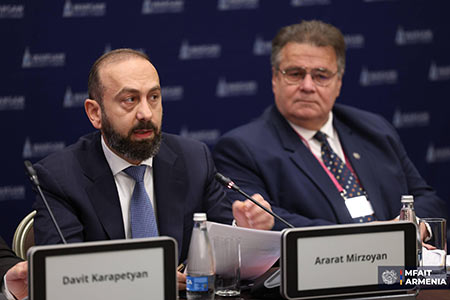
"In the second quarter, the review of 10 lawsuits previously filed by media outlets and journalists against officials and government agencies continued. The defendants in these cases are: Yerevan Mayor Tigran Avinyan; Armenian Parliament Speaker Alen Simonyan; Foreign Minister Ararat Mirzoyan; Prime Minister Nikol Pashinyan's wife, Anna Hakobyan; Members of Parliament Artur Hovhannisyan and Gegham Nazaryan; the parliamentary staff; and the Council of the Public Broadcaster of Armenia," the Committee to Protect Freedom of Expression noted.
At the same time, according to the source, the number of violations of the right to receive and impart information has decreased since the beginning of the year compared to previous monitoring periods. It is noted that, although this figure was four cases higher in the second quarter than in the previous quarter, it has decreased by 28 cases compared to the same period in 2025. "Thus, from April to June 2026, the Committee to Protect Freedom of Speech recorded 11 cases of violations of the right to receive and impart information, of which: 4 cases involved requests that remained unanswered; 3 cases involved untimely and incomplete responses; and 1 case involved an unreasonable refusal to respond to a request. One of the most notable events of the quarter was the Armenian government's initiative to provide citizens with the opportunity to direct part of their social credits to the media, as well as public organizations and political parties. This initiative is currently undergoing public discussion," the Committee summarized.










 Expert: The arrest of opposition figures in Armenia for social media posts is a systematic attempt to intimidate the public and suppress dissent.
 Azerbaijani Studies Expert: While Azerbaijan Prepares Its Generation for War, Aliyev’s Aide Calls on Armenia to Prepare Armenian Society for “Peace”
 Turkologist: Azerbaijan will never, under any circumstances, stop pressuring the Armenian people
 Political scientist: We need to move away from the question of "when" and replace it with more important questions
 Lukashenko called for Armenia to assume the CIS presidency in 2029
 Dmitry Medvedev predicted a Ukrainian-like fate for Armenia amid the country`s shift in foreign policy
 Russian Security Council: In Armenia, they want to force Russian asset owners to dispose of their assets
 Zakharova: Russia ready to discuss with Armenia the prospects for expanding military cooperation as part of a review of bilateral ties
 Tevanyan: Armenia, like Ukraine and Moldova, is being drawn into the EU’s global war
 Yerevan City Hall is considering introducing a valet parking system in the city
 Expert: The circus surrounding the “Albanization” of Armenian culture in the presence of foreign ambassadors in occupied Artsakh is genocide
 Political scientist: If Russian-Armenian relations are destroyed, Turkey will take Russia`s place
 Political scientist: The Armenian public is simply obliged to significantly change the entire content of public discourse and struggle
 Cross tattoos are being removed from the skin of Christian prisoners in Azerbaijan by fire, according to a human rights activist.
 Zakharova: Armenia`s likely introduction of visas with Russia will be a step against Yerevan itself
 Putin: Armenia`s recognition of Karabakh as part of Azerbaijan in Prague has given Russia`s position on this issue an ambivalent character
 Putin: Armenia`s adoption of the law on EU accession means an announcement of its withdrawal from the Eurasian Economic Union