

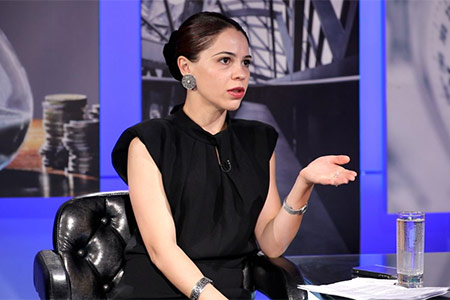
ArmInfo. The constant threat of war indicates that there is no peace, but rather a decision to accept Azerbaijan's dictated terms and transform Armenia into an Azerbaijani-style state. Azerbaijani expert Tatevik Hayrapetyan writes about this on her Facebook page.
She noted that peace is an extremely important, priceless, and desirable phenomenon. "In this distraught world, buried under wars, it is impossible not to understand the value of peace. And yet, in our current reality, the very word 'peace' and its meaning are distorted," the expert believes.
In particular, she says, the "peace" being offered to Armenia today repeatedly echoes the threat of war: "Say the word Artsakh, and there will be war; talk about ethnic cleansing, and there will be war; refuse to give up Tigranashen, and there will be war; say 'no' to the Constitution that Azerbaijani President Ilham Aliyev wants, and there will be war, and so on."
Hayrapetyan believes that the constant threat of war indicates that peace is nonexistent. "There is a decision to accept the conditions dictated by Azerbaijan and transform Armenia into an Azerbaijani-style state, where the church, army, culture, national identity, the Declaration of Independence, the diaspora, historical memory are under attack; simply being Armenian is problematic. If anyone thinks all this is an exaggeration, then they are still viewing what is happening to us through rose-colored glasses," the expert noted.
The Azerbaijani expert noted that the one (Nikol Pashinyan - ed.) who promises to "bend over" everyone within the country is the only and main "bent over," a meek executor of the Baku dictator's will. She expressed the conviction that Pashinyan, by bending over and fulfilling all the demands Azerbaijan places on him, is trying to maintain his power. "He bent over because he saw this as a way to retain power; he bent over because he suffered a defeat in his soul, heart, and mind; but it wasn't enough for him - he decided to bend over an entire nation. That's why he came from the podium of the National Assembly of Armenia, repeating Azerbaijani narratives, threatening war, declaring: 'I'm not going to bend over alone, am I?'" Let's adopt a new Constitution the way Aliyev wants, so that everyone bends together, and say: "We, a defeated, failed people, have decided to bend." This is precisely what he wants. And along this path, the theme of the former authorities is simply a repetition of a long-familiar repertoire, as if there was nothing else to watch at the cinema," Hayrapetyan explained.
All of this, she said, is a serious challenge for the political, social, and intellectual strata of Armenian society. "The more I observe what's happening, the more obvious one thing becomes: today, the average citizen of Armenia, living their ordinary lives, is a thousand times more conscious, courageous, and forthright than many figures who only seem important. Ultimately, we desperately need political and social leadership to remove from power those who have bowed to Aliyev and put an end to his anti-state policies," the Azerbaijani scholar concluded.
As a reminder, at a parliamentary session on August 25, during a discussion of the government's program for 2026-2031, Prime Minister Nikol Pashinyan, responding to a member of parliament's assertion that Armenia's second president, Robert Kocharyan, governed the country well, stated: "I govern poorly because I don't have a hotel, millions, or anything at all. But I have a mandate, legitimacy. I said I'll bend, and I will bend, in the de jure sense of the word."
It's worth noting that this isn't the first such incident. In May 2026, the Armenian prime minister threatened his political opponents, specifically Kocharyan, declaring his intention to "bring them to their knees."
















 Expert: The arrest of opposition figures in Armenia for social media posts is a systematic attempt to intimidate the public and suppress dissent.
 Azerbaijani Studies Expert: While Azerbaijan Prepares Its Generation for War, Aliyev’s Aide Calls on Armenia to Prepare Armenian Society for “Peace”
 Turkologist: Azerbaijan will never, under any circumstances, stop pressuring the Armenian people
 Political scientist: We need to move away from the question of "when" and replace it with more important questions
 Lukashenko called for Armenia to assume the CIS presidency in 2029
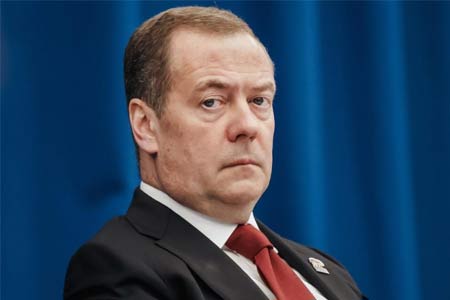 Dmitry Medvedev predicted a Ukrainian-like fate for Armenia amid the country`s shift in foreign policy
 Russian Security Council: In Armenia, they want to force Russian asset owners to dispose of their assets
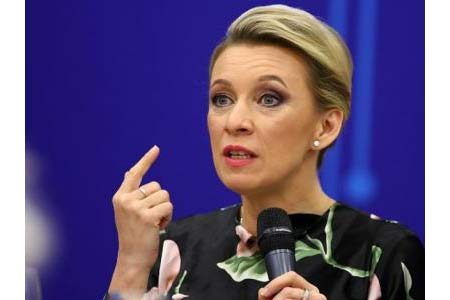 Zakharova: Russia ready to discuss with Armenia the prospects for expanding military cooperation as part of a review of bilateral ties
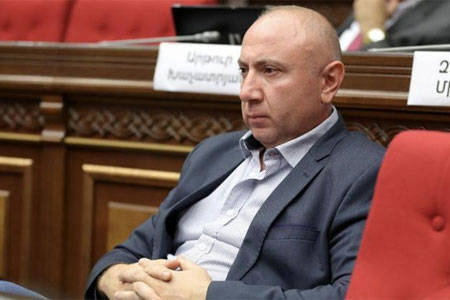 Tevanyan: Armenia, like Ukraine and Moldova, is being drawn into the EU’s global war
 Yerevan City Hall is considering introducing a valet parking system in the city
 Expert: The circus surrounding the “Albanization” of Armenian culture in the presence of foreign ambassadors in occupied Artsakh is genocide
 Political scientist: If Russian-Armenian relations are destroyed, Turkey will take Russia`s place
 Political scientist: The Armenian public is simply obliged to significantly change the entire content of public discourse and struggle
 Cross tattoos are being removed from the skin of Christian prisoners in Azerbaijan by fire, according to a human rights activist.
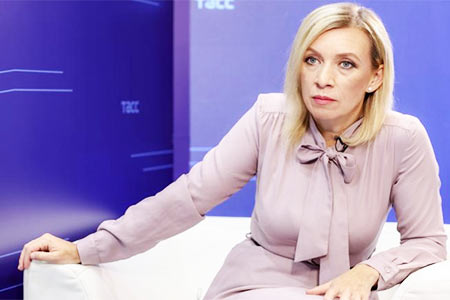 Zakharova: Armenia`s likely introduction of visas with Russia will be a step against Yerevan itself
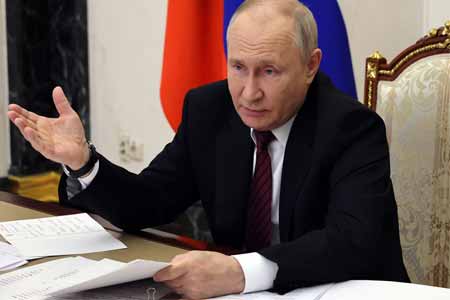 Putin: Armenia`s recognition of Karabakh as part of Azerbaijan in Prague has given Russia`s position on this issue an ambivalent character
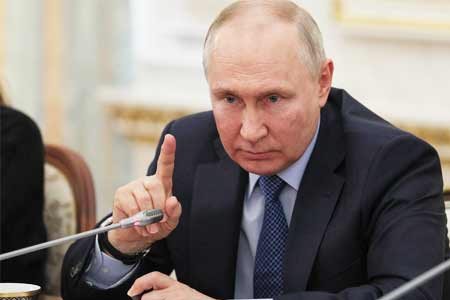 Putin: Armenia`s adoption of the law on EU accession means an announcement of its withdrawal from the Eurasian Economic Union