
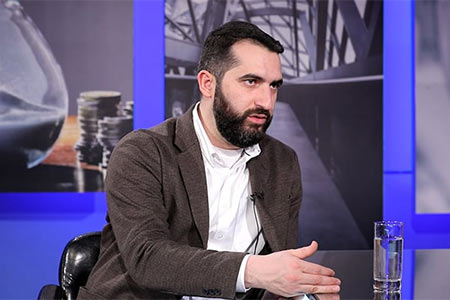
ArmInfo. Azerbaijan is not all-powerful, and the use of its vulnerabilities should be one of the guarantees of Armenia’s security, not the other way around. Armenian Turkologist Varuzhan Geghamyan wrote this on his Facebook page, reacting to
the protests that took place in Azerbaijan amid the de facto restrictions on wearing hijabs in schools and Turkey’s negative reaction to this.
According to the expert, an analysis of the events of recent days in Azerbaijan and, in particular, the reaction of the country’s authorities to emerging problems once again confirms what specialists have long known. "I would formulate it this way: in the person of modern Azerbaijan, on the one hand, we are dealing with a sufficiently effective and stable dictatorial system, and on the other, with a deeply crisis-ridden, vulnerable state system that lacks independence in many matters. To more clearly understand what I am talking about, it is enough to look at the panic caused among the Azerbaijani authorities by the negative public reaction in Turkey to the hijab ban," the Turkologist added.
Geghamyan believes that the future of the system of power built by the Aliyevs over the course of decades is highly uncertain due to numerous circumstances. Here, he said, it is enough to mention the sharp depletion of oil resources and the resulting new socioeconomic crisis expected already in the coming years. The expert expressed the conviction that in the near future such crises will only become more frequent, pushing the authorities to seek new external targets. "The point of this analytical review is as follows: Azerbaijan is not all-powerful, contrary to what the forces operating in Armenia have been trying to convince us of for six years already. Work against Azerbaijan, including exploiting vulnerabilities of this kind, should be one of the guarantees of Armenia’s security, not the other way around. The threats emanating from Azerbaijan can be resisted, they can be neutralized, and victories can be achieved. The paradox is that the last point is perfectly understood in Azerbaijan itself, but not in Armenia, including by some national forces," the Turkologist concluded.
It should be recalled that protests in Azerbaijan began after girls wearing headscarves were not allowed to attend classes, while teachers tore hijabs off children’s heads. The Azerbaijani Cabinet adopted the new rules in September 2026, according to which only secular clothing may be worn in state institutions and schools. Moreover, school uniforms were standardized, and the prescribed design does not include the hijab. Meanwhile, Azerbaijani pro-government media are trying to shift responsibility for the unrest in the country onto external forces that allegedly seek to influence Azerbaijan’s secular model of statehood.



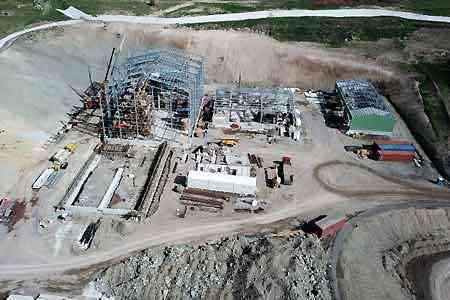



 Opinion: The development of the Amulsar mine near the resort town of Jermuk is the beginning of an environmental disaster in Armenia
 Expert: The arrest of opposition figures in Armenia for social media posts is a systematic attempt to intimidate the public and suppress dissent.
 Azerbaijani Studies Expert: While Azerbaijan Prepares Its Generation for War, Aliyev’s Aide Calls on Armenia to Prepare Armenian Society for “Peace”
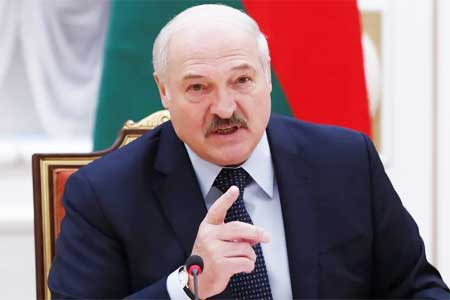 Lukashenko called for Armenia to assume the CIS presidency in 2029
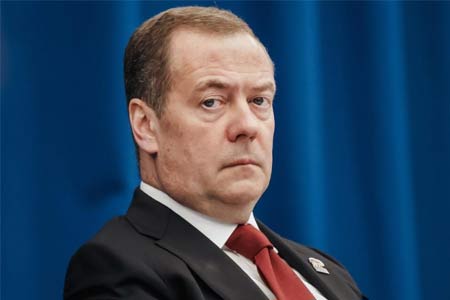 Dmitry Medvedev predicted a Ukrainian-like fate for Armenia amid the country`s shift in foreign policy
 Russian Security Council: In Armenia, they want to force Russian asset owners to dispose of their assets
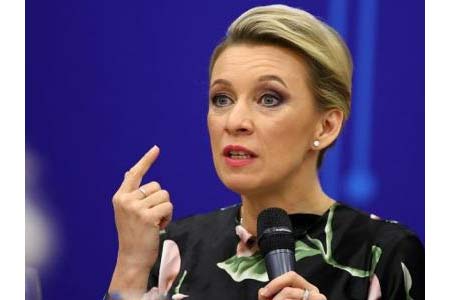 Zakharova: Russia ready to discuss with Armenia the prospects for expanding military cooperation as part of a review of bilateral ties
 Tevanyan: Armenia, like Ukraine and Moldova, is being drawn into the EU’s global war
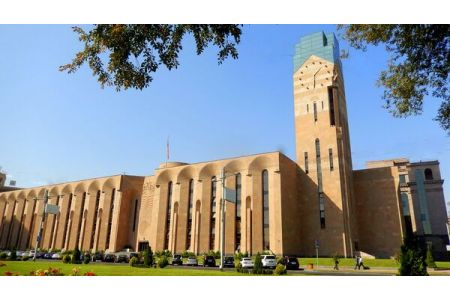 Yerevan City Hall is considering introducing a valet parking system in the city
 Expert: The circus surrounding the “Albanization” of Armenian culture in the presence of foreign ambassadors in occupied Artsakh is genocide
 Political scientist: If Russian-Armenian relations are destroyed, Turkey will take Russia`s place
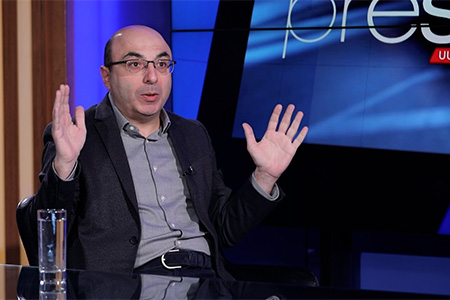 Political scientist: The Armenian public is simply obliged to significantly change the entire content of public discourse and struggle
 Cross tattoos are being removed from the skin of Christian prisoners in Azerbaijan by fire, according to a human rights activist.
 Zakharova: Armenia`s likely introduction of visas with Russia will be a step against Yerevan itself
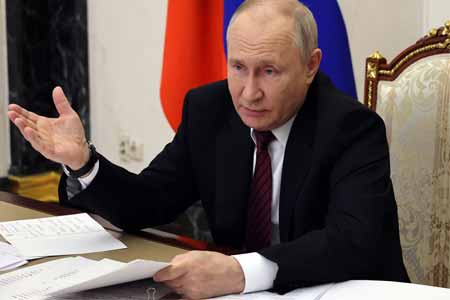 Putin: Armenia`s recognition of Karabakh as part of Azerbaijan in Prague has given Russia`s position on this issue an ambivalent character
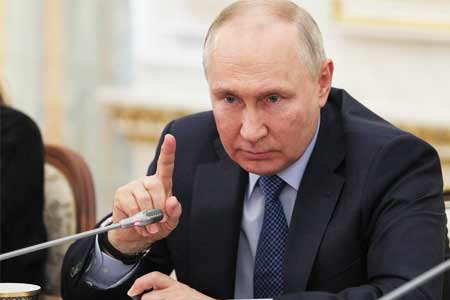 Putin: Armenia`s adoption of the law on EU accession means an announcement of its withdrawal from the Eurasian Economic Union