


ArmInfo. Amendments to the law "On the Prevention of Domestic and Family Violence and the Protection of Persons Subjected to Domestic and Family Violence" and a package of related documents are being considered in Armenia. The discussion of the draft in the National Assembly was postponed in October 2026 for up to two months for revision. The authors of the submitted document were MPs from the ruling Civil Contract party, Zaruhi Batoyan, Tsovinar Vardanyan, and Sona Ghazaryan.
Presenting the initiative at a meeting of the RA National Assembly Committee on Human Rights and Public Affairs on October 26, Zaruhi Batoyan noted that the draft is aimed at increasing the effectiveness of protection against domestic violence, expanding the toolkit, and criminalizing domestic violence as a separate crime. Specifically, it is proposed to classify domestic and family violence as a separate crime in the Criminal Code, establishing independent liability. The authors of the proposed document want to classify all cases of domestic and family violence as cases of public prosecution—meaning that the initiation of a criminal case will not depend on a statement or complaint from the victim, and the possibility of reconciliation between the parties will be eliminated. This would include placing aggressive individuals on preventive police watch even in the absence of an immediate threat of recurrence if the violence has already been established; the application of urgent intervention measures if the violence has occurred more than once in the past year; and a ban on communication with the victim for individuals sentenced to restricted freedom. In cases of cohabitation, it is proposed to remove the perpetrator of violence, rather than the victim, from the shared residence. It is also planned to ban house arrest if the accused and victim live together, and to introduce electronic monitoring of compliance with special protective measures. Police officers will be required to use body cameras when responding to calls of violence.
In turn, RA Minister of Internal Affairs Arpine Sargsyan noted that the main question is how the state intends to intervene in family life and what methods to use to prevent domestic violence. Specifically, it is planned to strengthen the relevant provisions in the Criminal Code and Criminal Procedure Code. Domestic violence will become a separate type of crime, for which appropriate liability will be established. The package, as the minister noted, indicates a change in the state's attitude toward these types of crimes. Another amendment concerns strengthening victim protection. Currently, according to current legislation, a statement from the victim is required for law enforcement agencies to carry out the necessary measures. Now, criminal proceedings can be initiated at the first signal. Moreover, reconciliation is excluded from this process. House arrest will be eliminated for suspects of domestic violence if the spouses live together. Monitoring of the suspect can be carried out electronically.
The bill proposes eliminating warnings as a protective measure and mandating completion of a rehabilitation program for those who commit domestic violence. The government, for its part, proposed placing such individuals on preventive police records even in cases where violence has been established but there is no immediate threat of recurrence. Furthermore, the Cabinet proposed applying urgent intervention measures if violence has occurred more than once within the past year, even in the absence of an immediate threat of recurrence or continuation. Another amendment proposed by the government would prohibit a person sentenced to restricted freedom for domestic violence from communicating with the victim. The package also provides for mandatory video or photographic recording of police actions when responding to reports of domestic violence and the creation of a single toll-free hotline.
Separate amendments concern the use of electronic monitoring devices against perpetrators of domestic violence. It is proposed to require them to wear an electronic device that would allow for 24/7 tracking of their movements and ensure compliance with established restrictions. The Ministry of Internal Affairs explained that the possibility of using electronic monitoring as part of an emergency intervention or protective order was already envisaged in the 2023 amendments, but current legislation does not require perpetrators of violence to wear such a device. Criminal liability is proposed for evading or refusing to wear an electronic monitoring device. The ministry believes that administrative measures are insufficient in such cases, as electronic monitoring is intended to prevent repeated violence and ensure the protection of the victim. Electronic monitoring devices with GPS will also allow for tracking the offender's approach to restricted areas. In justifying the initiative, the Ministry of Internal Affairs cited the experience of France, Canada, and the United States.
It should be noted that the commission, with four votes in favor, issued a positive opinion on the proposed package, recommending that the National Assembly Council include it on the agenda of the plenary session of parliament, which opens on October 27.

























 Expert: Economic pressure on Armenia may be virtually painless for other EAEU members, but not for Armenia itself
 Expert on protests in France: Civilizations fade when society loses a vision of the future
 Turkologist: Azerbaijan is not all-powerful—its vulnerabilities should become part of Armenia’s security strategy
 Opinion: The development of the Amulsar mine near the resort town of Jermuk is the beginning of an environmental disaster in Armenia
 Expert: The arrest of opposition figures in Armenia for social media posts is a systematic attempt to intimidate the public and suppress dissent.
 Expert: It`s time for Armenia to move away from uncertainty and choose between West and East
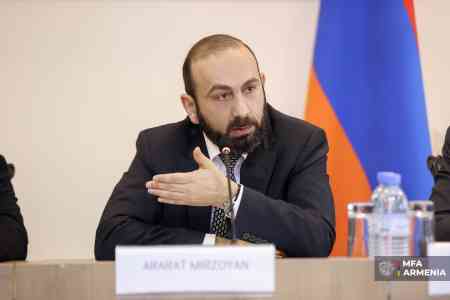 The Armenian Foreign Minister commented on the country`s return to work within the CSTO.
 The Artsakh Public Council expressed outrage at the UN Secretary-General`s behavior
 Lukashenko called for Armenia to assume the CIS presidency in 2029
 Dmitry Medvedev predicted a Ukrainian-like fate for Armenia amid the country`s shift in foreign policy
 Russian Security Council: In Armenia, they want to force Russian asset owners to dispose of their assets
 Zakharova: Russia ready to discuss with Armenia the prospects for expanding military cooperation as part of a review of bilateral ties
 Tevanyan: Armenia, like Ukraine and Moldova, is being drawn into the EU’s global war
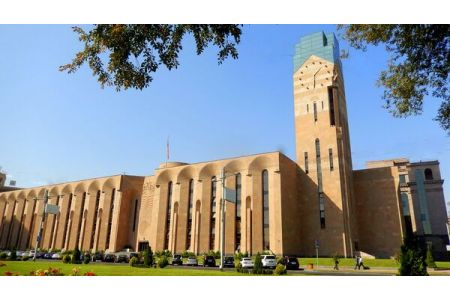 Yerevan City Hall is considering introducing a valet parking system in the city
 Expert: The circus surrounding the “Albanization” of Armenian culture in the presence of foreign ambassadors in occupied Artsakh is genocide
 Political scientist: If Russian-Armenian relations are destroyed, Turkey will take Russia`s place
 Political scientist: The Armenian public is simply obliged to significantly change the entire content of public discourse and struggle
 Cross tattoos are being removed from the skin of Christian prisoners in Azerbaijan by fire, according to a human rights activist.
 Zakharova: Armenia`s likely introduction of visas with Russia will be a step against Yerevan itself