
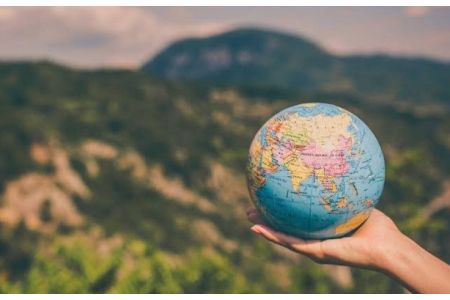
Arminfo. Armenia ranked 55th in the 2026 Positive Peace Index, recording an improvement of 11.3%.
According to the report, Eastern Europe and Central Asia demonstrated the greatest average improvement in the Positive Peace indicator.
"Eleven of the region’s 15 countries improved their scores over this period. Armenia and Uzbekistan showed the greatest progress, improving their scores by 11.3% and 11.2%, respectively, followed by Moldova (7.8%), Bulgaria (7.3%) and Georgia (7.1%). Three countries saw their scores deteriorate: Turkey (6.2%), Russia (5.2%) and Belarus (4.2%). In Kyrgyzstan, the indicator remained virtually unchanged," the report says.
The report states that the 11.3% improvement in Armenia’s Positive Peace indicators was driven by a 35.7% increase in the share of young people not in employment, education or professional training (NEET).
At the same time, it notes that the deterioration in Turkey, Russia and Belarus was similar in nature, focusing on indicators related to political openness and the flow of information. In Turkey, press freedom deteriorated by 36%, while laws supporting equal treatment of different population groups, government openness and transparency, as well as equality of opportunity, deteriorated by 33.3%. The decline in Russia was caused by a 36.6% deterioration in press freedom, as well as a 33.3% decline in equality of opportunity and a 25% decline in government openness and transparency. The greatest changes in individual indicators in the region were observed in Belarus, where the quality of information deteriorated by 83.9%, followed by a 34.6% deterioration in press freedom and a 34.4% deterioration in social exclusion based on socioeconomic factors.
The top 10 countries in the 2026 Positive Peace Index were Denmark, Finland, Sweden, Switzerland, Norway, Ireland, New Zealand, the Netherlands, Australia and Iceland.
Armenia’s neighbors ranked as follows: Georgia - 49th, Turkey - 83rd, Iran - 124th, and Azerbaijan - 98th. Russia ranked 1-1st. The poorest scores were recorded by Somalia, Sudan and the Central African Republic.
The index covers 163 countries and 99.7% of the world’s population. This report provides a detailed description of the approach used to create the PPI and its latest results.














 Expert: Economic pressure on Armenia may be virtually painless for other EAEU members, but not for Armenia itself
 Expert on protests in France: Civilizations fade when society loses a vision of the future
 Turkologist: Azerbaijan is not all-powerful—its vulnerabilities should become part of Armenia’s security strategy
 Opinion: The development of the Amulsar mine near the resort town of Jermuk is the beginning of an environmental disaster in Armenia
 Expert: The arrest of opposition figures in Armenia for social media posts is a systematic attempt to intimidate the public and suppress dissent.
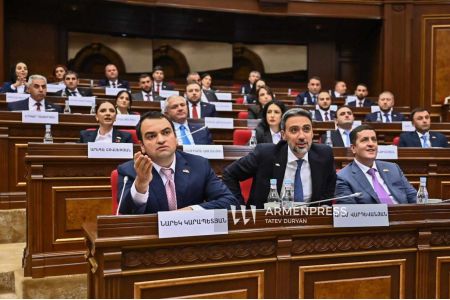 "Strong Armenia": The brawl in parliament was staged to distract public attention from Pashinyan`s failed foreign policy
 Zakharova commented on the scandalous epithets of the governor of Armenia`s Shirak region about "Ivanov"
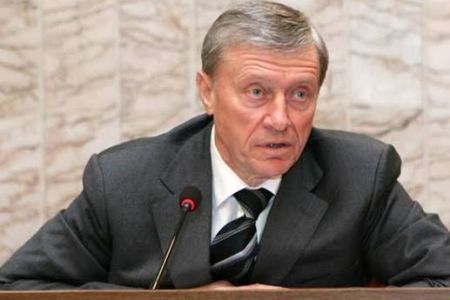 Nikolai Bordyuzha proposed excluding Armenia from the CSTO.
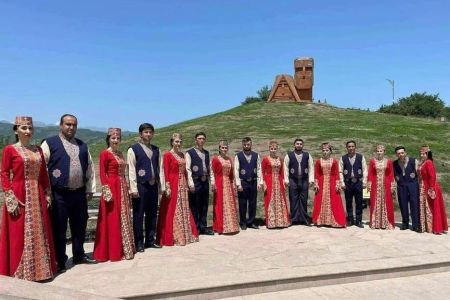 The participation of Artsakh ensembles in an international festival in Vienna was cancelled following the intervention of several foreign embassies
 Expert: It`s time for Armenia to move away from uncertainty and choose between West and East
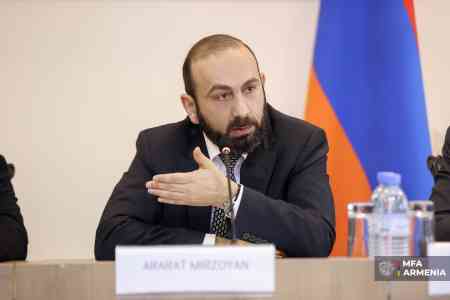 The Armenian Foreign Minister commented on the country`s return to work within the CSTO.
 The Artsakh Public Council expressed outrage at the UN Secretary-General`s behavior
 Lukashenko called for Armenia to assume the CIS presidency in 2029
 Dmitry Medvedev predicted a Ukrainian-like fate for Armenia amid the country`s shift in foreign policy
 Russian Security Council: In Armenia, they want to force Russian asset owners to dispose of their assets
 Zakharova: Russia ready to discuss with Armenia the prospects for expanding military cooperation as part of a review of bilateral ties
 Tevanyan: Armenia, like Ukraine and Moldova, is being drawn into the EU’s global war
 Yerevan City Hall is considering introducing a valet parking system in the city
 Expert: The circus surrounding the “Albanization” of Armenian culture in the presence of foreign ambassadors in occupied Artsakh is genocide
 Political scientist: If Russian-Armenian relations are destroyed, Turkey will take Russia`s place