


ArmInfo. At the plenary meeting of the Third Committee of the 81st session of the UN General Assembly in New York, a Russian initiative was approved – a resolution "Combating glorification of Nazism, neo-Nazism and other practices that contribute to fueling contemporary forms of racism, racial discrimination, xenophobia and related intolerance." According to published data, Armenia supported the adoption of this resolution.
Overall, 117 states voted in favor of the document; 53 voted against, and 9 abstained. Among Armenia's neighbors, Azerbaijan supported the resolution, Georgia voted against, Turkey abstained, and Iran did not participate in the vote.
Grigory Lukyantsev, Director of the Department of Multilateral Cooperation on Human Rights at the Russian Ministry of Foreign Affairs, noted that the resolution's approval this year is particularly significant given the 80th anniversary of the Nuremberg Tribunal's verdict and the 25th anniversary of the Durban Declaration and Programme of Action.
"The Russian initiative, presented with the support of a wide range of co-sponsors—45 states from all regions of the world—is intended to serve as an important international legal instrument to counter the falsification of history, the revision of the results of World War II, and attempts to whitewash the crimes of the Nazis and their accomplices." "Special attention is given to the destruction of monuments to those who fought against Nazism and attempts to ban symbols symbolizing the Great Victory," he noted.
According to the diplomat, the resolution also emphasizes the inadmissibility of ideologies based on the superiority of some groups over others on racial, ethnic, or religious grounds. This issue remains particularly relevant in the context of the spread of various forms of intolerance, including Islamophobia, Christianophobia, Afrophobia, Arabophobia, Russophobia, and anti-Semitism.
"Despite the obvious significance of the issues raised, during the consideration of the initiative, attempts by a number of Western states to politicize the discussion and replace substantive discussion about countering the glorification of Nazism with opportunistic accusations against the Russian Federation were once again evident." The overwhelming majority of delegations' votes once again confirmed the broad international support for the Russian initiative by the global majority.
The Russian Federation will continue to advocate for resolute opposition to the glorification of Nazism, the preservation of historical memory, and the prevention of a repeat of the tragedy of World War II," Lukyantsev concluded.












 Expert: Official Yerevan should not base its calculations in relations with Ankara on the "crack" in the Turkish-Azerbaijani alliance
 International expert: Trump is entering a "lame duck" period of rule
 Lavrov: Armenia will not be expelled from the CSTO
 Drmeyan: The ECHR rejected Azerbaijan`s appeal in the case of Artsakh Defense Army Major Hayk Toroyan
 "Strong Armenia": The brawl in parliament was staged to distract public attention from Pashinyan`s failed foreign policy
 Zakharova commented on the scandalous epithets of the governor of Armenia`s Shirak region about "Ivanov"
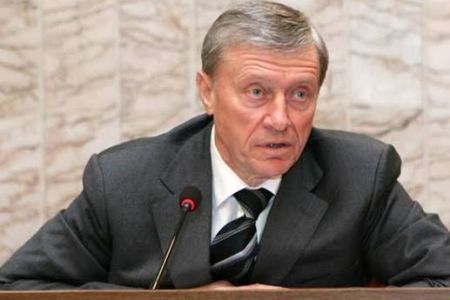 Nikolai Bordyuzha proposed excluding Armenia from the CSTO.
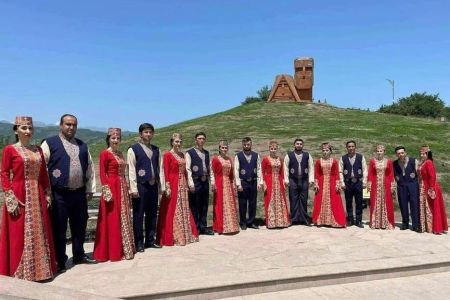 The participation of Artsakh ensembles in an international festival in Vienna was cancelled following the intervention of several foreign embassies
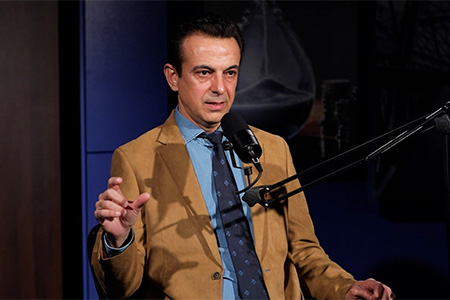 Expert: It`s time for Armenia to move away from uncertainty and choose between West and East
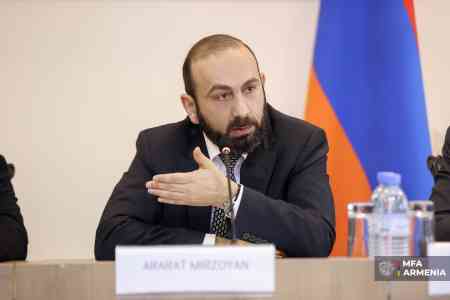 The Armenian Foreign Minister commented on the country`s return to work within the CSTO.
 The Artsakh Public Council expressed outrage at the UN Secretary-General`s behavior
 Lukashenko called for Armenia to assume the CIS presidency in 2029
 Dmitry Medvedev predicted a Ukrainian-like fate for Armenia amid the country`s shift in foreign policy
 Russian Security Council: In Armenia, they want to force Russian asset owners to dispose of their assets
 Zakharova: Russia ready to discuss with Armenia the prospects for expanding military cooperation as part of a review of bilateral ties
 Tevanyan: Armenia, like Ukraine and Moldova, is being drawn into the EU’s global war
 Yerevan City Hall is considering introducing a valet parking system in the city