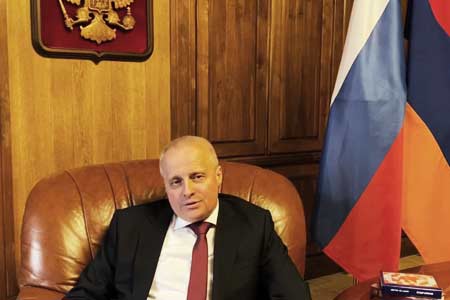
ArmInfo.On the issue of exchange of prisoners between the Armenian and Azerbaijani sides, Moscow advocates an exchange on the principle of "all for all," Russian Ambassador to Armenia Sergei Kopyrkin told reporters on April 3.
"The work, of course, must be completed. The Russian Federation is actively involved in this process. Helping to ensure that, in the end, the principle that we talked about initially -" all for all, "the ambassador noted.
The armed conflict over Nagorno-Karabakh between Armenia and Azerbaijan escalated sharply on September 27, 2020, when Azerbaijani forces launched a large-scale offensive. The hostilities ended on November 10 with the signing of a trilateral ceasefire agreement with the participation of Russia. Among other things, the document provided for "the exchange of prisoners of war, hostages and other detained persons and bodies of the dead."
The exact number of Armenian prisoners of war remaining in the power of the Azerbaijani side remains unclear. By the end of February, the representation of Armenia at the European Court of Human Rights petitioned for submissions to the Azerbaijani authorities on 240 allegedly prisoners of war and held civilians. In about 90% of such cases, according to the representative office, they presented photo and video materials confirming the fact that this or that person was in the captivity of the Azerbaijani side. The Armenian leadership claims that Azerbaijan has returned 69 prisoners of war and captured civilians. Azerbaijani President Ilham Aliyev claims that all prisoners of war have been returned to the Armenian side, but about 60 more people remain in custody as suspects of terrorism. Human Rights Watch is unable to verify the claims of both parties regarding the number of remaining detainees and their status.










 Armenian Analyst: One of the Key Tasks of the United Opposition is to Form Effective Mechanisms to Contain the Armenian Authorities
 Armenian expert: Could modern Azerbaijan even exist without Russian and Soviet modernization?
 South Caucasus is entering a new phase of turbulence - ex-official
  Zatulin: Pashinyan was eager to get back to Russia because he actually lost the elections
 Human rights activist Ruben Melikyan dismissed from YSU
 Pashinyan removed from INNOPROM guest list
 Zakharova: Armenia`s pro-EU pivot poses economic security risks to EAEU member states
 It`s time for South Caucasus countries to think of South Caucasus as single, unified region - RA premier
  Pashinyan: Armenia and Azerbaijan should leave each other alone
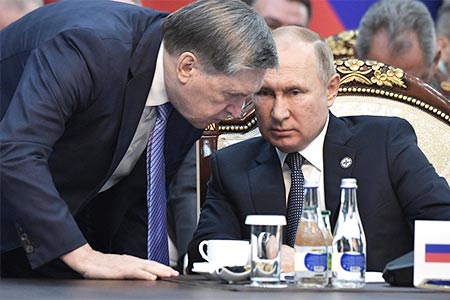 Moscow sees situation with Armenia as attempt to attack Russia-involving integration associations - Russian presidential aid
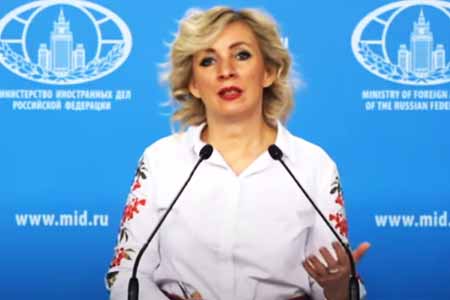 Zakharova: Armenia views relations with Russia as tool for financially securing reorientation toward EU
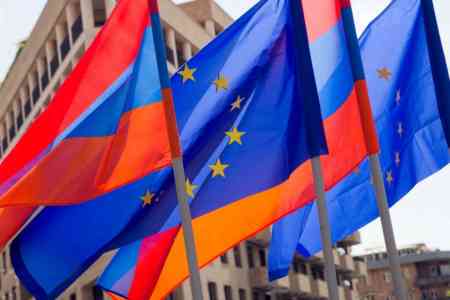 The Armenian Minister of Justice and the EU Ambassador discussed visa liberalization issues for Yerevan.
 Azerbaijan`s aggressive plans against Armenia became possible in wake of Pashinyan`s decisions on Artsakh - expert
 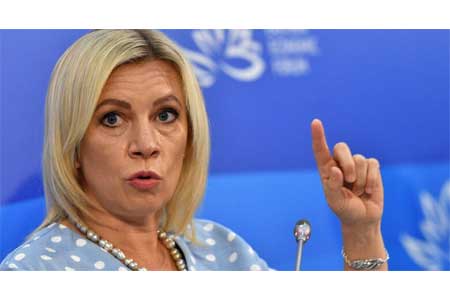 Zakharova: Russia sent a note of protest to Armenia over the act of vandalism at the "Mother Armenia" memorial in Gyumri
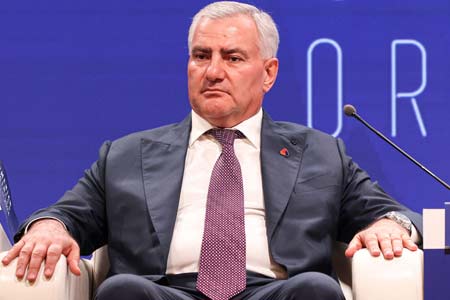 Samvel Karapetyan proposes creating a post-election opposition coalition
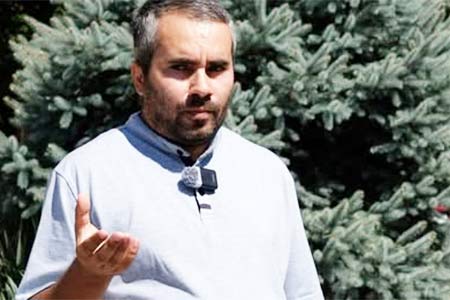 Artsakh`s Cultural Heritage Ombudsman called on Moscow to respond to destruction of WWII monuments by Azerbaijan in occupied NKR