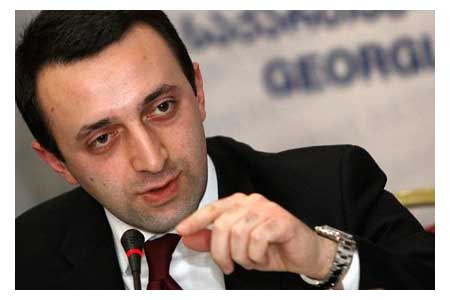
ArmInfo.Georgian Prime Minister Irakli Garibashvili explained that if Georgia joins the financial sanctions of the West against the Russian Federation, winemakers, exporters, and farmers of the country will suffer serious damage, tourism will suffer, and thus it will "harm national interests."
Earlier, Garibashvili said that the country would not join the financial and economic sanctions imposed by the West against Russia.
"When it comes to sanctions, thousands of winemakers, exporters, farmers are involved in this process. What am I supposed to do? Should I impose sanctions on our people? ... Therefore, these extra emotions will not give anything, it harms our national interests," he said.
Garibashvili said that after the 2008 conflict, then Georgian President Mikheil Saakashvili and his government were looking for ways to restore trade relations with Russia and open up the Russian market, and after the war, Saakashvili sold almost all strategic facilities to Russian companies.
" We have achieved everything thanks to our reasonable, national and patriotic policy: an association agreement with the EU, a visa-free regime and progress in many other things, including the opening of the Russian market," Garibashvili said, RIA Novosti reports.
The head of government noted that after the opening of the Russian market, from 2013 to 2021, agricultural products worth $2 billion were exported from Georgia to Russia, the export of other products is $3 billion. According to him, due to tourism over the past five years, the country has received $3 billion in income - more than 5 million guests from Russia have visited Georgia. The prime minister also added that about 1 million Georgians live in the Russian Federation, annual remittances amount to $500 million.
Western countries announced a new round of the sanctions spiral, which has been unwinding since 2014, after President Vladimir Putin signed decrees on February 21 recognizing the sovereignty of the LPR and DPR, and on February 24 announced the launch of a special operation in Donbass. Several major Russian banks fell under the new restrictions, including Sberbank and VTB. For some state-owned companies, it is difficult to attract foreign capital. Sanctions have been imposed on the supply of high-tech products to Russia. Germany has stopped certification of the Nord Stream 2 gas pipeline.
Moscow said it had prepared a plan of action in advance in case of a new wave of sanctions and would provide any necessary support to businesses that fell under the restrictions, ensuring the smooth operation of the economy. The government is also developing response measures, but the details are not yet known.







 Analyst: The primary issue with Armenia`s new Parliament Speaker`s speech lies is its one-sided interpretation of the causes of the political crisis
 Expert: Gagik Tsarukyan embodies post-Soviet model of big business-state relations; this model is used in many other post-Soviet countries
 Expert: Azerbaijan promoting aggressive plans against Armenia at state level
 NA Vice Speaker candidate believes his wife`s salary as director of HayPost is the lowest in the company`s history
 RF Permanent Representative: There is no CSTO-Armenia conflict
 Moscow: NATO seeking to "Pull" Armenia away from CSTO Allies
  Political analyst: Russia intends to determine which "Camp" Armenia will choose through a referendum
 Armenia and France discuss further development of strategic partnership and EU cooperation
  To overcome risks Armenia must reduce domestic escalation - expert
 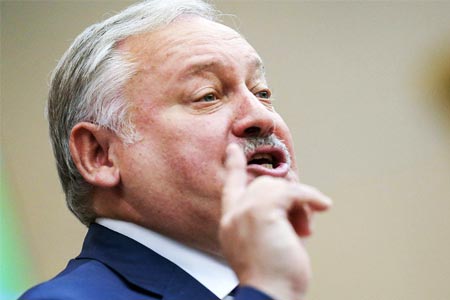 Zatulin: Pashinyan was eager to get back to Russia because he actually lost the elections
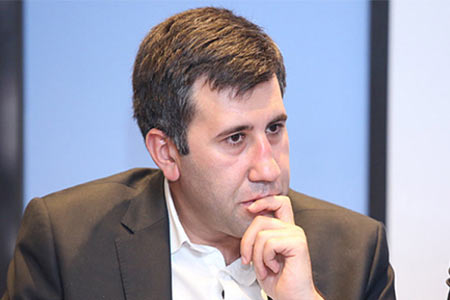 Human rights activist Ruben Melikyan dismissed from YSU
 Zakharova: Armenia`s pro-EU pivot poses economic security risks to EAEU member states
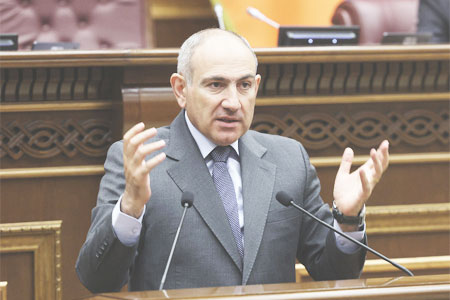 It`s time for South Caucasus countries to think of South Caucasus as single, unified region - RA premier
  Pashinyan: Armenia and Azerbaijan should leave each other alone