ArmInfo.Tens of thousands of people were going hungry - but the International Red Cross faced growing obstacles as it tried to deliver help. Among them was hostile rhetoric from the Azerbaijan Red Crescent, a local member of the Red Cross movement.
In February 2023, Ani Mangasaryan was watching her city die. She was terrified that her baby would die with it.
Nagorno-Karabakh, an isolated and contested region deep in Azerbaijani territory, was still in Armenian hands. But it had been under blockade for several months. Meat and fresh produce had vanished from the shelves in the capital city, Stepanakert. In the corridor of the children's hospital, Mangasaryan's son lay feverish with a lung infection.
"My child should really be in the intensive care unit, but there's no space," she told a reporter present at the scene, pacing nervously back and forth. She paused only to press her hand against the baby's hot forehead.
The doctors were feeling desperate as well. "We've had to cancel four operations so far," said pediatric surgeon Mari Grigoryan, rushing between overcrowded wards. "These children are suffering greatly."
There was occasional relief. The hospital had just managed to evacuate an ailing four-month-old infant to Armenia with the help of the International Committee of the Red Cross (ICRC) - virtually the only humanitarian organization still able to move supplies into Nagorno-Karabakh, or get people out.
But Grigoryan said it wasn't nearly enough. "The Red Cross's humanitarian aid is good. But it only covers a fraction of our needs," she said.
In February 2023, Ani Mangasaryan was watching her city die. She was terrified that her baby would die with it.
Nagorno-Karabakh, an isolated and contested region deep in Azerbaijani territory, was still in Armenian hands. But it had been under blockade for several months. Meat and fresh produce had vanished from the shelves in the capital city, Stepanakert. In the corridor of the children's hospital, Mangasaryan's son lay feverish with a lung infection.
"My child should really be in the intensive care unit, but there's no space," she told a reporter present at the scene, pacing nervously back and forth. She paused only to press her hand against the baby's hot forehead.
The doctors were feeling desperate as well. "We've had to cancel four operations so far," said pediatric surgeon Mari Grigoryan, rushing between overcrowded wards. "These children are suffering greatly."
There was occasional relief. The hospital had just managed to evacuate an ailing four-month-old infant to Armenia with the help of the International Committee of the Red Cross (ICRC) - virtually the only humanitarian organization still able to move supplies into Nagorno-Karabakh, or get people out.
But Grigoryan said it wasn't nearly enough. "The Red Cross's humanitarian aid is good. But it only covers a fraction of our needs," she said.
The Azerbaijan Red Crescent is deeply enmeshed with the authoritarian regime of President Ilham Aliyev, who in more than 20 years of rule has left Azerbaijan near the bottom of human rights and democracy rankings. But the organization has never faced serious scrutiny of the kind undergone by its equivalents in countries like Belarus, where the local Red Cross's membership in the IFRC was suspended last year after it was found to have violated the movement's fundamental principles.
Melanie O'Brien, an expert in international humanitarian law and an associate professor at the University of Western Australia's School of Law, reviewed reporters' findings. She said that, as a signatory of the Geneva Conventions, Azerbaijan was obligated to allow the ICRC to do its work unhindered.
"All parties have agreed to the ICRC's presence in Nagorno-Karabakh, and therefore it is concerning that a state was hindering their work," she said.
Of the actions taken by the Azerbaijan Red Crescent, she added: "Based on the information I have seen, and if it is true, these are very serious alleged violations of the [Red Cross movement's] fundamental principles."
In response to requests for comment, both the ICRC and IFRC provided statements that stressed the importance of the Red Cross movement's fundamental principles and the urgency of the work.
Neither criticized the Azerbaijani government, with the ICRC noting that the organization's commitment to "reaching vulnerable people" in the Nagorno-Karabakh conflict meant "working with relevant authorities to gain access to people who needed humanitarian assistance, including medical evacuations."
"The diplomacy and coordination it takes to reach people affected by conflict is done through bilateral dialogue," the ICRC statement continued. "Years of practice have shown us this is the most effective way to carry out our work."
Neither the ICRC nor the IFRC directly addressed the question of whether the Azerbaijan Red Crescent had violated the Red Cross movement's principles.
"The ICRC and the [IFRC] take alleged violations of the fundamental principles very seriously," the ICRC wrote. "The IFRC works directly with its members, the national societies, to address issues or take further measures as necessary in close coordination with the ICRC."
The IFRC wrote that it had "engaged in a dialogue with the Azerbaijan Red Crescent Society at a high leadership level, in a fast-changing political landscape."
"Neutrality is critical in every context, even more so during a conflict," the IFRC said. "Every National Red Cross Red Crescent Society needs to follow the Fundamental Principles and refrain from engaging in controversies of political nature."
The Azerbaijani presidential administration and foreign ministry did not respond to requests for comment. The head of the Azerbaijan Red Crescent, Novruz Aslanov, did not respond to requests sent through the organization's public email addresses and through his assistant.
The Stage for a Tragedy
In Azerbaijani and other regional languages, Karabakh means "Black Garden" - an appropriate name for this highly-contested southern stretch of the Caucasus Mountains, its valleys dotted with lush forests and rivers.
Though historically home to both Azeris and Armenians, the territory was awarded to Azerbaijan by Joseph Stalin after both countries fell under Soviet rule. The conflict was thus tamped down for 70 years, only to erupt anew as they regained their independence.
In the First Nagorno-Karabakh War of the 1990s, hundreds of thousands were displaced and many killed on both sides. But Armenian forces won a decisive victory, resulting in a self-governing Armenian state on territory that was internationally recognized as Azerbaijani. This contradictory situation became the subject of prolonged peace negotiations under the Organization for Security and Cooperation in Europe.
In the end, the talks proved futile. President Aliyev, having fortified his military with drones, heavy artillery, and advanced technology purchased on the back of brisk oil sales, launched an offensive in 2020 that easily brushed aside Armenian defenses. His forces reclaimed most of Nagorno-Karabakh's territory, including its historic second city.
What remained in Armenian hands was an isolated enclave centered around Stepanakert (known in Azeri as Khankendi), its population fed and supplied by a single active road that wound its way through the mountains. This tenuous lifeline, known as the Lachin Corridor, was guarded by Russian peacekeepers who often seemed to defer to Azerbaijani demands.
The situation persisted for the next two years, during which the Red Cross's humanitarian efforts grew in scale and complexity. The annual budget of the ICRC's longstanding Nagorno-Karabakh mission more than quadrupled, to around $48 million. By 2023, it had as many as 75 employees in the territory and hundreds more outside of it, handling everything from mine clearance to prisoner exchanges. But the biggest challenge was yet to come.
The Noose Tightens
In December 2022, Azerbaijan allowed a group of government-backed environmental activists to impose a blockade of the Lachin Corridor, ostensibly to protest damage wrought by ore mining on the territory. For the first time, Nagorno-Karabakh was almost completely sealed off from the outside world.
Facing new geopolitical challenges in the South Caucasus after its invasion of Ukraine, and perhaps unwilling to manage another hotspot, Moscow did not order its peacekeepers to remove the blockade. And though the peacekeepers continued to deliver food, at least for a time, it wasn't nearly enough.
The situation was especially dire for the ill. As hospital supplies dried up, the ICRC organized humanitarian convoys to evacuate the neediest patients to Armenia along the Lachin Corridor.
Azerbaijan's responsibility to keep this path open was enshrined in a February ruling by the International Court of Justice in the Hague, which was reaffirmed a few months later. But though the court decisions instructed Azerbaijan to ensure "unimpeded movement : in both directions," in practice the ICRC's capacity to transport patients fell far short of demand.
"We applied to the ICRC for his transfer," one Stepanakert resident told the human rights watchdog Freedom House, explaining that a family member with a stomach tumor needed immediate evacuation. "There were many patients waiting. ... He died before his turn came."
Reporters obtained data about how many people the ICRC's convoys were able to evacuate on a day-to-day basis, which the organization had shared with the Nagorno-Karabakh government.
The data shows the transfers sometimes halted entirely. These periods correspond to the episodes of heightened Azerbaijani pressure described by the ICRC employee.
In late April, for example, the ICRC convoys were halted for five days while an official Azerbaijani checkpoint was built on the Hakari Bridge, at the Armenian end of the Lachin Corridor. The environmental activists were replaced by border guards.
After another week, the transports stopped again - this time for nearly a month - as Azerbaijan made new demands, including requiring advance copies of the passports of every passenger who would ride in a Red Cross medical convoy.
On June 15, after a clash between Azerbaijani soldiers and Armenian border guards on the bridge, Azerbaijan closed off the route for everyone.
The closure threatened the existence of the corridor itself. While ICRC transports were allowed to resume a few days later, regular Russian food deliveries never again reached Nagorno-Karabakh. Even the peacekeepers had to use helicopters to keep themselves supplied.
The ICRC did its best to step up and deliver at least some aid, the organization's employee said. But the mission had only a few trucks it could use, and these were not generally allowed to carry fuel into Nagorno- Karabakh, even for the ICRC's own needs. The organization resorted to bringing in fuel "discreetly," without the Azerbaijanis' permission.
"We shared 1,000-1,500 liters with the ambulance service of Stepanakert, and they shared with the regions [outside the city]," the employee said. "Sometimes we donated fuel to the hospital because there was a blackout, and they needed to run a generator." (This account was confirmed by hospital employees.)
As the situation deteriorated, the ICRC hired commercial trucks to try to bring in additional supplies. But some of the drivers were caught smuggling cigarettes and other goods to be sold for their own personal profit, prompting Azerbaijan to crack down. "Every day they [were] accusing the ICRC that we are smugglers," the employee said. The commercial trucking scheme was abandoned.
Seven months into the siege, at the end of July, the ICRC issued a rare public statement declaring that it was no longer able to bring in any supplies at all. The text was careful to assign no blame, addressing only "the relevant decision-makers" in its request to "allow the ICRC to resume its essential humanitarian operations."
"It takes a lot for the ICRC to speak out publicly," said O'Brien, the humanitarian law expert. "They won't do it unless the situation has come to an impasse."
As essential inbound supplies ground to a halt, emergency evacuations also faced growing challenges. Just days after the ICRC statement, a 68-year-old patient on a medical convoy was arrested by Azerbaijani officials for allegedly committing war crimes during the 1990s war. The incident prompted the ICRC to repeat its plea for "all concerned decision-makers to respect its strictly humanitarian mission."
"Oh, it was a nightmare," the ICRC employee said. "At that point, we couldn't guarantee that [passengers] would pass the Hakari Bridge freely." Many men who were fighting age or had served in the 1990s war became afraid to use the route; from then on the convoys carried mostly women and children.
An 'Internal Question'
Around this time, Baku began to make new demands. Instead of the Lachin Corridor, the Azerbaijani government said, the blockaded territory should be supplied via another route that linked Nagorno- Karabakh not to Armenia, but to the Azerbaijani city of Aghdam.
This proposition, frequently aired in public, was also insistently made to the ICRC mission in private, the ICRC employee said. But for many in Nagorno-Karabakh, the idea was unacceptable because it would seem to legitimize the Azerbaijanis' campaign to "integrate" them into Azerbaijan - and cut off their last link with Armenia.
"If the Aghdam road is open : but the Lachin Corridor remains closed, we are still in a cage like zoo animals & they just decided to feed us," tweeted Marut Vanyan, a journalist writing from besieged Stepanakert. (Vanyan also contributed reporting to this story.)
The ICRC argued that the Lachin road, and its vital lifeline to Armenia, be kept open. It was then, the employee said, that Azerbaijani officials began to question the organization's presence entirely. ICRC colleagues in Baku were told that the crisis was an "internal question of Azerbaijan," and that there was a local group perfectly placed to deal with it: the Azerbaijan Red Crescent.
These private discussions could not be independently confirmed, and the Azerbaijani Red Crescent did not respond to a request for comment. But in the last weeks of August, Red Crescent officials themselves made similar arguments in public.
"If the ICRC is having problems carrying out its mission, we're always ready to help," said the group's chairman Novruz Aslanov in a lengthy interview with a state media outlet.
He went on to cast doubt on the severity of the crisis in Nagorno-Karabakh.
"The Armenians are indicating where they want their humanitarian cargo from, and from what direction it should come," he continued. "It's strange for people whose children and old people are supposedly dying of hunger, isn't it?"
In an official statement made the same week, the Red Crescent went further. "Humanitarian operations in the area where Russian peacekeepers are temporarily based [are] not within the jurisdiction of ICRC," the statement read, using a formulaic description that emphasized Azerbaijan's sovereignty over the territory. "These operations are under the responsibility of the Azerbaijan Red Crescent Society."
In effect, the Red Crescent was claiming that the ICRC - which had been working in Nagorno-Karabakh for decades, on a mandate agreed by all sides - had no right to be there since the territory unquestionably belonged to Azerbaijan.
Moreover, the statement went on to claim that there was "no 'humanitarian crisis' in the region."
Reality on the ground suggested otherwise. That same week, Vanyan, the local journalist, had tweeted that kindergartens in Stepanakert were closing for lack of food. His photos from those last days of August also documented a pharmacy with empty shelves and a bread line that had stretched so long into the night that people were laying on the ground to rest.
Meanwhile, even as the ICRC continued to negotiate with the Azerbaijanis over resuming humanitarian deliveries along the Lachin Corridor, the Azerbaijan Red Crescent organized a protest by the Aghdam road, demanding access for itself.
The protest was joined by Hikmet Hajiyev, President Aliyev's foreign policy adviser, who tweeted from the scene that the Armenian government in Nagorno-Karabakh was an "illegal regime [that] must be dissolved and disarmed."
On September 8, Hajiyev told Reuters that Azerbaijan would open the Lachin Corridor for ICRC food shipments - but only if the Azerbaijan Red Crescent was also allowed entry through Aghdam.
'How to Write History in 24 Hours'
Less than two weeks later, the argument became irrelevant.
Azerbaijani troops invaded Nagorno-Karabakh on September 19, prompting nearly the entire Armenian population of the enclave to flee to Armenia along the Lachin Corridor. Dozens of people, exhausted by months of hunger, were reported to have died during the miserable 30-hour journey. The last outpost of an ancient Armenian community was no more.
But Red Crescent officials' public statements evinced little concern for the humanitarian crisis. Instead, they celebrated their government's actions.
On September 21, the organization's head Aslanov tweeted a tribute to Ilham Aliyev - a fake book cover emblazoned with an image of the leader, with text superimposed over his body: "How To Write History in 24 Hours."
The next day, Aslanov posted a photo of a Red Crescent convoy in Nagorno-Karabakh. "Our honorable mission is completed," he wrote.
This wasn't the first time the Azerbaijan Red Crescent has advanced Azerbaijani government narratives.
When Ilham Aliyev became president in 2003, a title he inherited from his deceased father Heydar Aliyev, the organization awarded him the first honorary medal it has ever issued.
Since then, Azerbaijan has lost ground in nearly all measures of democracy, its prisons periodically filling with dissidents and journalists and its elections turned into coronations for Aliyev and his allies. According to researchers from Freedom House, Azerbaijan now surpasses Belarus as Europe's most repressive state.
Through it all, the Azerbaijan Red Crescent has stuck by the government's side.
Aslanov, the organization's president since 1999, is ostensibly an independent member of parliament. But in Azerbaijan, such distinctions don't mean much. Last December, he openly urged voters to support Aliyev in an upcoming presidential election.
So did the Red Crescent's secretary-general, Jeyhun Mirzayev.
"Ilham Aliyev, the national leader who led Azerbaijan from victory to victory, deserves to win the election more than anyone else; this is his full right," Mirzayev said at the organization's official annual assembly, which took place the same month.
At the event, Red Crescent members formally voted to endorse Aliyev's reelection - a decision state media reported as being unanimous.
"The connections with the government, that's in violation of how the Red Cross works. It's in violation of independence," said O'Brien. "It's hugely problematic."
The original article can be found here: https://www.occrp.org/en/feature/we-couldnt-work-properly-how-azerbaijan-obstructed-red-cross-relief- during-the-nagorno-karabakh-siege?fbclid=IwY2xjawE- gOdleHRuA2FlbQIxMAABHW7jtrJXEAvvaDZO8sTsAIq7Q5EMonQZ0BrwCLOnwmzS7lMW3zbLIF- iNg_aem_rKBYYnA1Pb_YI8hpLBCl5A

















 Iranologist: Baku`s propaganda of might masks the country`s inability to provide water to its own population
 Analyst: Continued tensions between Yerevan and Moscow could entail new restrictive measures from Russia
 Political analyst: Russia intends to determine which "Camp" Armenia will choose through a referendum
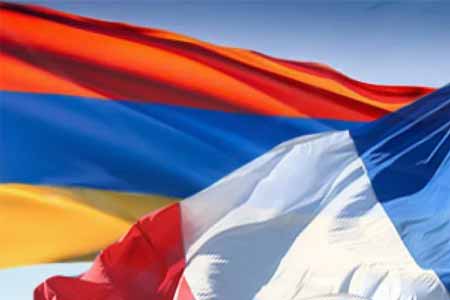 Armenia and France discuss further development of strategic partnership and EU cooperation
  To overcome risks Armenia must reduce domestic escalation - expert
  Zatulin: Pashinyan was eager to get back to Russia because he actually lost the elections
 Human rights activist Ruben Melikyan dismissed from YSU
 Pashinyan removed from INNOPROM guest list
 Zakharova: Armenia`s pro-EU pivot poses economic security risks to EAEU member states
 It`s time for South Caucasus countries to think of South Caucasus as single, unified region - RA premier
  Pashinyan: Armenia and Azerbaijan should leave each other alone
 Moscow sees situation with Armenia as attempt to attack Russia-involving integration associations - Russian presidential aid
 Zakharova: Armenia views relations with Russia as tool for financially securing reorientation toward EU
 The Armenian Minister of Justice and the EU Ambassador discussed visa liberalization issues for Yerevan.
 Azerbaijan`s aggressive plans against Armenia became possible in wake of Pashinyan`s decisions on Artsakh - expert
  Zakharova: Russia sent a note of protest to Armenia over the act of vandalism at the "Mother Armenia" memorial in Gyumri