

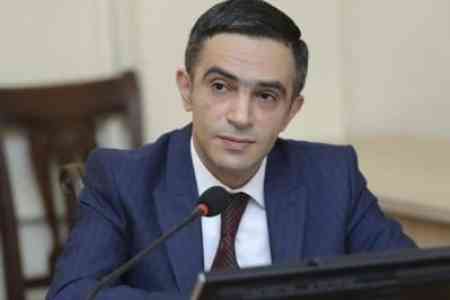
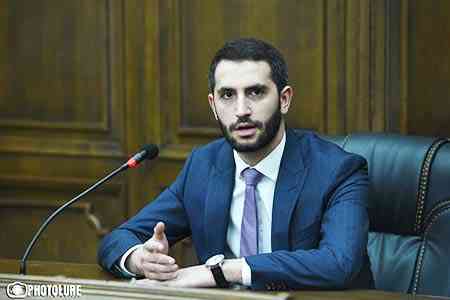
ArmInfo. In a week, two programs aimed at supporting low-income and extremely low-income citizens will be launched in the Kotayk and Syunik regions of Armenia. This was announced on July 29 at a press conference in Yerevan by the Minister of Labor and Social Affairs of Armenia Ruben Sargsyan.
The deputy minister explained that the program will be aimed in particular at unemployed youth, women aged 35 to 40, and able-bodied citizens who, according to the results of the new assessment system, are considered low-income. The programs will facilitate the integration of this part of the population into the labor market, and recruitment will be carried out through digital systems.
Presenting the first program, Sargsyan said that it will consist of three components: training, gaining work experience, and partial compensation of wages. At the same time, according to the deputy minister, the choice of the component will be made by the employer based on the results of the interview. "If he chooses that the beneficiary needs to undergo training, the state will pay for 5 months of training, and also cover the employer's expenses for providing this training up to 250,000 drams, after which the employer will have to conclude an employment contract for at least 6 months," Sargsyan explained.
At the same time, as the deputy minister continued, the state will have to cover tax liabilities in the amount of 50,000 drams for 6 months. "And if the employer believes that the beneficiary of the program only needs practice, then from the very first day an employment contract is signed between them for a period of 6 months, during which the state pays the employer's salary and taxes in the amount of 165,000 drams for the first three months, and tax liabilities up to 50,000 drams for the next three months," Sargsyan emphasized, adding that according to their calculations, up to 400 people can be beneficiaries of the first program.
Touching upon the second program, aimed at helping extremely low-income families, the deputy minister said that, unlike the first, in this case, paid public work is offered, which has certain industry areas. For example, repair work that does not require special professional skills, the service sector, forestry, tourism, education, and so on. "Under this program, beneficiaries will already receive daily wages, 3,500 drams per day," Sargsyan noted.
Touching upon the amount of payment, he explained that it was determined taking into account that along with it, the state will also provide additional financial support. "Thus, we help people not to depend entirely on benefits, but by combining them with salaries, gradually becoming independent," the official explained.
According to Sargsyan, the second program is intended, according to their estimates, for 350 beneficiaries. "But if demand increases, the number of quotas will also be increased," added the Deputy Minister of Social Affairs.
He also noted that if a beneficiary refuses all offers under these two programs, this gives them a reason to believe that he has income that he did not report. In this case, the provision of benefits does not continue. However, he assured that in both cases, the desire and choice of the beneficiary are taken into account.
Sarkisyan added that after completing the program, beneficiaries will not be deprived of benefits immediately. As the Deputy Minister explained, assistance will continue, but in the process, income will be re-evaluated, and over time it will be reduced. "That is, this will happen in stages, because it is clear that even having found a job, a person cannot immediately cope with all the problems," Sargsyan summarized.











 Opinion: The development of the Amulsar mine near the resort town of Jermuk is the beginning of an environmental disaster in Armenia
 Expert: The arrest of opposition figures in Armenia for social media posts is a systematic attempt to intimidate the public and suppress dissent.
 Azerbaijani Studies Expert: While Azerbaijan Prepares Its Generation for War, Aliyev’s Aide Calls on Armenia to Prepare Armenian Society for “Peace”
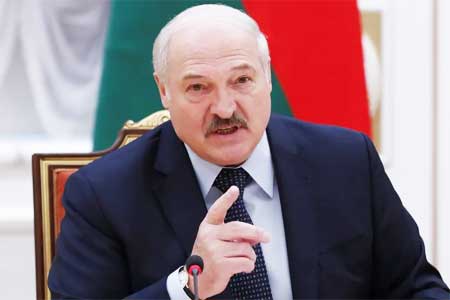 Lukashenko called for Armenia to assume the CIS presidency in 2029
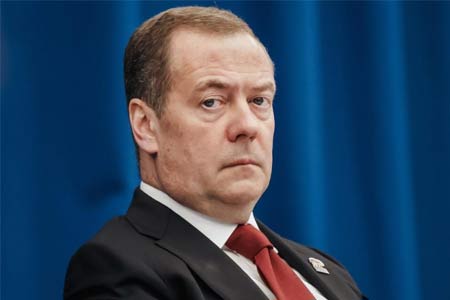 Dmitry Medvedev predicted a Ukrainian-like fate for Armenia amid the country`s shift in foreign policy
 Russian Security Council: In Armenia, they want to force Russian asset owners to dispose of their assets
 Zakharova: Russia ready to discuss with Armenia the prospects for expanding military cooperation as part of a review of bilateral ties
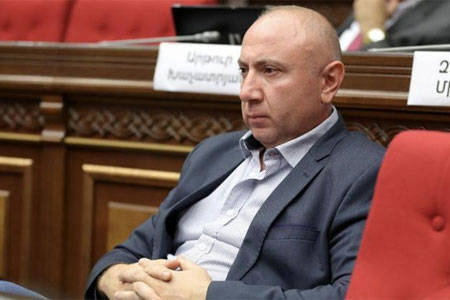 Tevanyan: Armenia, like Ukraine and Moldova, is being drawn into the EU’s global war
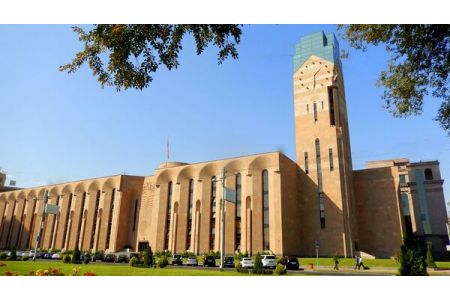 Yerevan City Hall is considering introducing a valet parking system in the city
 Expert: The circus surrounding the “Albanization” of Armenian culture in the presence of foreign ambassadors in occupied Artsakh is genocide
 Political scientist: If Russian-Armenian relations are destroyed, Turkey will take Russia`s place
 Political scientist: The Armenian public is simply obliged to significantly change the entire content of public discourse and struggle
 Cross tattoos are being removed from the skin of Christian prisoners in Azerbaijan by fire, according to a human rights activist.
 Zakharova: Armenia`s likely introduction of visas with Russia will be a step against Yerevan itself
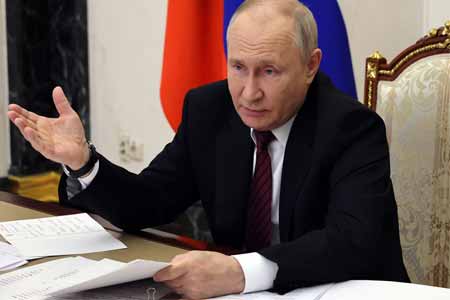 Putin: Armenia`s recognition of Karabakh as part of Azerbaijan in Prague has given Russia`s position on this issue an ambivalent character
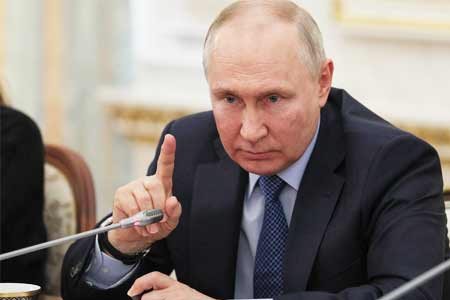 Putin: Armenia`s adoption of the law on EU accession means an announcement of its withdrawal from the Eurasian Economic Union