
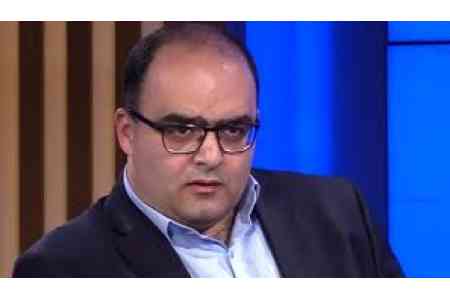
ArmInfo. The indicators of the Baku-Tbilisi-Kars (BTK) railway are important when extrapolating them to assess the potential of the extraterritorial corridor through Syunik. This is written by political scientist Vahe Davtyan.
In this regard, he drew attention to the fact that 250 thousand tons of cargo were transported via the BTK railway in the first 7 months of this year, and according to him, this figure is expected to exceed only 500 thousand tons by the end of the year. "And this is with a throughput capacity of 6.5 million tons," the expert noted.
Davtyan noted that such indicators create justified skepticism regarding the assessments of the transportation potential of the extraterritorial corridor voiced by Azerbaijani President Ilham Aliyev at a recent media forum. "BTK is operated in incomparably more stable and geopolitically predictable conditions. And even despite this, Turkish-Azerbaijani transportation carried out along this highway, as we see, leaves much to be desired," the political scientist noted.
According to him, such indicators prove the previously voiced conclusions regarding the real goals of the corridor. Davtyan is confident that its opening does not boil down to the diversification of trade routes, since otherwise, according to him, Ankara and Baku would have agreed to the "Arak Corridor" proposed by Tehran.
"From here it becomes clear that the real goal of the so-called "Zangezur corridor" is the consistent militarization of Nakhichevan, the formation of an anti-Iranian bridgehead in the South Caucasus, the paralysis of the Caucasian section of the North-South ITC, and the subsequent expulsion of Russia from the region. The anti-Russian axis being formed in the South Caucasus more than fits into this goal-setting," the political scientist summed up.
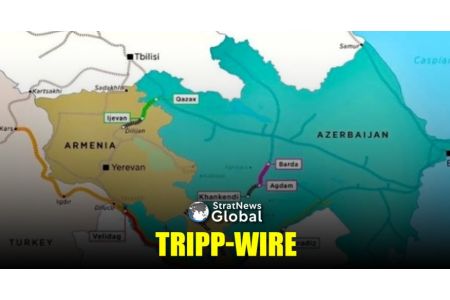
Recall that the Meghri route is a project for a transport route about 40 km long through the territory of the Syunik region of Armenia, which would provide transport links between the western regions of Azerbaijan and its exclave, the Nakhichevan Autonomous Republic. The opening of transport routes in the region was envisaged by paragraph 9 of the trilateral statement of November 9, 2020 by the leaders of Russia, Armenia and Azerbaijan. Meanwhile, Azerbaijan is trying to distort the essence of these agreements and get an extraterritorial corridor.




















 Expert: Economic pressure on Armenia may be virtually painless for other EAEU members, but not for Armenia itself
 Expert on protests in France: Civilizations fade when society loses a vision of the future
 Turkologist: Azerbaijan is not all-powerful—its vulnerabilities should become part of Armenia’s security strategy
 Opinion: The development of the Amulsar mine near the resort town of Jermuk is the beginning of an environmental disaster in Armenia
 Expert: The arrest of opposition figures in Armenia for social media posts is a systematic attempt to intimidate the public and suppress dissent.
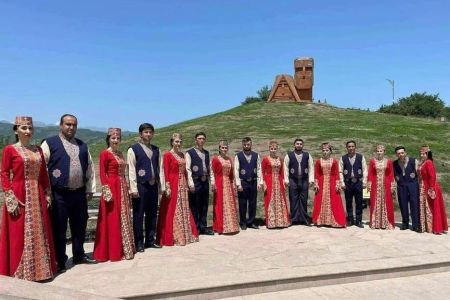 The participation of Artsakh ensembles in an international festival in Vienna was cancelled following the intervention of several foreign embassies
 Expert: It`s time for Armenia to move away from uncertainty and choose between West and East
 The Armenian Foreign Minister commented on the country`s return to work within the CSTO.
 The Artsakh Public Council expressed outrage at the UN Secretary-General`s behavior
 Lukashenko called for Armenia to assume the CIS presidency in 2029
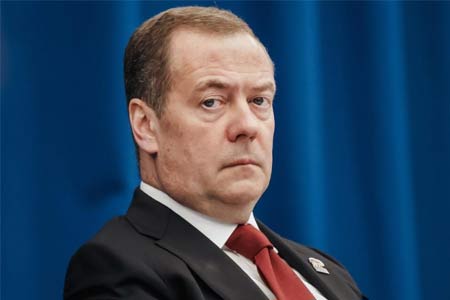 Dmitry Medvedev predicted a Ukrainian-like fate for Armenia amid the country`s shift in foreign policy
 Russian Security Council: In Armenia, they want to force Russian asset owners to dispose of their assets
 Zakharova: Russia ready to discuss with Armenia the prospects for expanding military cooperation as part of a review of bilateral ties
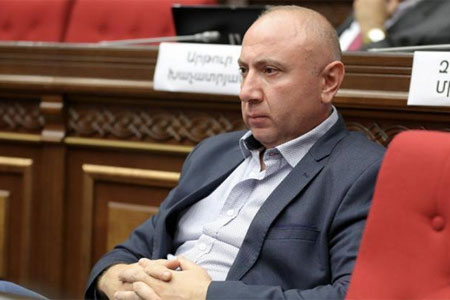 Tevanyan: Armenia, like Ukraine and Moldova, is being drawn into the EU’s global war
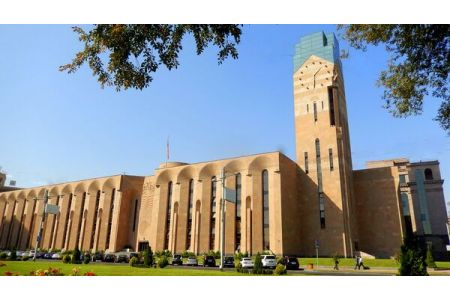 Yerevan City Hall is considering introducing a valet parking system in the city
 Expert: The circus surrounding the “Albanization” of Armenian culture in the presence of foreign ambassadors in occupied Artsakh is genocide
 Political scientist: If Russian-Armenian relations are destroyed, Turkey will take Russia`s place
 Political scientist: The Armenian public is simply obliged to significantly change the entire content of public discourse and struggle
 Cross tattoos are being removed from the skin of Christian prisoners in Azerbaijan by fire, according to a human rights activist.