
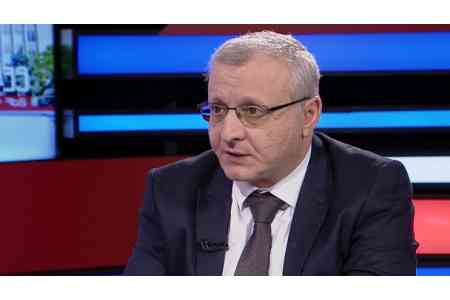
ArmInfo. The reality is that without practical and reliable security guarantees, Armenia's sovereignty remains vulnerable. Political scientist Suren Surenyants notes this on his YouTube channel, responding to an article by public figure and diplomat Zhirayr Liparityan, who expressed his opinion on the Washington agreements.
"With all due respect to the scientific and diplomatic merits of Zhirayr Liparityan, I still consider it necessary to respond to his article published today in "Aravot". He presents the Washington documents in an overly optimistic light. As rude as it may sound, it seems that the author of the article is not an outstanding scientist, but a government lobbyist. Now to the point. Liparityan writes: "Azerbaijan has undertaken an obligation to recognize the principle of territorial integrity of Armenia, based on the Alma- Ata Declaration of 1991; a goal that Yerevan has long been striving for."
However, experience shows that Azerbaijan has repeatedly violated the provisions of the same declaration, invading Armenian territory, seizing heights and blackmailing our country by force. If these obligations were violated without consequences in the past, how can we refer to the same document today as a reliable guarantee?" asks Surenyants.
He also touched on the issue of constitutional amendments, which Liparityan points to as a possible genuine concern on the part of Baku. "But this is not "genuine concern", but an instrument of open pressure, with the help of which Baku is trying to make Armenia's domestic legislation serve its interests. The Constitution of Armenia cannot be subject to the whims of Azerbaijan. Liparityan claims that these documents allow Armenians to "breathe a little more freely". But what kind of "peace" is this if the documents bypass the issues of the release of prisoners, delimitation/demarcation, the protection of Armenian cultural heritage and real security mechanisms. Ignoring these issues does not bring peace, but, on the contrary, aggravates the uncertainty. In the section dedicated to the opposition, Liparityan writes that it acts "out of the wrong motives" (of course, I also have doubts about the statements of some oppositionists, but Liparityan's overall assessment is harsh and unfair). It is Azerbaijan's aggressive rhetoric and constantly put forward new demands that form the opposition's fears. Ignoring them is not only political injustice, but also a weakening of Armenia's position in the issue of self-defense. Finally, Liparitian admits: "Even under the most favorable circumstances, US guarantees remain unstable." Even if the author claims that US guarantees are unstable, what is the real basis for Armenia's security? If Washington is not ready to ensure its obligations by force or political leverage, and Russia, in the author's opinion, has already proven its unreliability, then who and how will ensure our territorial integrity? Note that Liparitian, following many Armenian analysts, seems to compare the imperfect Russian security system with some ideal state, and not with the complete absence of this imperfect system. However, it is precisely this incorrect comparison that creates the illusion in public discourse that Russia is simply "failing," while the reality is that nothing will appear in its place. And when there is nothing, the danger is greater than any imperfection. Thus, Liparitian's article is built on overly optimistic assumptions. Meanwhile, the reality is that without practical and reliable security guarantees, Armenia's sovereignty remains vulnerable," says Suren Surenyants.
















 Armenian expert: Could modern Azerbaijan even exist without Russian and Soviet modernization?
 South Caucasus is entering a new phase of turbulence - ex-official
  Expert: Azerbaijan`s political leadership states `occupation of Armenia is their new national goal`
  Human rights activist Ruben Melikyan dismissed from YSU
 Zakharova: Armenia`s pro-EU pivot poses economic security risks to EAEU member states
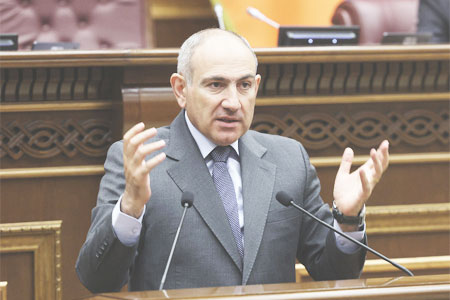 It`s time for South Caucasus countries to think of South Caucasus as single, unified region - RA premier
  Pashinyan: Armenia and Azerbaijan should leave each other alone
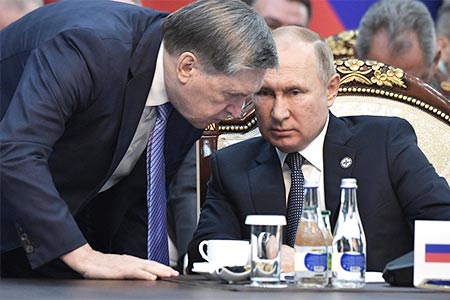 Moscow sees situation with Armenia as attempt to attack Russia-involving integration associations - Russian presidential aid
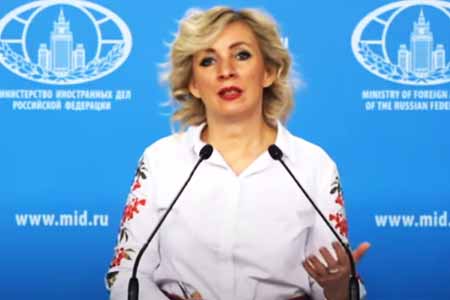 Zakharova: Armenia views relations with Russia as tool for financially securing reorientation toward EU
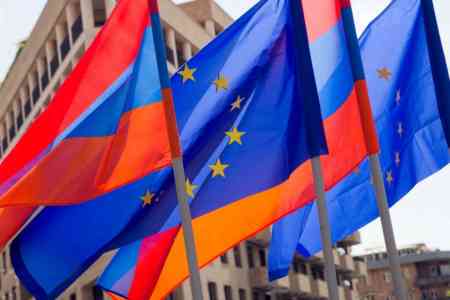 The Armenian Minister of Justice and the EU Ambassador discussed visa liberalization issues for Yerevan.
 Azerbaijan`s aggressive plans against Armenia became possible in wake of Pashinyan`s decisions on Artsakh - expert
  Zakharova: Russia sent a note of protest to Armenia over the act of vandalism at the "Mother Armenia" memorial in Gyumri
 Samvel Karapetyan proposes creating a post-election opposition coalition
 Artsakh`s Cultural Heritage Ombudsman called on Moscow to respond to destruction of WWII monuments by Azerbaijan in occupied NKR
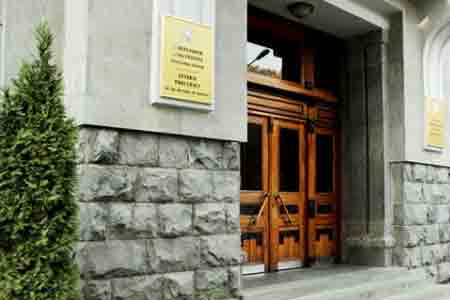 Prosecutor General`s Office petitions Central Electoral Commission for criminal prosecution of Robert Kocharyan
 Dutch Prime Minister expresses his support for Armenia`s democratic reform and economic diversification agenda