
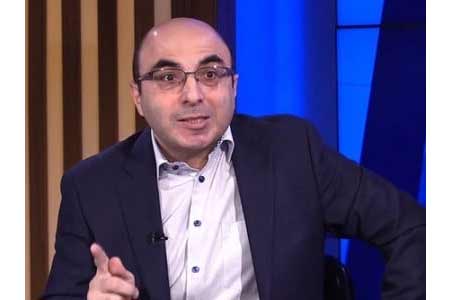
ArmInfo. Azerbaijan and the United States have achieved their desired outcomes and now will not "let go" Nikol Pashinyan until he fulfills his promise "on the ground", according to Vahe Hovhannisyan, a member of the Alternative Projects Group.
"The topic of early elections is being discussed impulsively and is not receiving a final decision, hanging in the air. Why is this so?", the expert asks. "In a country where one person can make any decision convenient for him without resistance, why should he hesitate on this issue or take into account other people's arguments that go against his own interests. Most likely, there are reasons for this>, he adds. As Hovhannisyan notes, after the visit to Ankara, the meeting in Abu Dhabi and, most importantly, the signings in Washington, a new reality has emerged. This raises the question: is a decision on early elections being made in Yerevan?
Undoubtedly, a narrow circle of people in power will want early elections, and they have their reasons for this. 1. There is a certain post-doc background, "the legend of the peace brought", and it is strong while it is fresh. Why delay? 2. The authorities have filled the prisons with activists, roughly speaking, they have moved activism from the streets to prisons. But this cannot last forever, "the shock of terrorism" has already passed, and the trials are starting to work ion favor of the defendants. 3. New potential forces have not yet formed, and it would be logical to hold elections without them. It seems that these three points alone are sufficient for the government to consider early elections (although this does not guarantee success either, but the next elections will likely be much more challenging). Despite this, the government has not yet made a decision. There seems to be something important holding back and blocking this process", the political scientist writes.
Looking at this at the upside, Vahe Hovhannisyan notes that after the Washington agreements, for the other two participants in the process, especially Trump, early elections would mean out of the agreements. The Trump administration will say: you signed, and you have a year ahead, work hard to implement what you signed. A lot can be accomplished in a year. Just imagine Trump's reaction if, right before the Nobel Prize ceremony, the person who signed the paper with him, with great pomp announces early elections and, most likely, leaves his post. Therefore, the American side will strongly oppose early elections>, the expert believes.
In the case of Aliyev, the situation is almost the same, of course, with some peculiarities. "The arguments of a narrow circle of people in power, who have worked well for several years, are now losing their relevance for Aliyev. It is at this point that the situation changes. Nikol will say: let's hold early elections so that I can reproduce myself and start working. But Aliyev has already received everything he wanted on paper. He is no longer interested in Nikol's reproduction, but in the implementation of the agreements that were made. A year is enough time to make many things irreversible and see them through to completion.
To Nikol's counterargument that if this happens again, I may not be elected, they silently reply: this is your problem. Aliyev and Trump have achieved what they wanted on paper, and now they are insisting that the signatory from the Armenian side begins implementing it, Hovhannisyan notes. He believes that if Nikol Pashinyan used to say: "If I am not there, you will not get what you want", now everyone has got what they wanted. "They no longer want just a signature, but the active implementation of what was signed. These are completely different things, and they want the implementation of both the agreements published and unpublished this year. They are not interested in Nikol's personal comfort or his personal prospects. And, of course, all of them together are not interested in the interests and desires of Armenia and its real people," Vahe Hovhannisyan concludes.



















 Expert: Azerbaijan`s political leadership states `occupation of Armenia is their new national goal`
  Expert: Armenian society falls into security trap of totalitarianism
 Expert: Pashinyan`s visit to Russia creates prerequisites for restoring dialogue, but thaw in relations is more symbolic
 Human rights activist Ruben Melikyan dismissed from YSU
 Pashinyan removed from INNOPROM guest list
 Zakharova: Armenia`s pro-EU pivot poses economic security risks to EAEU member states
 It`s time for South Caucasus countries to think of South Caucasus as single, unified region - RA premier
  Pashinyan: Armenia and Azerbaijan should leave each other alone
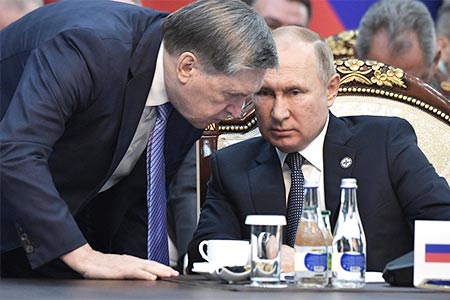 Moscow sees situation with Armenia as attempt to attack Russia-involving integration associations - Russian presidential aid
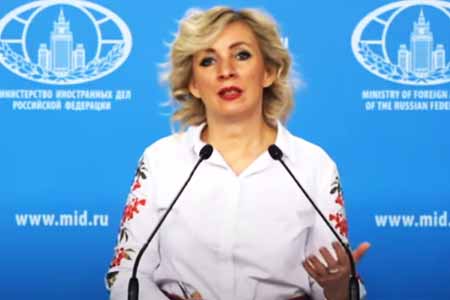 Zakharova: Armenia views relations with Russia as tool for financially securing reorientation toward EU
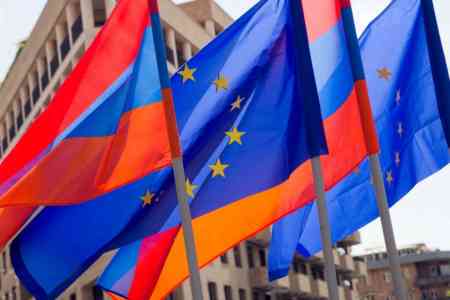 The Armenian Minister of Justice and the EU Ambassador discussed visa liberalization issues for Yerevan.
 Azerbaijan`s aggressive plans against Armenia became possible in wake of Pashinyan`s decisions on Artsakh - expert
 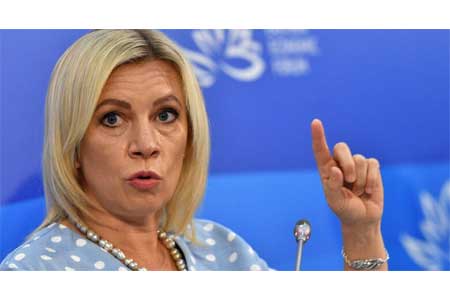 Zakharova: Russia sent a note of protest to Armenia over the act of vandalism at the "Mother Armenia" memorial in Gyumri
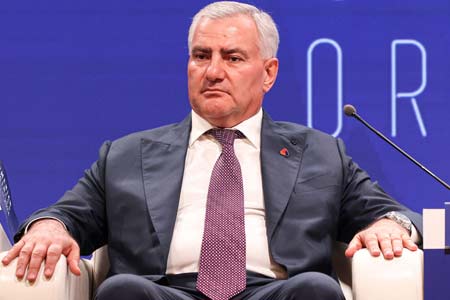 Samvel Karapetyan proposes creating a post-election opposition coalition
 Artsakh`s Cultural Heritage Ombudsman called on Moscow to respond to destruction of WWII monuments by Azerbaijan in occupied NKR
 Prosecutor General`s Office petitions Central Electoral Commission for criminal prosecution of Robert Kocharyan
 Dutch Prime Minister expresses his support for Armenia`s democratic reform and economic diversification agenda
 Heritage: It`s time for Armenia`s opposition to present people with legitimate alternative to power