

ArmInfo. State support programs don't even cover the basic needs of Artsakh residents; the burden falls primarily on NGOs and international organizations.
INNOBIZ Director Naira Margaryan made this statement in an interview with an ArmInfo correspondent on the sidelines of an event summing up the results of the BYUR project, implemented by INNOBIZ in partnership with the European Bank for Reconstruction and Development (EBRD). The project aims to integrate forcibly displaced Artsakh residents into Armenia. She noted that there are no official statistics on how many of our compatriots from Artsakh currently remain in Armenia. According to some estimates, approximately 19,000 Artsakh residents have left, mostly due to unemployment and inadequate living conditions. According to margaryan, there is currently a trend of deconcentration, from forcibly displaced Artsakh residents to anyone in need. "But, in reality, after such a large-scale disaster, according to international practice, it takes about 10 years to work with these people to help them integrate, ensure they have decent living conditions, and be able to perceive their new place of residence as their new homeland," the head of INNOBIZ pointed out.
Working with Artsakh residents as part of the BYUR project since the summer of 2024, Margaryan noted that our compatriots lived in more socially disadvantaged conditions, in a different culture. "They didn't have a market economy in the classical sense, and we need to help them integrate. This requires a comprehensive set of measures-not just providing shelter, which isn't being done yet, not just meager benefits, but truly ensuring the long-term integration of these people," she noted.
Introducing the BYUR project, Margaryan clarified that, with the support of the EBRD, an educational platform was created to train forcibly displaced Artsakh residents to launch their own microbusinesses. "We teach how to form an idea from scratch, build a small business, integrate, sell, organize it all, and calculate whether it makes sense or not. And the next step is trying to find funding for them," the head of the organization explained. During the first phase of the program, 1,800 people completed training on the platform, and were accompanied throughout the course by a mentor in each specialty. As a result, approximately 200 Artsakh residents have opened their own businesses here.
INNOBIZ, as she noted, intends to continue pursuing the path of attracting financial resources from other sources, including following the path of social entrepreneurship, in order to continue working and providing assistance to the people of Artsakh and other people in need.








 Opinion: The development of the Amulsar mine near the resort town of Jermuk is the beginning of an environmental disaster in Armenia
 Expert: The arrest of opposition figures in Armenia for social media posts is a systematic attempt to intimidate the public and suppress dissent.
 Azerbaijani Studies Expert: While Azerbaijan Prepares Its Generation for War, Aliyev’s Aide Calls on Armenia to Prepare Armenian Society for “Peace”
 Turkologist: Azerbaijan will never, under any circumstances, stop pressuring the Armenian people
 Political scientist: We need to move away from the question of "when" and replace it with more important questions
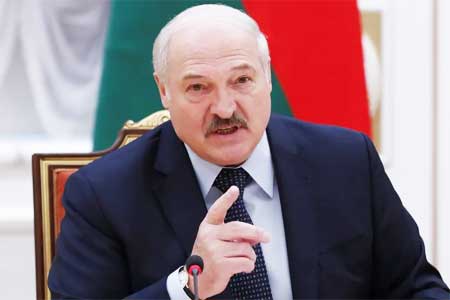 Lukashenko called for Armenia to assume the CIS presidency in 2029
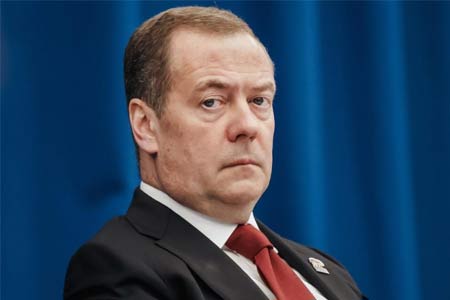 Dmitry Medvedev predicted a Ukrainian-like fate for Armenia amid the country`s shift in foreign policy
 Russian Security Council: In Armenia, they want to force Russian asset owners to dispose of their assets
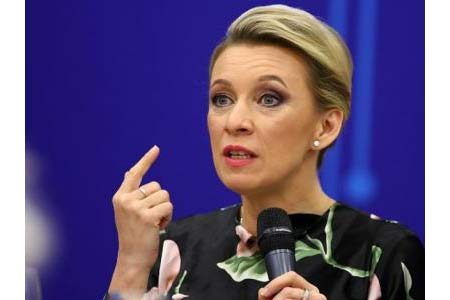 Zakharova: Russia ready to discuss with Armenia the prospects for expanding military cooperation as part of a review of bilateral ties
 Tevanyan: Armenia, like Ukraine and Moldova, is being drawn into the EU’s global war
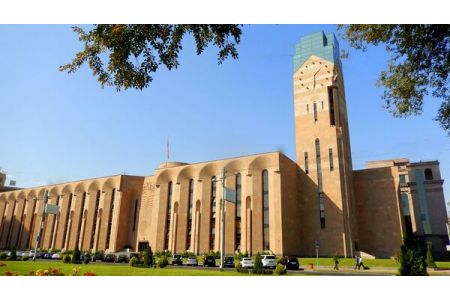 Yerevan City Hall is considering introducing a valet parking system in the city
 Expert: The circus surrounding the “Albanization” of Armenian culture in the presence of foreign ambassadors in occupied Artsakh is genocide
 Political scientist: If Russian-Armenian relations are destroyed, Turkey will take Russia`s place
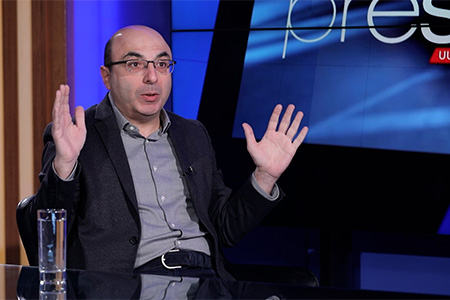 Political scientist: The Armenian public is simply obliged to significantly change the entire content of public discourse and struggle
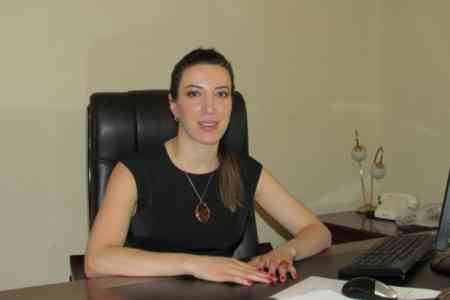 Cross tattoos are being removed from the skin of Christian prisoners in Azerbaijan by fire, according to a human rights activist.
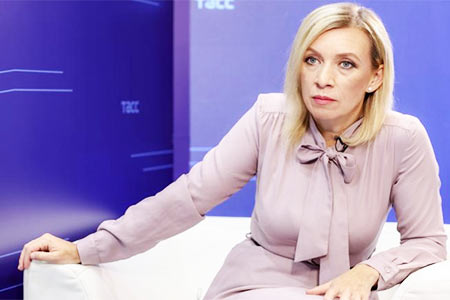 Zakharova: Armenia`s likely introduction of visas with Russia will be a step against Yerevan itself
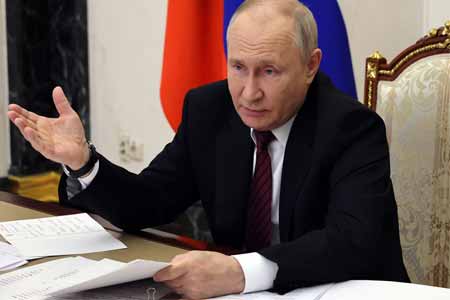 Putin: Armenia`s recognition of Karabakh as part of Azerbaijan in Prague has given Russia`s position on this issue an ambivalent character
 Putin: Armenia`s adoption of the law on EU accession means an announcement of its withdrawal from the Eurasian Economic Union
 Aram Vardevanyan: Public demands solutions, not apology scandals in Parliament