



ArmInfo. The war unleashed by the Donald Trump administration against Iran has led to a deep rift both within the United States and in relations between Washington and its allies in Europe and Asia. Malek Dudakov, political scientist, expert on American studies, and publicist, made this statement during a Moscow-Yerevan video conference "The Middle East Crisis and Regional-American Relations," noting that Donald Trump's popularity continues to decline since the outbreak of the conflict with Iran.
According to the expert, Trump has effectively lost support, and no country is rushing to provide assistance to the United States, including European states, Japan, and South Korea. "The main factor driving the splits influencing Trump's policies is internal conflict. It has a bipartisan nature: Democrats are almost universally opposed to the operation in Iran. It's worth noting that such anti-war rhetoric once helped Democrats win the election, and now they hope to repeat that success," Dudakov believes.
Furthermore, the political scientist noted that a serious rift is also evident within the Republican Party itself. He noted that many of those who shape public opinion in the US, such as Tucker Carlson, Stephen Bannon, and Megyn Kelly, openly criticize Trump for his campaign against Iran. "Thus, Trump is losing support among his audience, which once contributed to his victory in the November 2024 election. We also see polls showing that two-thirds of Americans are against war with Iran and don't understand why it was provoked," the expert emphasized. Dudakov also noted the strong correlation between fuel prices in the US and the approval ratings of current presidents. He explained that the higher the prices, the lower the ratings. "This also negatively impacts Trump: diesel prices have reached their highest levels since 2022, with the average fuel cost exceeding $4 per gallon, which is high by American standards. Meanwhile, Trump has found himself in a deadlock in the Middle East, with no apparent way out, and the Strait of Hormuz still elusive," the political scientist noted.
Trump's rating, according to the expert, was also affected by the postponement of his trip to China. "Because what was happening against Iran was intended to create issues for China, since the lion's share of Iranian oil goes to China. Trump, with this attack, was trying to seize these oil flows in order to then blackmail China and unblock rare earth metal supplies from the United States, which the Americans are currently facing problems with, since China controls 80% of the rare earth market," the political scientist recalled. He added that Trump had to postpone the trip because he essentially had nothing to travel with and no reason to go. Since, as Dudakov noted, Iran has not been quickly defeated and the Strait of Hormuz remains closed, Trump is literally forced to humbly plead with China itself to facilitate the unblocking of the strait. In this regard, the expert noted that he does not rule out the possibility that this visit may ultimately never take place, which would also have long-term consequences for US influence worldwide.
Speaking about the possibility of Trump's impeachment, he recalled that American history has seen previous attempts to impeach presidents, which have ended unsuccessfully. The political scientist explained that this is due to the high threshold for impeachment. "Democrats are certainly raising the topic of impeachment now, but it's clear they don't have that option, as they're in the minority and don't control Congress. Meanwhile, there are proposals to invoke the 25th Amendment to the US Constitution, which allows for the removal of a president from office if he or she is incapacitated. I don't think this is a threat to Trump right now, but the Democrats will actively resort to it," the expert concluded.




























 Political Scientist: As long as the opposition remains silent, Pashinyan can use Plan B and secure a constitutional majority
 US-Iranian memorandum more beneficial for Iran from political and economic perspective - expert
  Political analyst: While Pashinyan pledges peace with Azerbaijan, Baku continues promoting the "Western Azerbaijan" project
 Political analyst: In light of new realities, Yerevan may propose advancing peace process with Baku without constitutional referendum
 Present-day geopolitical competition shifts from territorial control to infrastructure flows
 Zakharova: Russia sent a note of protest to Armenia over the act of vandalism at the "Mother Armenia" memorial in Gyumri
 Artsakh`s Cultural Heritage Ombudsman called on Moscow to respond to destruction of WWII monuments by Azerbaijan in occupied NKR
 Prosecutor General`s Office petitions Central Electoral Commission for criminal prosecution of Robert Kocharyan
 Dutch Prime Minister expresses his support for Armenia`s democratic reform and economic diversification agenda
 Heritage: It`s time for Armenia`s opposition to present people with legitimate alternative to power
 RA Security Council Sec, Assistant to President of Azerbaijan hold negotiations in Dilijan
  CEC Neutralizes PAP: Three Political Forces to Enter Armenian Parliament Following Election Vote
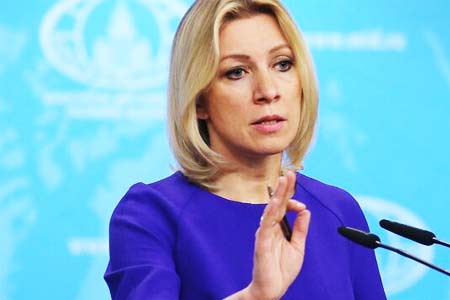 Elections in Armenia were accompanied by unprecedented pressure on opposition, RF MFA spokesperson claims
 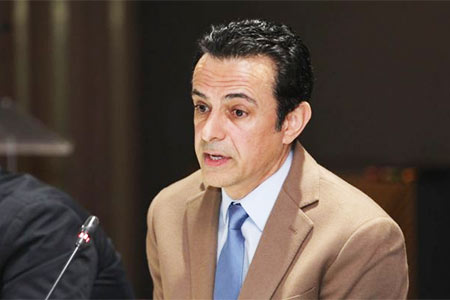 Expert: Even OSCE observers recorded numerous violations during elections in Armenia
  Moscow to await official results of Armenian elections - Peskov
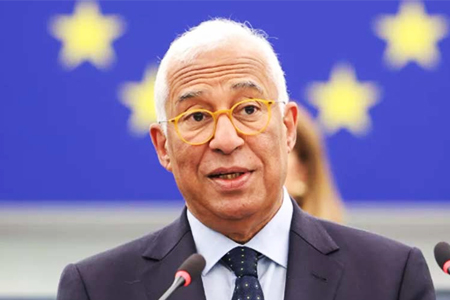 Antonio Costa: EU to deepen its partnership with Armenia, expanding cooperation in energy, trade, and digitalization
 Israeli MFA congratulates Pashinyan
 Turkish MFA comments on results of Armenian elections
  Zakharova: International observers cannot ignore `flagrant violations` in Armenian elections