



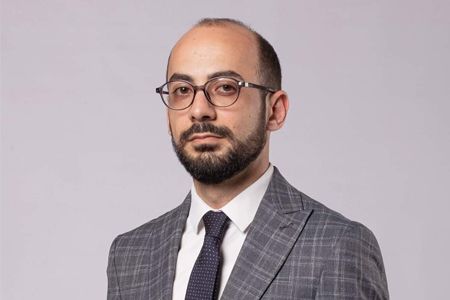
ArmInfo.Elections in Armenia today have become not a battle of political ideas, but a battle of financial resources, which political forces use to attract voters, as stated by public finance management specialist Artak Kyurumyan at a press conference titled "Who Finances Politics? Risks Ahead of Elections." in Yerevan.
In this vein, the expert touched on the changes that came into effect in 2024, according to which the threshold for donations to the election fund has increased from 2.5 million drams to 10 million drams, and the new reporting form only contains the first and last name. Kyurumyan noted that these changes could have negative consequences, as the National Assembly of Armenia has many people with identical first and last names, making it difficult to identify donors. "That's why other data exists to identify a person, and in this sense, just having a first and last name creates problems," he noted.
Te expert noted that higher limits open the door for "shadow sums" to penetrate the political process, creating volatility for both the ruling party and the opposition,s financial flows could spiral out of control. "Essentially, it creates a problem with monitoring income and expenditures, meaning there's no way to ensure that we're dealing with a fair political struggle in the elections," the expert noted.
I this regard, he called for attention to who initiated the increase in the donation threshold, recalling that the initiative came from the ruling Civil Contract party. Kyurumyan noted that such actions raise doubts, raising questions about the possible hidden agendas of these decisions. "Businessmen often finance the authorities to secure future loyalty from state structures," Kyurumyan explained. "This suggests a hidden financial benefit or a pre-arranged agreement with the government. Of course, funding issues also affect other political forces, but I focus specifically on the government, since they manage public finances."
According to the expert, investigative journalism plays a significant role in this context, as it, unlike the agencies responsible for it, uncovers such cases. As Kyurumyan noted, a lack of attention to this issue could lead to a loss of public confidence in the fairness of elections. "In essence, people see that elections have long ceased to be a battle of ideologies, but have become a battle of financial resources. In 2018, the people of Armenia, when making their choice, rejected the old, unfair governance and strove for justice. However, since the people were unable to achieve this, their disappointment became so great that elections have now become an arena for a battle of financial resources, used by political forces to attract voters. Therefore, in these elections, we expect maximum use of communication technologies to motivate voters to vote for one force or another," the expert believes.
Speaking about what needs to be done in this case, Kyurumyan noted that changes are necessary. He said the country must not ignore a number of challenges facing it, and political forces must not simply propose something in the ideological struggle, but also explain how to implement these proposals to voters and provide financial accountability.
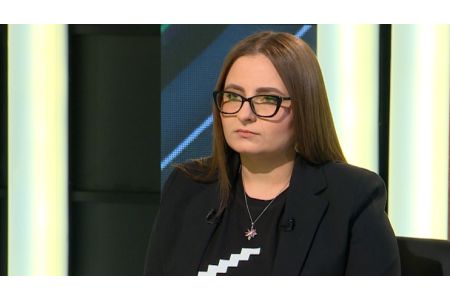
In turn, political scientist Tigran Mugnetsyan, added that the new system fosters dangerous dependencies. Under the 2024 rules, donations are routed through parties before reaching election funds, effectively masking the original source of the money from the voter.
Furthermore, data regarding donors will only be made public the following year-long after the ballots are cast. "Transparency is only achieved if a voter knows who is funding a party before they vote," Mugnetsyan stated, adding that the law was passed without adequate public debate. "The problem is also that there has been no adequate discussion of these changes, and no justification has been provided for the imperative reasons behind them. It turns out that these changes open up opportunities for those who currently have significant financial resources," Mugnetsyan concluded.





















 Political Scientist: As long as the opposition remains silent, Pashinyan can use Plan B and secure a constitutional majority
 US-Iranian memorandum more beneficial for Iran from political and economic perspective - expert
  Political analyst: While Pashinyan pledges peace with Azerbaijan, Baku continues promoting the "Western Azerbaijan" project
 Political analyst: In light of new realities, Yerevan may propose advancing peace process with Baku without constitutional referendum
 Present-day geopolitical competition shifts from territorial control to infrastructure flows
 Artsakh`s Cultural Heritage Ombudsman called on Moscow to respond to destruction of WWII monuments by Azerbaijan in occupied NKR
 Prosecutor General`s Office petitions Central Electoral Commission for criminal prosecution of Robert Kocharyan
 Dutch Prime Minister expresses his support for Armenia`s democratic reform and economic diversification agenda
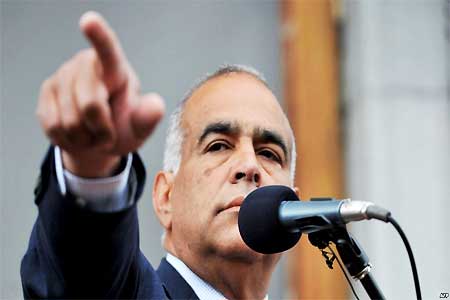 Heritage: It`s time for Armenia`s opposition to present people with legitimate alternative to power
 RA Security Council Sec, Assistant to President of Azerbaijan hold negotiations in Dilijan
 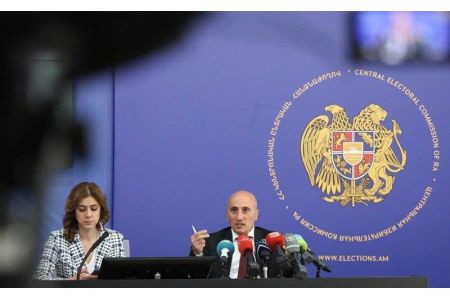 CEC Neutralizes PAP: Three Political Forces to Enter Armenian Parliament Following Election Vote
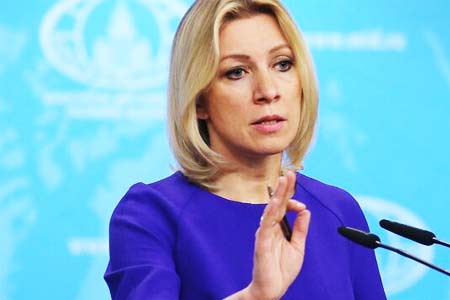 Elections in Armenia were accompanied by unprecedented pressure on opposition, RF MFA spokesperson claims
 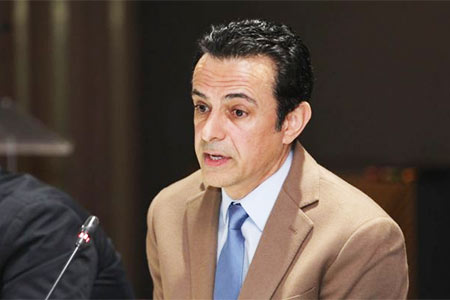 Expert: Even OSCE observers recorded numerous violations during elections in Armenia
  Moscow to await official results of Armenian elections - Peskov
 Antonio Costa: EU to deepen its partnership with Armenia, expanding cooperation in energy, trade, and digitalization
 Israeli MFA congratulates Pashinyan
 Turkish MFA comments on results of Armenian elections
  Zakharova: International observers cannot ignore `flagrant violations` in Armenian elections