


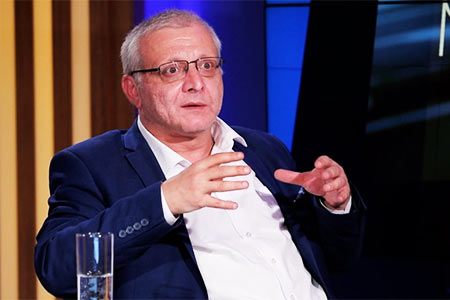
ArmInfo. Armenia's ruling Civil Contract party is attempting to legitimize its unconstitutional program through elections. Political scientist Suren Surenyants shares a similar view.
On his Facebook page, the expert noted that the Civil Contract party's election program calls for the "resignation" of the Catholicos, followed by the election of a locum tenens, amendments to the charter, and the election of a new Catholicos, presenting this as a "reform" of the church. "This is not a reform program, but a program of harsh political interference. The Constitution of the Republic of Armenia clearly defines the separation of state and church. This is a fundamental principle that precludes state interference in the internal affairs of the church. The election or resignation of the Catholicos falls under the exclusive jurisdiction of the church. Under these circumstances, the inclusion of such a provision in the ruling party's platform effectively means the government is declaring its interference in the governance of the church at the political level. This is already linked to the issue of maintaining constitutional order," emphasized Suren Surenyants.
Furthermore, the political scientist points out that an attempt is being made to legitimize this program through elections, presenting it as an initiative that has gained "public trust." Thus, everything is being done to transform the electoral mandate into a political justification for steps that violate constitutional restrictions. However, no election result can remove the boundaries established by the RA Constitution. "In a democracy, elections provide a mandate for political decisions, but they cannot overturn constitutional prohibitions. In this situation, opposition response must be systemic. First, it is necessary to clearly articulate the essence of the problem on a political platform, presenting it as an attempt to violate the constitutional order. Second, it is necessary to apply a range of legal instruments, raising the question of the constitutionality of government statements and possible actions through the relevant bodies. Third, it is necessary to create a broad public and expert community to establish that this is a violation of state-church relations, which is dangerous for the state system. Finally, the opposition must be able to turn this issue into a matter of political responsibility, forcing the government to provide a clear response to its programmatic statements," the political scientist concluded.























 Political analyst: In light of new realities, Yerevan may propose advancing peace process with Baku without constitutional referendum
 Present-day geopolitical competition shifts from territorial control to infrastructure flows
 Expert: Public participation in decision-making essential for sustainable urban development
  Politician: Statement by Armenia`s third president may deprive opposition of only political basis for ousting Pashinyan
 Heritage: It`s time for Armenia`s opposition to present people with legitimate alternative to power
 RA Security Council Sec, Assistant to President of Azerbaijan hold negotiations in Dilijan
 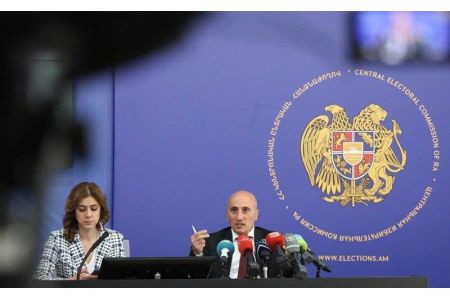 CEC Neutralizes PAP: Three Political Forces to Enter Armenian Parliament Following Election Vote
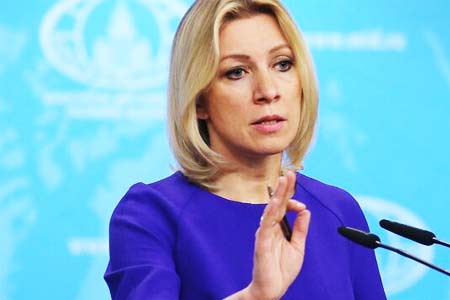 Elections in Armenia were accompanied by unprecedented pressure on opposition, RF MFA spokesperson claims
 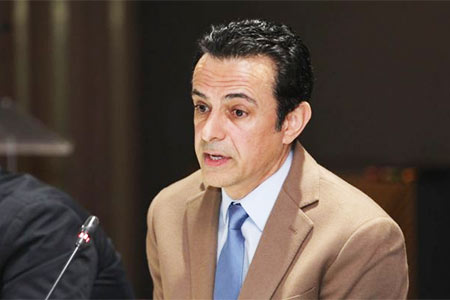 Expert: Even OSCE observers recorded numerous violations during elections in Armenia
  Moscow to await official results of Armenian elections - Peskov
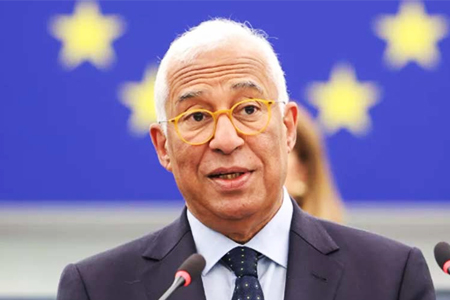 Antonio Costa: EU to deepen its partnership with Armenia, expanding cooperation in energy, trade, and digitalization
 Israeli MFA congratulates Pashinyan
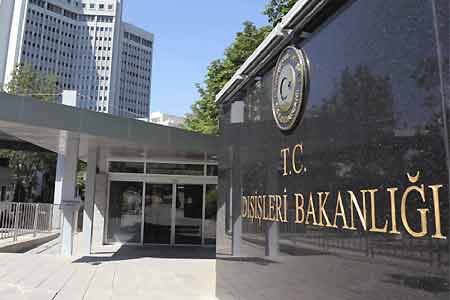 Turkish MFA comments on results of Armenian elections
  Zakharova: International observers cannot ignore `flagrant violations` in Armenian elections
 Strong Armenia to issue statement after vote count completed - Narek Karapetyan
 Russian Senator: Opposition complaints regarding election violations by ruling party remain unanswered
 RA premier receiving congratulations on his victory in parliamentary elections