

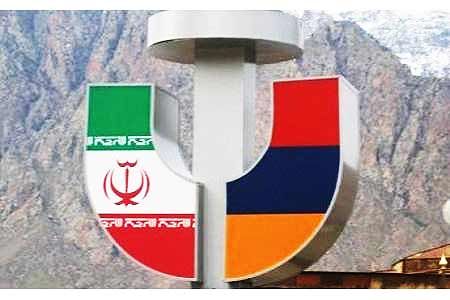
ArmInfo. For over 2,500 years, Armenia has remained a priority for Iran's interests in the Caucasus. For Iran, Armenia is a window to Europe, while Iran is Armenia's gateway to Asia and the Persian Gulf. This is stated in an article by Mikhail Aharonyan, an orientalist expert at the International Information and Analytical Center (IIAC)
The expert notes that the modern Republic of Armenia and the Islamic Republic of Iran are building harmonious, mutually beneficial cultural, trade, economic, and military-political relations. "It is in this context that Tehran's painful reaction to the so-called 'Zangezur Corridor' or 'Trump Road' should be viewed. In Iran, such projects are perceived not simply as infrastructure initiatives, but as geopolitical tools capable of altering the balance of power in the South Caucasus and weakening direct ties between Tehran and Yerevan. For Iran, Armenia is not only a neighbor but also a strategic buffer, allowing it to curb the influence of Turkey and Azerbaijan and circumvent regional isolation. Therefore, any attempts to change the status quo provoke a harsh reaction," Aharonyan believes.
According to him, Yerevan, for its part, understands the value of relations with Iran, but is forced to balance between various centers of power-Russia, the West, and regional players. The expert is confident that abandoning transport projects is impossible, but ignoring Tehran's interests is also risky. The orientalist believes that in the medium term, the parties will reach a compromise model: any new transport routes will be implemented taking into account Iranian interests and without harming Armenian-Iranian trade.
"Thus, Armenian-Iranian relations are not just neighbors, but a historically established alliance based on mutual benefit, cultural affinity, and pragmatic geopolitics. And despite external pressure and new regional projects, this connection, proven over millennia, is unlikely to be severed. It is important to emphasize that Armenian-Iranian relations today have not only a historical and cultural foundation, but also a measurable economic and energy one," the expert continued.
To support his assertions, the orientalist cited statistics. According to him, according to recent data, trade turnover between Armenia and Iran has been steadily growing and has already approached the $1 billion mark. In 2024, it amounted to approximately $737 million, an increase of 6.5% compared to the previous year, and in 2025, the two sides have effectively reached the target of $1 billion.
"However, the structure of this trade is extremely specific: Armenia imports significantly more than it exports. In 2025, the negative trade balance reached almost $600 million, highlighting the Armenian economy's dependence on Iranian resources. Energy remains a key element of cooperation. The strategic "gas for electricity" program has been in effect since 2009 and has been extended until 2030. Under this program, Iran supplies Armenia with hundreds of millions of cubic meters of gas annually. Thus, in 2024, the volume of supplies exceeded 440 million cubic meters, and in 2025, almost 476 million cubic meters, demonstrating steady growth. In return, Armenia exports electricity: in 2024 alone, supplies exceeded 370 million kWh, which is higher than the average of previous years.
The unique feature of the agreement is the fixed formula: 1 cubic meter of Iranian gas = 3 kWh of Armenian electricity, making this model one of the most sustainable barter schemes in the region," Aharonyan noted.
At the same time, he is confident that the potential for cooperation is far from exhausted, as the Iran- Armenia gas pipeline's capacity is estimated at approximately 1 billion cubic meters of gas per year, but is only partially utilized. According to the orientalist, this means that with the necessary political will, the parties could significantly increase the volume of cooperation.
He then drew attention to the human dimension of relations, noting that in 2024 alone, more than 276,000 Armenian citizens visited Iran, and approximately 176,000 Iranians visited Armenia, with the flow of Iranian tourists increasing by approximately 20%. "In fact, Iran is not just a neighbor for Armenia today, but a critically important economic partner. Its share accounts for approximately 5% of Armenia's imports, while exports to Iran remain limited and do not exceed 1%, which further highlights the asymmetry of the relationship. In terms of energy, the dependence is even more obvious: despite the dominance of Russian gas (over 80% of the market), the Iranian route plays the role of a strategic alternative, allowing Yerevan to maintain a minimal level of diversification," the orientalist continued.
Aharonyan believes that under these conditions, a complex architecture of interests is emerging in which neither side can act unilaterally. "Most likely, in the medium term, Armenia and Iran will move not to open confrontation, but to a model of covert coordination of interests. Yerevan will strive to implement transportation projects, including the so-called 'Zangezur Corridor,' but in a configuration that will not lead to Iran's strategic isolation. For Tehran, it is fundamentally important to maintain a land connection with Armenia as the only Christian and relatively neutral partner in the South Caucasus," the orientalist asserts.
He believes that the loss of this corridor would mean increased geopolitical pressure from Turkey and Azerbaijan, as well as the potential emergence of infrastructure controlled by pro-Western forces directly on Iran's northern border.
The expert emphasized that this is precisely why Iran is consistently increasing its presence in the region not only diplomatically but also in terms of infrastructure. According to him, this involves developing transportation routes within the international North-South corridor, modernizing border infrastructure, and deepening energy cooperation with Armenia. "Armenia, in turn, finds itself in a classic 'geopolitical nodal point,' where the interests of several players-Russia, Iran, the EU, the US, Turkey, and China-intersect. Under these circumstances, its strategy is not to choose one side, but to try to extract maximum benefit from the competition between them. However, Iran remains the partner that doesn't impose ideological conditions on Yerevan and doesn't demand a radical transformation of its foreign policy. This makes Armenian-Iranian relations more stable compared to other areas where the level of political turbulence is significantly higher," the expert believes.
Thus, he continued, despite external pressure and the emergence of new infrastructure initiatives, the fundamental logic of Armenian-Iranian relations remains unchanged: it is an alliance based not on declarations, but on mutual need.
From his words, based on the above, it can be said with confidence that Armenian-Iranian relations are not simply a matter of historical inertia or cultural affinity, but a coldly calculated geopolitical calculation.
"For Iran, Armenia has several key significances. First, it is the only land gateway to the Caucasus and beyond to Eurasia, not controlled by Turkey or pro-Western forces. Through Armenia, Tehran gains the ability to circumvent regional isolation and maintain alternative trade and logistics routes.
Second, Armenia serves as a buffer zone, preventing the formation of a unified Turkic corridor from Turkey to the Caspian Sea and further to Central Asia. Strengthening this corridor directly contradicts Iran's strategic interests and threatens its position in the region," the expert noted.
Third, he added, it is a tool for energy and economic diversification, allowing Iran to export resources and integrate into regional markets despite sanctions pressure.
Fourth, Aharonyan believes, Armenia is a politically convenient partner, not involved in anti-Iranian alliances and making no ideological demands, making cooperation stable and predictable.
"Finally, for Iran, Armenia is an element of strategic depth in the northern direction, allowing Tehran to maintain influence in the South Caucasus and prevent competing forces from completely dominating. This is why, for Iran, Armenia is not just a neighbor, but a critical element of the regional security and economic architecture. In this context, any projects that could weaken or sever this connection are perceived by Tehran as a direct threat to national interests. Therefore, regardless of external pressure, the Armenian- Iranian alliance will persist-not as a tribute to the past, but as a necessity dictated by the geopolitics of the present," Aharonyan concluded.

























 Expert: The arrest of opposition figures in Armenia for social media posts is a systematic attempt to intimidate the public and suppress dissent.
 Azerbaijani Studies Expert: While Azerbaijan Prepares Its Generation for War, Aliyev’s Aide Calls on Armenia to Prepare Armenian Society for “Peace”
 Turkologist: Azerbaijan will never, under any circumstances, stop pressuring the Armenian people
 Political scientist: We need to move away from the question of "when" and replace it with more important questions
 International Law Specialist: Azerbaijan intends to initiate legal proceedings against Armenia by sentencing Armenian prisoners
 Dmitry Medvedev predicted a Ukrainian-like fate for Armenia amid the country`s shift in foreign policy
 Russian Security Council: In Armenia, they want to force Russian asset owners to dispose of their assets
 Zakharova: Russia ready to discuss with Armenia the prospects for expanding military cooperation as part of a review of bilateral ties
 Tevanyan: Armenia, like Ukraine and Moldova, is being drawn into the EU’s global war
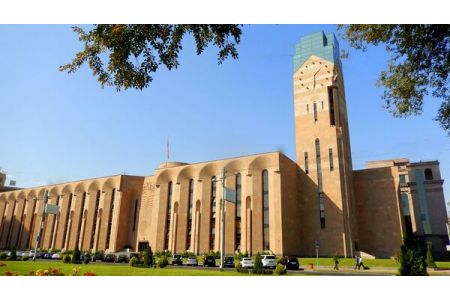 Yerevan City Hall is considering introducing a valet parking system in the city
 Expert: The circus surrounding the “Albanization” of Armenian culture in the presence of foreign ambassadors in occupied Artsakh is genocide
 Political scientist: If Russian-Armenian relations are destroyed, Turkey will take Russia`s place
 Political scientist: The Armenian public is simply obliged to significantly change the entire content of public discourse and struggle
 Cross tattoos are being removed from the skin of Christian prisoners in Azerbaijan by fire, according to a human rights activist.
 Zakharova: Armenia`s likely introduction of visas with Russia will be a step against Yerevan itself
 Putin: Armenia`s recognition of Karabakh as part of Azerbaijan in Prague has given Russia`s position on this issue an ambivalent character
 Putin: Armenia`s adoption of the law on EU accession means an announcement of its withdrawal from the Eurasian Economic Union