

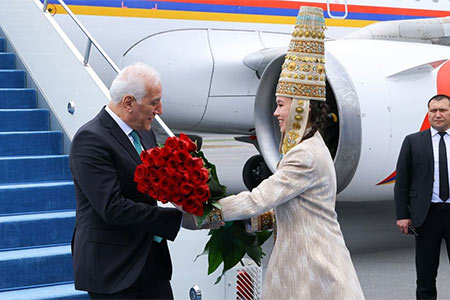
ArmInfo. Armenia faces serious challenges related to climate change: despite its share of greenhouse gas emissions being less than 0.01%, the average temperature in the country has increased by more than 1 degree Celsius in recent decades. This was stated by Armenian President Vahagn Khachaturyan on April 22, speaking at the plenary session of the Regional Ecological Summit (RES), currently underway in Astana.
Referring to forecasts, he noted that this increase will continue until mid-century. Khachaturyan noted that climate change has also led to very serious natural disasters, such as floods and droughts, causing significant environmental losses and threatening the lives and livelihoods of the population. "All this leads to a shortage of water resources. Access to drinking water is currently limited, especially in rural and remote areas. Water security now also impacts agriculture, agricultural producers, and, in general, the well- being of the people and the population," the Armenian President noted. In this regard, he stated that Armenia welcomes Kazakhstan's initiative in the water sector (the creation of the International Water Organization - ed.) to launch global consultations with international partners to strengthen cooperation for more effective water resource management. He stated that Armenia will actively participate in these consultations. "Armenia has demonstrated and continues to demonstrate that there is room for international cooperation and that we must contribute to the global environment. We have our own targets for reducing greenhouse gas emissions by 35% compared to 1990 levels, with international support, of course. Armenia has undertaken these commitments understanding and accepting that we have limitations, and only with international cooperation will we be able to achieve our goals in terms of risk mitigation and adaptation in the interests of global justice and shared responsibility. Rising temperatures are one of the drivers of biodiversity loss and ecosystem destruction. And all of this will impact food security, public health, and so on. Therefore, in this regard, it is crucial to strengthen and intensify global efforts to preserve and promote biodiversity," Khachaturyan noted.
He recalled that this fall, Armenia will host the 17th meeting of the Conference of the Parties on Biological Diversity (COP17). "This demonstrates that even small countries can make significant commitments to enhancing global biodiversity. Armenia has high hopes that we will see you all and the leaders of other countries in Yerevan this October to conduct monitoring and identify new measures for further action to protect the environment and nature," the Armenian leader noted.
He emphasized that international cooperation, the mobilization of global financial resources, and the exchange of expertise and technology are vital for addressing global environmental challenges, particularly in combating climate change, ensuring food security, and promoting more efficient water use. "Armenia is ready to cooperate with everyone, both in the region and beyond. We are ready to share our own experience and our own developments, because only together can we protect our planet Earth and ensure sustainability and prosperity for our society for generations to come," he concluded.
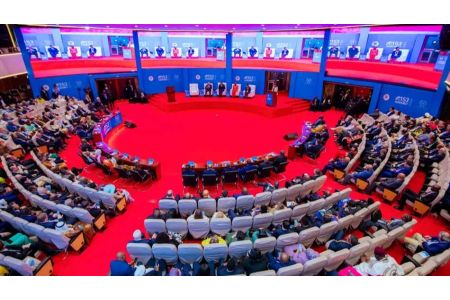
On April 22, the Regional Environmental Summit 2026, initiated by Kazakh President Kassym-Jomart Tokayev and designed to unite the countries of Central Asia to develop common solutions to combat climate change in partnership with the UN, opened in Astana.
The goal of the 2026 Regional Economic Cooperation Summit is to create an open platform for developing joint and practical solutions to climate and environmental challenges, bringing together a wide range of countries, regions, and partners, and demonstrating, using the example of Central Asia, how interregional cooperation strengthens global efforts.
The summit received broad support from international partners, including the UN, the Secretariats of the three Rio Conventions (the UN Framework Convention on Climate Change (UNFCCC), the UN Convention on Biological Diversity (CBD), and the UN Convention to Combat Desertification (UNCCD)), UNECE, UNDP, UN-Habitat, UNEP, UNICEF, UNFPA, FAO, UNESCO, UNIDO, WMO, ILO, OECD, IEA, IRENA, ADB, WB, IMWI, SWITCH-Asia, and other organizations. In particular, the United Nations expressed support in General Assembly Resolution 78/147 of 19 December 2023, "Central Asia Facing Environmental Challenges: Strengthening Regional Solidarity for Sustainable Development and Prosperity."
















 Azerbaijani Studies Expert: While Azerbaijan Prepares Its Generation for War, Aliyev’s Aide Calls on Armenia to Prepare Armenian Society for “Peace”
 Turkologist: Azerbaijan will never, under any circumstances, stop pressuring the Armenian people
 Political scientist: We need to move away from the question of "when" and replace it with more important questions
 International Law Specialist: Azerbaijan intends to initiate legal proceedings against Armenia by sentencing Armenian prisoners
 Dmitry Medvedev predicted a Ukrainian-like fate for Armenia amid the country`s shift in foreign policy
 Russian Security Council: In Armenia, they want to force Russian asset owners to dispose of their assets
 Zakharova: Russia ready to discuss with Armenia the prospects for expanding military cooperation as part of a review of bilateral ties
 Tevanyan: Armenia, like Ukraine and Moldova, is being drawn into the EU’s global war
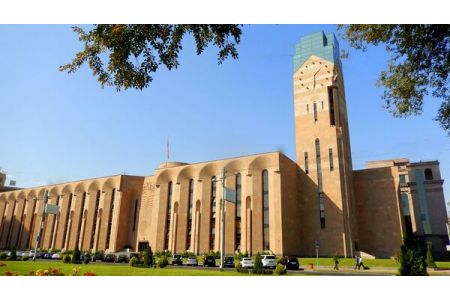 Yerevan City Hall is considering introducing a valet parking system in the city
 Expert: The circus surrounding the “Albanization” of Armenian culture in the presence of foreign ambassadors in occupied Artsakh is genocide
 Political scientist: If Russian-Armenian relations are destroyed, Turkey will take Russia`s place
 Political scientist: The Armenian public is simply obliged to significantly change the entire content of public discourse and struggle
 Cross tattoos are being removed from the skin of Christian prisoners in Azerbaijan by fire, according to a human rights activist.
 Zakharova: Armenia`s likely introduction of visas with Russia will be a step against Yerevan itself
 Putin: Armenia`s recognition of Karabakh as part of Azerbaijan in Prague has given Russia`s position on this issue an ambivalent character
 Putin: Armenia`s adoption of the law on EU accession means an announcement of its withdrawal from the Eurasian Economic Union
 Aram Vardevanyan: Public demands solutions, not apology scandals in Parliament
 Arrested Armenian oligarch on economy and new jobs