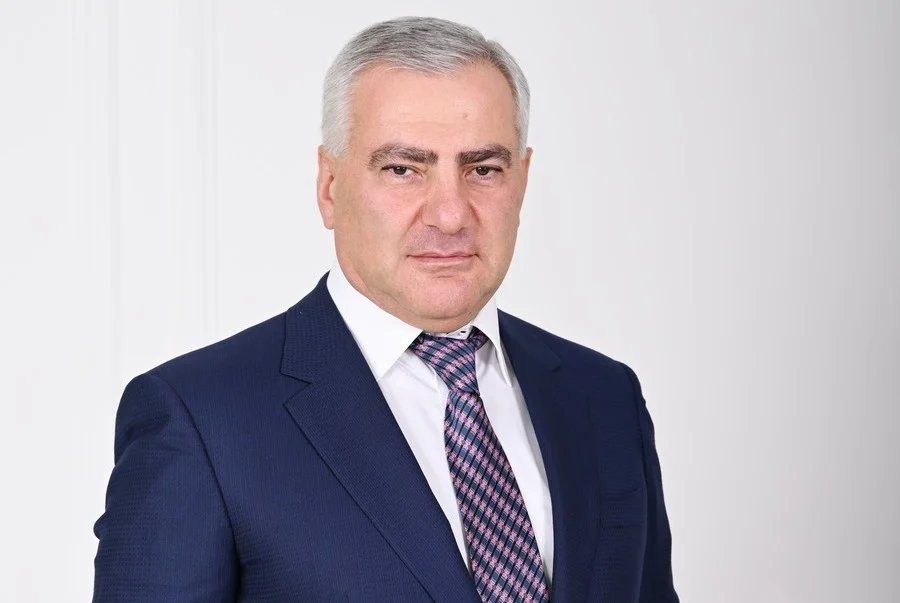
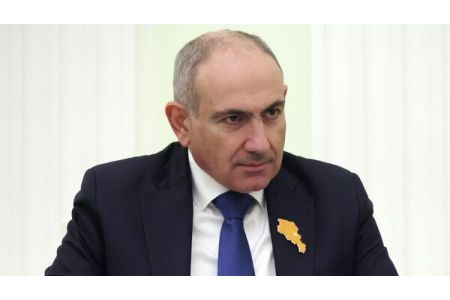
ArmInfo. The current Armenian authorities are attempting to justify the perpetrators of the Armenian Genocide; moreover, they are attempting to equate the victim with the executioner. This is stated in the message of Samvel Karapetyan, founder and leader of the Strong Armenia party, on the occasion of the 111th anniversary of the Armenian Genocide.
"My dear Armenian people, the strong Armenian people, who have endured many tragedies but have risen again. Today, we are all united by one sorrow and one pain - the Armenian Genocide. We are the descendants of those Armenians who fell victim to the most heinous crime against humanity - genocide. We are witnesses to a painful and unbelievable reality for Armenians," Karapetyan wrote. The party leader recalled that the current Armenian authorities are attempting to justify the perpetrators of the Armenian Genocide, and even more so, they are attempting to equate the victim with the executioner. Furthermore, as Karapetyan noted, they openly declare that international recognition of the Armenian Genocide is no longer a priority of their foreign policy. "But they forget or ignore an important fact: such weak people come and go, but the historical memory of the Armenian people remains. It is eternal. This memory is embedded in our genetic code," the leader of Strong Armenia stated.
At the same time, he noted that the Armenian people cannot change their geography and neighbors. Therefore, according to Karapetyan, regional stability and peace are a priority for the country. "The rapid development of Armenia's economy leaves us no other choice. Therefore, closing borders in the 21st century will inevitably impact the country's natural development. We advocate establishing and maintaining diplomatic relations with Turkey based on the fundamental principles of international law, without compromising historical truth and national dignity," the party leader noted. Karapetyan is convinced that a nation without memory is like a rootless tree, which can quickly break and fall. "But we are not that kind of nation; we are like a thousand-year-old oak tree, whose roots reach deep into the earth. We are firmly attached to our land. Dear compatriots, history leaves us no choice but to be strong. We see that when we are weak and stubborn, the evil that befalls us becomes even stronger. It was under this weak and incompetent government that we witnessed the loss of our second homeland - our wonderful Artsakh. We will no longer allow ourselves to be killed," Karapetyan emphasized.
According to him, a strong and prudent leader is one who foresees tragedy and prevents it, rather than commenting on the past and trying to find excuses. "Today, we, together with our compatriots in the diaspora, our brothers and sisters, Armenians scattered around the world, join hands and set one goal: to have a strong Armenia. We will no longer be weak," Karapetyan concluded. It is worth noting that in early 2025, the Armenian prime minister, at a meeting with representatives of the Armenian community in Switzerland, questioned the fact of the Armenian Genocide in the Ottoman Empire. Independent experts are inclined to believe that he is either unaware that the term "genocide" was coined by genocide scholar Raphael Lemkin only in 1944, or he is deliberately trying to create a narrative that "this issue was artificially raised by the Soviet Union to put pressure on Turkey." Let us recall that on April 24, 1915, in Constantinople, the capital of the Ottoman Empire, the extermination of Armenian subjects began. It began with the arrests of Armenian intellectuals-writers and poets, architects, and parliamentarians-and then escalated into the complete extermination of Armenians. As a result of these actions by the Turkish authorities, more than 1.5 million Armenians were deported, starved, and tortured to death.
The Armenian Genocide has been recognized by the Council of Europe (1998, 2001), the European Parliament (1987, 2000, 2002, 2005), the UN Sub-Commission on the Prevention of Discrimination and Protection of Minorities[7], the World Council of Churches, the Parliamentary Coalition of South American Countries (Mercosur), and the Parliament of Latin America (2015).
The Armenian Genocide has been recognized and condemned by many countries and influential international organizations. The first to officially recognize and condemn the mass killings of Armenians was the Parliament of Uruguay (1965). The extermination of Armenians has been officially recognized as genocide (under international law) and condemned by: Austria (joint statement of the chairmen of parliamentary factions, 2015), Argentina (2 laws, 5 resolutions; 2004, 2007), Armenia (1964 as part of the USSR, 1988, 1990), Belgium (1998, 2015), Bulgaria (2007, 2015), Bolivia (2014), Brazil (2015), Vatican City (2015), Venezuela (2005), Germany (2016), Greece (1996), Italy (2000, 2019), Canada (1996, 2002, 2004), Cyprus (1975, 1982), Latvia (2021), Lebanon (1997), Libya (2019); On April 18, 2019, the Interim Government of Libya adopted a resolution recognizing the Armenian Genocide. Lithuania (2005), Luxembourg (2015), Netherlands (2004, 2018), Paraguay (2015), Poland (2005), Portugal (2019), Russia (1995), Syria (2020), Slovakia (2004), USA (2019, 2021); On April 24, 2021, US President Joe Biden officially recognized the Armenian Genocide. Uruguay (1965), France (1998, 2000, 2001, 2006), Czech Republic (2015, 2017, 2020), Chile (2007), Switzerland (2003), Sweden (2010). Turkey continues its policy of denial of this crime against humanity.













 Narek Karapetyan will give up his parliamentary salary in favor of charitable contributions.
 Armenia and France discuss further development of strategic partnership and EU cooperation
  To overcome risks Armenia must reduce domestic escalation - expert
  Zatulin: Pashinyan was eager to get back to Russia because he actually lost the elections
 Human rights activist Ruben Melikyan dismissed from YSU
 Pashinyan removed from INNOPROM guest list
 Zakharova: Armenia`s pro-EU pivot poses economic security risks to EAEU member states
 It`s time for South Caucasus countries to think of South Caucasus as single, unified region - RA premier
  Pashinyan: Armenia and Azerbaijan should leave each other alone
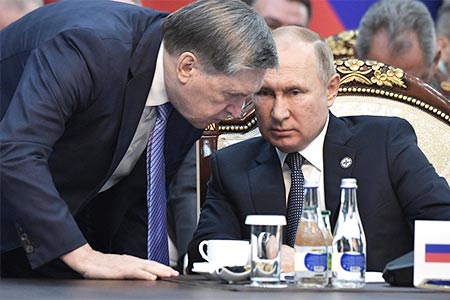 Moscow sees situation with Armenia as attempt to attack Russia-involving integration associations - Russian presidential aid
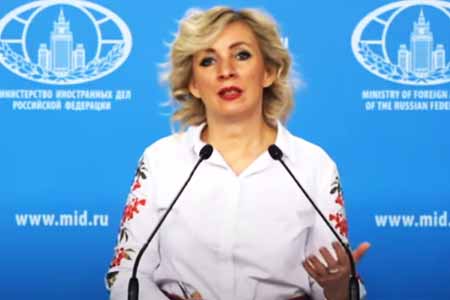 Zakharova: Armenia views relations with Russia as tool for financially securing reorientation toward EU
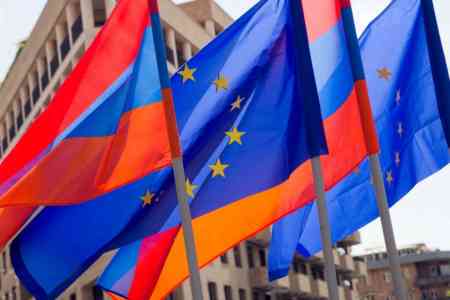 The Armenian Minister of Justice and the EU Ambassador discussed visa liberalization issues for Yerevan.
 Azerbaijan`s aggressive plans against Armenia became possible in wake of Pashinyan`s decisions on Artsakh - expert
 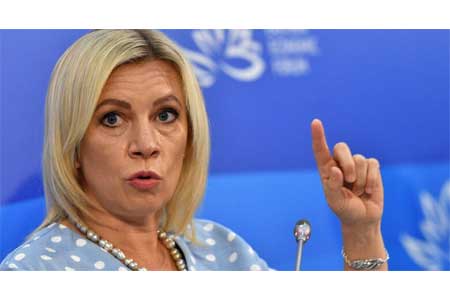 Zakharova: Russia sent a note of protest to Armenia over the act of vandalism at the "Mother Armenia" memorial in Gyumri