

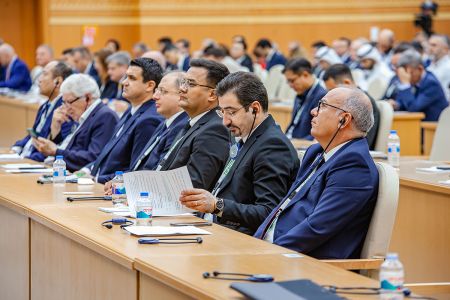
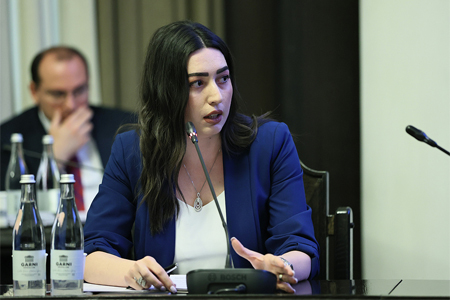
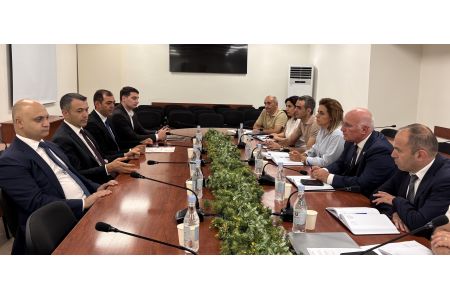
ArmInfo. The corridors being formed today will determine not only trade—they will determine who stands with whom, against whom, and under what conditions they will exist in the coming decades. This opinion was expressed by Garegin Manukyan, Chairman of the Armenian Center for Civil Initiatives (SPARAPET) and former UN Secretariat official, during an Armenian-Kazakh expert roundtable held the previous day.
According to him, the war in Iran has effectively nullified many previous assumptions, including those related to the TRIPP project—the so-called regional infrastructure and transport project associated with the Trump administration's initiatives. He noted that "the stakes have risen beyond the regional level— they have reached a continental scale, affecting major projects like 'One Belt, One Road'.
The expert noted that a redivision of the transport and economic map of Eurasia is occurring before our eyes—rapidly, harshly, and with no guarantee of a return to previous models. The war in Iran is not a local conflict; it is a systemic blow to the entire architecture of transit. It has demonstrated that the stability of these routes was vastly overestimated. "If speed and price were previously the key parameters, the new priorities are vulnerability, control, and the capacity to withstand crises," Manukyan noted. Southern routes through Iran and the Persian Gulf have effectively dropped out of the game or, at the very least, have become associated with prohibitive risks. This means that relying on "default stability" no longer works.
In this context, the Middle Corridor (Trans-Caspian International Transport Route) has gained critical importance. It is no longer perceived as an "alternative"; it is transforming—regardless of its current readiness—into one of the most vital arteries of the Eurasian transport architecture. The fundamental problem, however, is that while demand for the Trans-Caspian corridor grows, its infrastructure base, management mechanisms, and coordination systems remain incomplete. Without rapid and coordinated decisions, there is a risk that instead of a sustainable solution, a new structural "bottleneck" will emerge within the Eurasian transport system.
The expert emphasized that the consequences of the military conflict in Iran extend far beyond simple logistical disruptions. They affect the very foundation of the Belt and Road Initiative. Iran's weakening role as a transit hub removes a critical important link from the system, one of the most ambitious modern projects for global connectivity. However, according to Manukyan, this does not signal the end of the project. Instead, the current situation serves as a rigorous stress test. "We are witnessing not a retreat, but a fundamental reconfiguration," the expert noted. "This is a transition from boundless expansion to expansion under constraints—from linear, singular corridors to diversified, resilient networks. The era of pure optimism has been replaced by strategic caution and cold risk calculation."
According to the expert, it is precisely this recalibration that will determine the next stage of Eurasian connectivity. China is essentially forced to restructure its strategy: diversification, backup routes, and reduced dependence on problem areas. In this context, the role of countries like Kazakhstan is sharply increasing. It is no longer just a transit territory; it is becoming a key hub. This presents significant opportunities, but also poses significant challenges: rapidly expanding infrastructure, ensuring manageability, and ensuring predictability. In this context, the China-Kyrgyzstan-Uzbekistan railway project—a planned railway corridor connecting Western China (Kashgar, Xinjiang) with Kyrgyzstan and Uzbekistan—takes on particular significance.
Essentially, this is one of the key missing links in the Eurasian transport network, capable of significantly reconfiguring the connections between China and the West via Central Asia. Its implementation will create a more direct and flexible route, reducing reliance on traditional northern corridors controlled by Russia, as well as potentially unstable southern routes. Undoubtedly, this corridor will strengthen Central Asia's role as an independent transit hub. At the same time, the project intensifies competition between corridors and further sharpens the question: who will be integrated into these new routes, and who will be left on the sidelines?
For the South Caucasus, the stakes are equally high. The region is gaining strategic weight; however, this does not mean it is automatically a participant in these processes. Connectivity can integrate—but it can also bypass. For Armenia, this is not a theoretical question. It is a strategic crossroads. The issue is not whether new corridors will emerge—they are already forming. The question is whether Armenia will become a part of them or find itself out of the game. This requires more than discussion for the sake of discussion; it demands concrete decisions—rapid, pragmatic, and often politically complex. 'In a system where economics no longer dominates politics but is instead subordinated to it, neutrality becomes a weak strategy, and political dependencies become glaringly apparent,' the political analyst concluded.





























 Iranologist: Baku`s propaganda of might masks the country`s inability to provide water to its own population
 Analyst: Continued tensions between Yerevan and Moscow could entail new restrictive measures from Russia
 Political analyst: Russia intends to determine which "Camp" Armenia will choose through a referendum
 Armenia and France discuss further development of strategic partnership and EU cooperation
  To overcome risks Armenia must reduce domestic escalation - expert
  Zatulin: Pashinyan was eager to get back to Russia because he actually lost the elections
 Human rights activist Ruben Melikyan dismissed from YSU
 Pashinyan removed from INNOPROM guest list
 Zakharova: Armenia`s pro-EU pivot poses economic security risks to EAEU member states
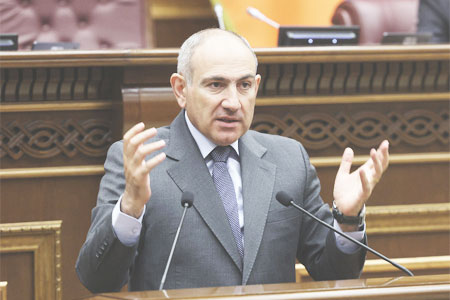 It`s time for South Caucasus countries to think of South Caucasus as single, unified region - RA premier
  Pashinyan: Armenia and Azerbaijan should leave each other alone
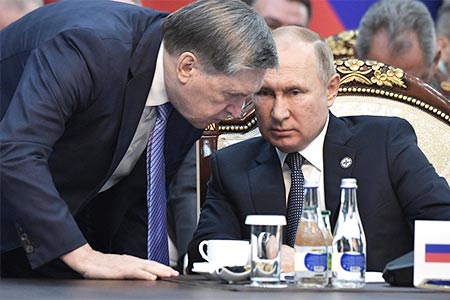 Moscow sees situation with Armenia as attempt to attack Russia-involving integration associations - Russian presidential aid
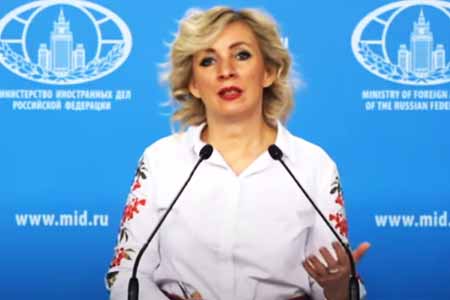 Zakharova: Armenia views relations with Russia as tool for financially securing reorientation toward EU
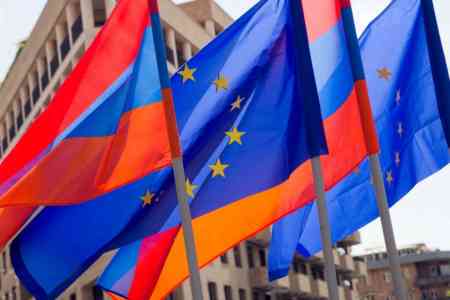 The Armenian Minister of Justice and the EU Ambassador discussed visa liberalization issues for Yerevan.
 Azerbaijan`s aggressive plans against Armenia became possible in wake of Pashinyan`s decisions on Artsakh - expert
 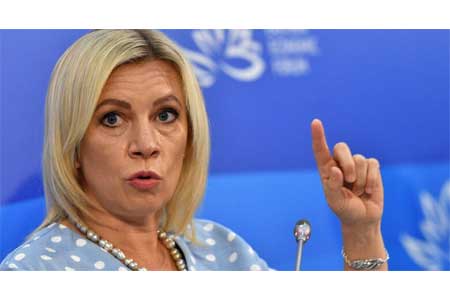 Zakharova: Russia sent a note of protest to Armenia over the act of vandalism at the "Mother Armenia" memorial in Gyumri