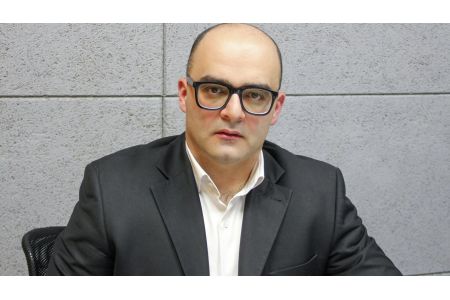
ArmInfo. When RA Prime Minister Nikol Pashinyan, in his pre- election ecstasy, shouts that Artsakh "was never Armenian" because "we built nothing there-no school, no kindergarten, no factory," this isn't just political manipulation. It's a denial of a vast swathe of reality. Political scientist Vahe Davtyan shares this view.
According to him, Artsakh has demonstrated one of the highest rates of economic growth in the South Caucasus based on a number of socioeconomic indicators. It's no coincidence that back in 2014, the Russian RBC newspaper dubbed Artsakh the "Transcaucasian tiger." Artsakh's economic growth has ranged from 9% to 15.6% in various years, particularly since 2010. Artsakh consistently built and modernized its energy infrastructure, connected settlements to gas, and developed hydropower, transport, and utility networks. One of the most striking manifestations of Artsakh's infrastructural development was the Stepanakert airport. A legislative framework for energy policy aimed at strengthening economic and energy independence was established, leading to the commencement of electricity supply to Armenia in 2018.
Davtyan continued that the level of institutional development of Artsakh's economy can be judged by the initial public offering of the Artsakh Hydroelectric Power Plant in 2009, which was considered an innovative step even for Armenia at the time. In fact, it was the first Armenian IPO. Until 2020, a large- scale hydropower development program was implemented in Artsakh. Dozens of hydroelectric power plants were built, and the republic gradually approached a model of energy surplus: electricity production almost doubled domestic demand. Artsakh's gasification rate reached 67.1%, while urban gasification reached 93%.
"Is this 'nothing being built'? In Artsakh, production facilities were established, trade developed, exports grew, processing plants operated, new social infrastructure facilities were built, and communications networks were modernized. Thus, such statements are an attempt to retrospectively destroy Armenian Artsakh by denying the entire history of colossal work, infrastructure, and development. I well remember two lectures I gave at Artsakh State University in 2015. The audience represented a vibrant Armenian intellectual and national space, with its students, researchers, and faculty members who were building, developing, and giving meaning to the future of Artsakh," the expert noted.
It's worth noting that during his campaign, Pashinyan stated that Armenia's dispute with Azerbaijan was pointless from the very beginning. "They say we lost lands. But how were these lands ours? Please explain: were they ours? I don't want to speak behind the backs of the dead, but let's put it this way: they were under the control of a few generals who, for example, sowed wheat there, right? What did it mean that they were ours? How? Explain: how was that? Did we build a school there? A kindergarten? A factory? Did we live there? Create a settlement? What did it mean that they were ours? They weren't ours," the Armenian prime minister said.















 Iranologist: Baku`s propaganda of might masks the country`s inability to provide water to its own population
 Analyst: Continued tensions between Yerevan and Moscow could entail new restrictive measures from Russia
 Political analyst: Russia intends to determine which "Camp" Armenia will choose through a referendum
 Armenia and France discuss further development of strategic partnership and EU cooperation
  To overcome risks Armenia must reduce domestic escalation - expert
  Zatulin: Pashinyan was eager to get back to Russia because he actually lost the elections
 Human rights activist Ruben Melikyan dismissed from YSU
 Pashinyan removed from INNOPROM guest list
 Zakharova: Armenia`s pro-EU pivot poses economic security risks to EAEU member states
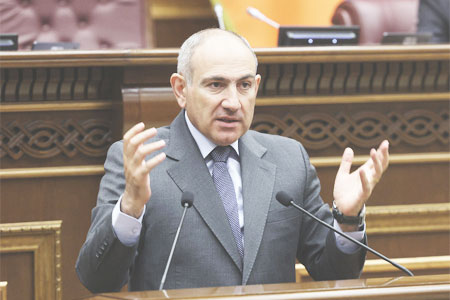 It`s time for South Caucasus countries to think of South Caucasus as single, unified region - RA premier
  Pashinyan: Armenia and Azerbaijan should leave each other alone
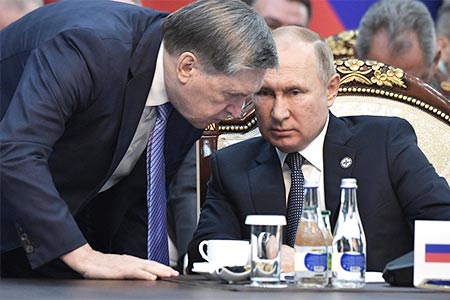 Moscow sees situation with Armenia as attempt to attack Russia-involving integration associations - Russian presidential aid
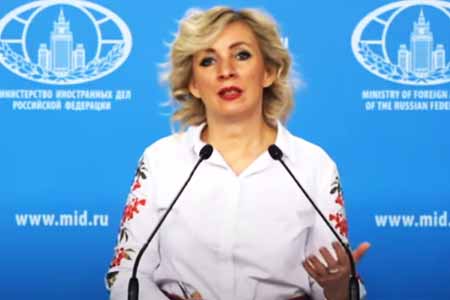 Zakharova: Armenia views relations with Russia as tool for financially securing reorientation toward EU
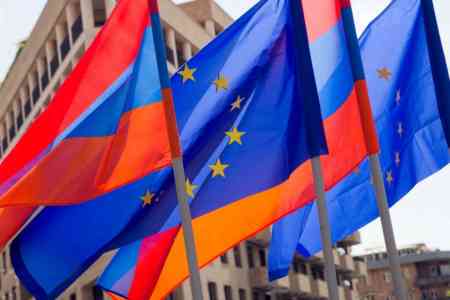 The Armenian Minister of Justice and the EU Ambassador discussed visa liberalization issues for Yerevan.
 Azerbaijan`s aggressive plans against Armenia became possible in wake of Pashinyan`s decisions on Artsakh - expert
  Zakharova: Russia sent a note of protest to Armenia over the act of vandalism at the "Mother Armenia" memorial in Gyumri