

ArmInfo. After more than a decade, the doors of Yerevan's Nairi Cinema, which boasts a nearly century-old history, have reopened to citizens and guests of the capital.
This return is not just another cultural event, but a return to the roots of one of Yerevan's very first cinemas, whose history begins at the start of the last century. Originally located on Amiryan Street, it received a new building in the 1950s, built in the Stalinist Neoclassicism style according to the design of architect Gevorg Tamanyan—a representative of the Alexander Tamanyan architectural school.
It was here that the screenings of one of the first Soviet films, "Zare," took place, which gives this venue a special significance in the history of the formation of the national film distribution.
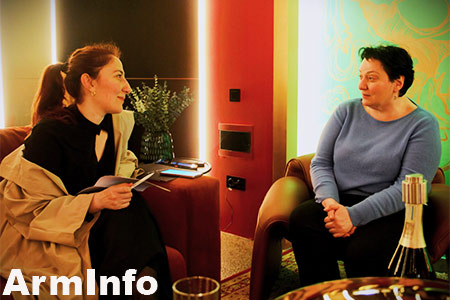
The fate of the cinema was not simple: periods of active life alternated with long pauses, when it either stood idle or did not fully perform its primary function. And yet, as often happens with authentic cultural spaces, "Nairi" did not disappear. It was as if it patiently awaited its return. Today, it is no longer just a cinema reopened after reconstruction, but an attempt to return to the starting point where cinema becomes an event rather than a background. It is a revival rather than a new stage—a desire to regain a lost voice and find its audience once again. The ArmInfo correspondent visited the "Nairi" cinema and explored the updated space, where modern solutions do not clash with history but organically complement and develop it. In a conversation with the cinema's director, Lianna Tamrazyan, it was possible to learn about the vision and development prospects of "Nairi," which today enters a new chapter of its history—carefully preserving the past while re-establishing itself as an important part of the city's cultural life.
The Renovated "Nairi" as a Bridge Between Eras
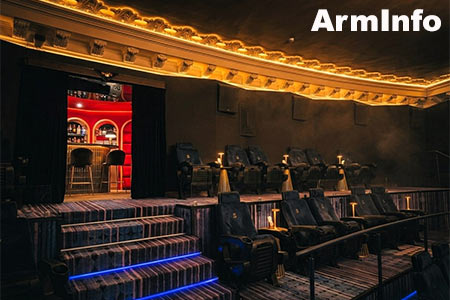 At this stage, the "Nairi" cinema operates one renovated hall equipped with ergonomic seats. According to Tamrazyan, they managed to purchase modern technical equipment, including a Christie CP2411-RBe 2K laser projector and a Dolby CP950 digital sound system. "Since we are reopening, everything needs to be top-tier," she emphasized.
The active hall provides 175 seats in the stalls and 20 seats on the balcony in the VIP zone. During the design phase, the goal was not to increase the number of seats and, consequently, maximize ticket sales—on the contrary, the distances between the seats were carefully calculated with ergonomics in mind to primarily ensure comfort during the movie screening. The seats themselves are specialized for cinemas by an Italian manufacturer; the back does not get tired or sweat, ensuring zero discomfort even during a long movie.
In the near future, it is planned to complete the reconstruction and launch two more halls—both more intimate. This will become possible after resolving legal issues related to the lease of the utilized territories. In addition, given that the "Nairi" cinema has the status of a local cultural monument, according to the law, no other type of activity is allowed under the building's roof.
Special attention is given to the VIP zone, located on the balcony next to a bar styled in an expressive "cinematic" look. If necessary, guests can use additional services. A lounge area is also provided before the entrance to the VIP hall, where one can spend time before the screening starts with light refreshments and pleasant music. "The point is that everything a person might need while watching a movie, they can find here. All conditions for this have been created," the cinema director noted.
According to Tamrazyan, the full-format grand opening is to be expected by the end of summer—after the launch of the two additional halls.
Answering the question about what was fundamentally important to preserve during the reconstruction, Lianna Tamrazyan admitted that for her personally, the main goal was to bring back the viewer's memories of this place. "For many Yerevan residents, the 'Nairi' cinema is very dear—it is a place of youth, meetings, and discoveries. And already today, I hear many warm reviews about the cinema reopening," she shared.
What is being shown in cinemas nowadays?
At the time when the "Nairi" cinema received a second life after its reconstruction in the early 2000s, according to the director, it was in many ways ahead of its time. Back then, the cinema culture in Yerevan was experiencing a period of decline, and cinema was not as highly demanded as it is today. Today, however, the industry is developing not only from the perspective of film distribution but also due to the active growth of domestic filmmaking. According to Tamrazyan, the younger generation shows a particular interest in Armenian cinema. "We will take this into account. I think it is important to support our local filmmakers because there is currently a shortage of screens, while the number of creators themselves is growing more and more—and that is very good," she noted. At the same time, according to her, the repertoire will continue to include commercial hits, auteur cinema, and classic films. In this way, an inter-genre balance is being formed, which over time will allow the cinema to develop its own recognizable signature style.
Cinema and Technologies: A New Experience for the Viewer
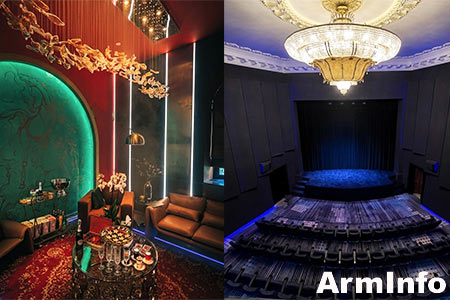 One of the key focus areas for the "Nairi" cinema team was the creation of their own app, Nairi Cinema, which is meant to be not just a ticket-buying service but a fully-fledged platform for communication with the audience. Through the app, guests will be able to follow the schedule, receive special offers, and become part of a community of regular visitors. In the future, they plan to develop a loyalty club with access to private events, special screenings, and themed late-night sessions. Moreover, the app will become part of a broader idea—to make a trip to the cinema a highly personal and immersive experience. The cinema has designed a system of themed lighting: the color of the light in the hall will change depending on the atmosphere of the movie, creating a feeling of a single
space between the screen and the viewer. According to Tamrazyan, it is important that a person does not just watch a movie, but literally finds themselves inside its mood. That is why they want to give viewers the opportunity to participate in creating this atmosphere. Through the app, users will be able to vote for the hall's color scheme before the screening, influencing the visual mood of the space. According to the creators' vision, this small but unusual detail turns the viewer from an observer into a part of what is happening. The team also expects that this format will help attract a younger audience, partly due to digital services, the mobile app, and a more modern format of interaction with the viewer.
Festival Life
A separate direction that the cinema team wants to develop is returning "Nairi" to an active festival life. In the early 2000s, it was the "Nairi" cinema, along with the "Moscow" cinema, that hosted the "Golden Apricot" International Film Festival. The plans are to recreate a venue in the cinema for film meetings and cinematic dialogue. The cinema's director, Lianna Tamrazyan, noted that the team feels aligned with the format of international festivals, special screenings, and cultural projects that unite viewers around cinema. However, this is not just about major festivals, but also about themed national and historical programs, musical evenings, performances, and joint initiatives with cultural organizations. According to Tamrazyan, the renovated "Nairi" views itself as an open platform for cooperation and is ready to welcome international guests, directors, and industry representatives. She noted that the cinema is open to negotiations, new partnerships, and ideas that will help return the space to its status as one of the city's important cultural centers.
A Look into the Future
When asked how she sees the cinema over the next 5–10 years, Lianna Tamrazyan replied: "To be honest, I see it overcrowded, meaning that I feel it shouldn't just be a cinema in its classic sense—where you come, watch a movie, and leave—but 'Nairi' must become a cinema of events."
The director expressed confidence that over time, they will succeed in creating a special atmosphere around each film, revealing its essence by holding additional events, including meetings with actors and directors, hosting themed evenings involving youth, and arranging special screenings.
The team strives to keep "Nairi" constantly in motion. They want to preserve the feeling of a "living space" where something new is always happening and where the viewer returns not just for the schedule, but for the atmosphere itself. As Tamrazyan noted, there are actually many good ideas, and the team is ready to work on bringing them to life.



























 Azerbaijani Studies Expert: While Azerbaijan Prepares Its Generation for War, Aliyev’s Aide Calls on Armenia to Prepare Armenian Society for “Peace”
 Turkologist: Azerbaijan will never, under any circumstances, stop pressuring the Armenian people
 Political scientist: We need to move away from the question of "when" and replace it with more important questions
 International Law Specialist: Azerbaijan intends to initiate legal proceedings against Armenia by sentencing Armenian prisoners
 Dmitry Medvedev predicted a Ukrainian-like fate for Armenia amid the country`s shift in foreign policy
 Russian Security Council: In Armenia, they want to force Russian asset owners to dispose of their assets
 Zakharova: Russia ready to discuss with Armenia the prospects for expanding military cooperation as part of a review of bilateral ties
 Tevanyan: Armenia, like Ukraine and Moldova, is being drawn into the EU’s global war
 Yerevan City Hall is considering introducing a valet parking system in the city
 Expert: The circus surrounding the “Albanization” of Armenian culture in the presence of foreign ambassadors in occupied Artsakh is genocide
 Political scientist: If Russian-Armenian relations are destroyed, Turkey will take Russia`s place
 Political scientist: The Armenian public is simply obliged to significantly change the entire content of public discourse and struggle
 Cross tattoos are being removed from the skin of Christian prisoners in Azerbaijan by fire, according to a human rights activist.
 Zakharova: Armenia`s likely introduction of visas with Russia will be a step against Yerevan itself
 Putin: Armenia`s recognition of Karabakh as part of Azerbaijan in Prague has given Russia`s position on this issue an ambivalent character
 Putin: Armenia`s adoption of the law on EU accession means an announcement of its withdrawal from the Eurasian Economic Union
 Aram Vardevanyan: Public demands solutions, not apology scandals in Parliament
 Arrested Armenian oligarch on economy and new jobs