
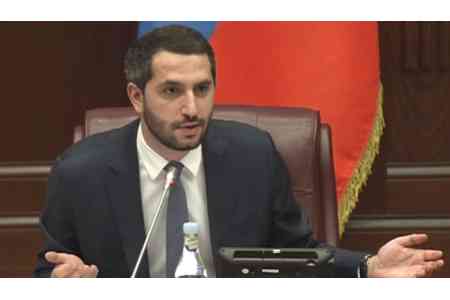
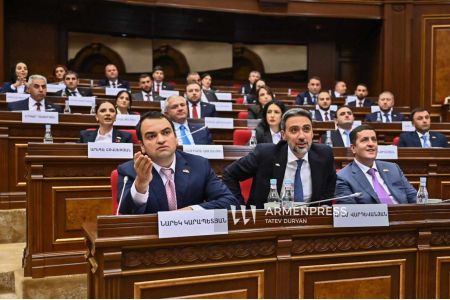
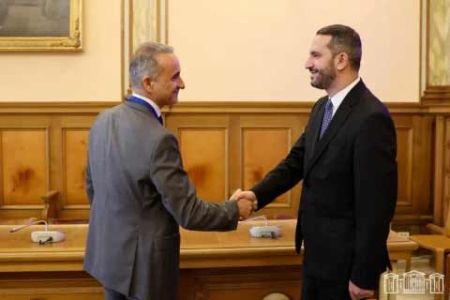
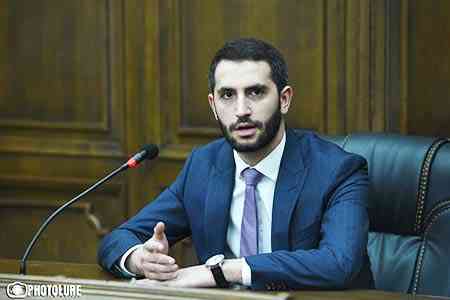
ArmInfo. The territory of Armenia has always measured 29,743 square kilometers, whereas the previously circulated figure of 29,800 square kilometers was merely a rounded estimate. This statement was made on August 11 from the rostrum of the National Assembly by RA National Assembly Vice-Speaker Ruben Rubinyan, responding to an inquiry from opposition "Armenia" faction MP Artur Khachatryan.
The MP, in particular, noted that they were once taught in school that Armenia's territory was 29,800 square kilometers, while now the Armenian authorities are voicing the figure of 29,743 kilometers. "When you round 29,743, you get 29,700, so the logical question arises: where did those 57 square kilometers of the Republic of Armenia's sovereign territory go?" said Artur Khachatryan, speculating about the possible ceding of Tigranashen to Azerbaijan. Khachatryan also noted that both the Armenian Encyclopedia and the USSR Encyclopedia spoke of a territory of 29,800 square kilometers.
Meanwhile, Rubinyan, citing a report on the availability and distribution of land in the Republic of Armenia, approved in 2005, noted that the country's territory has always been 29,743. The encyclopedia may have rounded off the number in the title, but it was no smaller. According to him, in 2005, when the ARF Dashnaktsutyun joined the ruling coalition, the land fund report approved by the Armenian government listed Armenia's territory as 2,974,300 hectares, equivalent to 29,743 square kilometers. Rubinyan added that the same figure was presented in subsequent relevant documents in 2010 and 2015.
The NC speaker also mentioned the Alma-Ata Declaration, noting that according to it, the administrative borders that existed between the former Soviet republics became interstate borders after independence. "It clearly states that existing interrepublican borders become interstate borders. This means that whatever borders existed at that time between the Armenian Soviet Socialist Republic and the Azerbaijan Soviet Socialist Republic become interstate borders," Rubinyan said. According to him, the recognition of Armenia's 29,743 square kilometer territory also follows from this logic.
Rubinyan also saw a contradiction in the opposition MP's positions, according to which, on the one hand, the ratification of the 1991 Alma-Ata Declaration is not seen as a step toward recognizing Nagorno- Karabakh as part of Azerbaijan, while on the other hand, the 2022 Prague Declaration, in which the parties reaffirmed their recognition of each other's territorial integrity based on the Alma-Ata Declaration, is presented as a change in Armenia's policy. "Now decide whether the recognition of each other's territorial integrity by the Alma-Ata Declaration means recognition of the borders of the former Soviet republics or not," the Speaker of the National Assembly said.






 Expert: The arrest of opposition figures in Armenia for social media posts is a systematic attempt to intimidate the public and suppress dissent.
 Azerbaijani Studies Expert: While Azerbaijan Prepares Its Generation for War, Aliyev’s Aide Calls on Armenia to Prepare Armenian Society for “Peace”
 Turkologist: Azerbaijan will never, under any circumstances, stop pressuring the Armenian people
 Political scientist: We need to move away from the question of "when" and replace it with more important questions
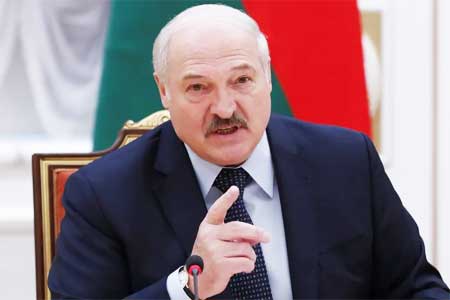 Lukashenko called for Armenia to assume the CIS presidency in 2029
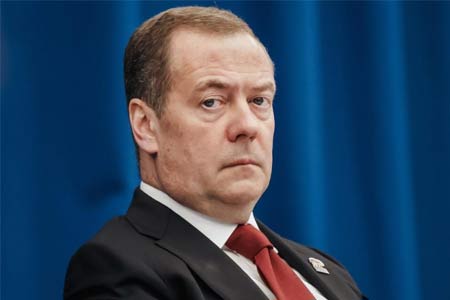 Dmitry Medvedev predicted a Ukrainian-like fate for Armenia amid the country`s shift in foreign policy
 Russian Security Council: In Armenia, they want to force Russian asset owners to dispose of their assets
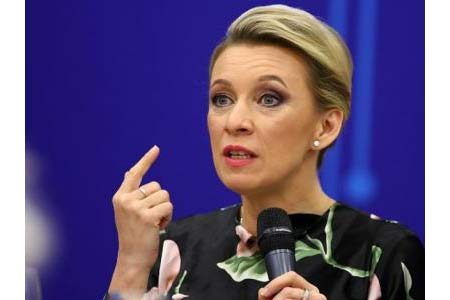 Zakharova: Russia ready to discuss with Armenia the prospects for expanding military cooperation as part of a review of bilateral ties
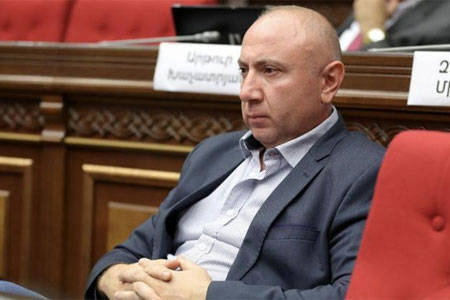 Tevanyan: Armenia, like Ukraine and Moldova, is being drawn into the EU’s global war
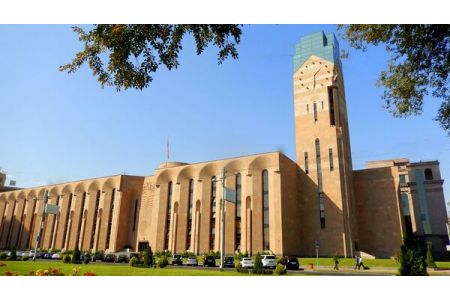 Yerevan City Hall is considering introducing a valet parking system in the city
 Expert: The circus surrounding the “Albanization” of Armenian culture in the presence of foreign ambassadors in occupied Artsakh is genocide
 Political scientist: If Russian-Armenian relations are destroyed, Turkey will take Russia`s place
 Political scientist: The Armenian public is simply obliged to significantly change the entire content of public discourse and struggle
 Cross tattoos are being removed from the skin of Christian prisoners in Azerbaijan by fire, according to a human rights activist.
 Zakharova: Armenia`s likely introduction of visas with Russia will be a step against Yerevan itself
 Putin: Armenia`s recognition of Karabakh as part of Azerbaijan in Prague has given Russia`s position on this issue an ambivalent character
 Putin: Armenia`s adoption of the law on EU accession means an announcement of its withdrawal from the Eurasian Economic Union