

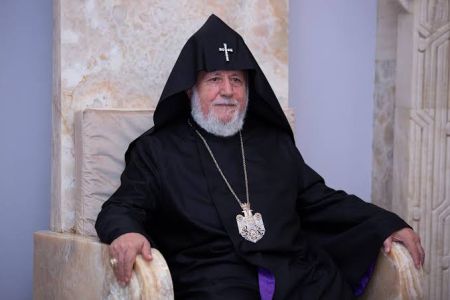
ArmInfo. Catholicos of All Armenians Garegin II and the clergy of the Supreme Spiritual Council are to be acquitted in the criminal case initiated by the Armenian authorities due to the lack of evidence of criminal illegality of the act or due to the lack of proof of the factual circumstances imputed to them.
This is stated in an amicus curiae ("friend of the court") opinion prepared at the initiative of a group of specialists in criminal procedure. The opinion was prepared by Artur Gambaryan, Doctor of Law, Professor, and Honored Lawyer of the Republic of Armenia; Artak Ghazaryan, Candidate of Law; Zorayr Harutyunyan, Candidate of Law; and Grigor Chapanyan, PhD candidate in the Department of Criminal Law and Criminal Procedure Law at the Russian-Armenian University.
The conclusion, published on the Armenian Church of Moscow's Facebook page, states that, given the widespread public outcry over the criminal prosecution of the Catholicos of All Armenians and the clerical members of the Supreme Spiritual Council, as well as its exceptional historical significance for the Armenian people and the Holy Armenian Apostolic Church, at the initiative of a group of criminal justice specialists, we prepared and presented an amicus curiae brief on this case to the Supreme Patriarch and the judge.
It is emphasized that the brief was prepared solely on the basis of legal analysis, without political or other judgments, and is aimed at facilitating the administration of justice. "Thus, firstly, the act of 'defrocking' is not criminally illegal. It is regulated exclusively by ecclesiastical canon law and is outside the scope of state positive law.
Secondly, initiating criminal prosecution against the Catholicos of All Armenians and other clergy for defrocking constitutes criminal interference in the internal affairs of the Church and violates the principles of separation of state and church guaranteed by the Constitution and international law, as well as the autonomy of religious organizations (Articles 17 and 41 of the Constitution of the Republic of Armenia, Article 9 of the European Convention on Human Rights, the case law of the European Court of Human Rights, and the positions of the Venice Commission)," the prepared document states.
Third, according to the authors of the opinion, the act imputed to the clerical members of the Supreme Spiritual Council lacks the objective element of a crime, that is, a specific act. They submitted a proposal for defrocking, which is not a final decision.
"Fourth, the initiation of prosecution in this case violated the requirements of legal certainty and predictability: the judicial act applying the interim measure did not expressly prohibit defrocking, and such a prohibition could not be inferred by interpreting the judicial act under the rule intra legem analogia (within the law). Consequently, the limits of criminal liability were determined only subsequently, which contradicts the principles of certainty and legality of criminal law," the opinion continues.
Fifth, the opinion draws attention to an alternative argument and states that even with the formal elements of a crime, the act imputed in this case is insignificant (Part 2 of Article 16 of the Criminal Code of the Republic of Armenia). It is noted that after his defrocking, Arman Saroyan effectively continued his activities as the primate of the diocese, wearing the episcopal vestments and occupying the office of the primate. Moreover, the state continued to recognize him as a high-ranking representative of the Church: by Decision No. 251-A of the Prime Minister of the Republic of Armenia, Arman (formerly Bishop Gevorg) Saroyan was included in the Advisory Commission on Pardons as a representative of the Armenian Apostolic Holy Church.
"This circumstance clearly demonstrates that the act did not obstruct the normal administration of justice and, therefore, from the standpoint of the constitutional principle of proportionality, cannot serve as grounds for criminal liability. Based on the above, we emphasize that the Catholicos of All Armenians and the clergy of the Supreme Spiritual Council are subject to acquittal due to the lack of evidence of the criminal unlawfulness of the act or due to the failure to prove the factual circumstances imputed to them," the legal experts concluded in their prepared opinion. It should be noted that since May 2025, the Armenian authorities have been actively pursuing an anti-church policy and are seeking the resignation of Catholicos of All Armenians Garegin II, who is elected to this position for life. This campaign has targeted both clergy and citizens who support the Church. It should be noted that, according to the Constitution, Armenia is a secular state, where church and state are separated. At the same time, the "exceptional mission" of the Armenian Apostolic Church (AAC) in preserving national identity is recognized.
Furthermore, as was reported on August 19, the issue of removing the Catholicos is included in the Pashinyan government's program for 2026-2031.

















 Expert: The arrest of opposition figures in Armenia for social media posts is a systematic attempt to intimidate the public and suppress dissent.
 Azerbaijani Studies Expert: While Azerbaijan Prepares Its Generation for War, Aliyev’s Aide Calls on Armenia to Prepare Armenian Society for “Peace”
 Turkologist: Azerbaijan will never, under any circumstances, stop pressuring the Armenian people
 Political scientist: We need to move away from the question of "when" and replace it with more important questions
 Lukashenko called for Armenia to assume the CIS presidency in 2029
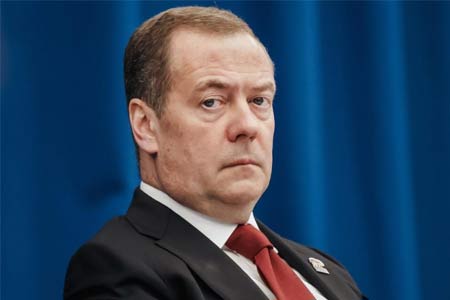 Dmitry Medvedev predicted a Ukrainian-like fate for Armenia amid the country`s shift in foreign policy
 Russian Security Council: In Armenia, they want to force Russian asset owners to dispose of their assets
 Zakharova: Russia ready to discuss with Armenia the prospects for expanding military cooperation as part of a review of bilateral ties
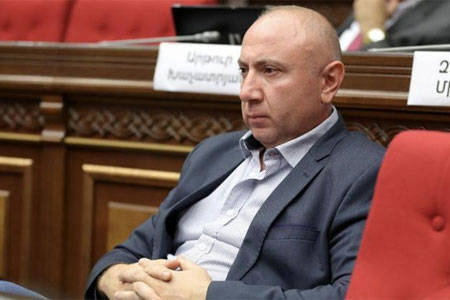 Tevanyan: Armenia, like Ukraine and Moldova, is being drawn into the EU’s global war
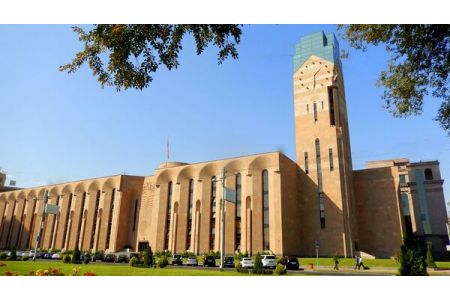 Yerevan City Hall is considering introducing a valet parking system in the city
 Expert: The circus surrounding the “Albanization” of Armenian culture in the presence of foreign ambassadors in occupied Artsakh is genocide
 Political scientist: If Russian-Armenian relations are destroyed, Turkey will take Russia`s place
 Political scientist: The Armenian public is simply obliged to significantly change the entire content of public discourse and struggle
 Cross tattoos are being removed from the skin of Christian prisoners in Azerbaijan by fire, according to a human rights activist.
 Zakharova: Armenia`s likely introduction of visas with Russia will be a step against Yerevan itself
 Putin: Armenia`s recognition of Karabakh as part of Azerbaijan in Prague has given Russia`s position on this issue an ambivalent character
 Putin: Armenia`s adoption of the law on EU accession means an announcement of its withdrawal from the Eurasian Economic Union