
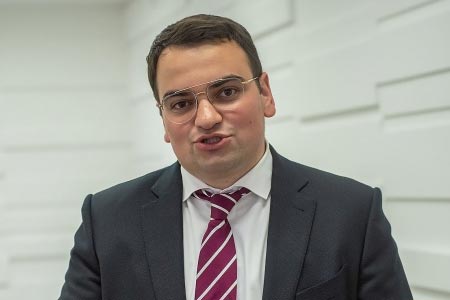
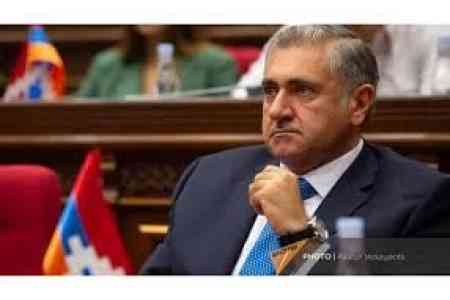
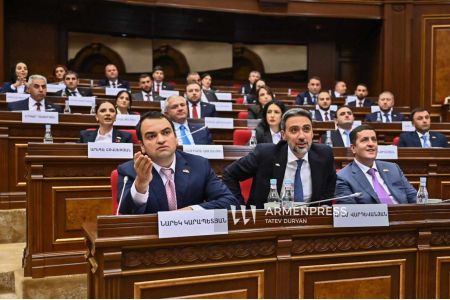
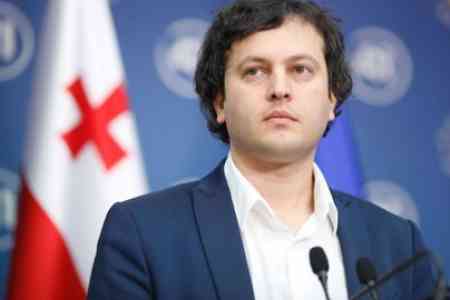
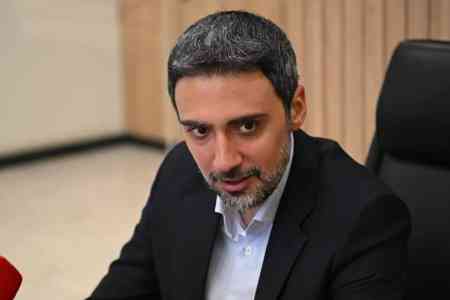
ArmInfo. A report by the Parliamentary Assembly of the Council of Europe (PACE) showed that in terms of the conduct of elections, Armenia was on the same level as well-known authoritarian countries, including Azerbaijan. This was stated by Narek Karapetyan, head of the parliamentary faction “Strong Armenia,” in an interview with Petros Ghazaryan on Armenia’s Public Television (APT).
During the interview, Ghazaryan asked why the opposition gives a positive assessment of the PACE report if its conclusion says that the elections reflected the will of the Armenian people and that the incumbent authorities received a public mandate. In response, Karapetyan urged attention to the fact that about 80% of the report is devoted to documented violations. “Do the violations indicated in the report not testify that the authorities committed fraud? The authorities received a mandate exclusively through the abuse of the state apparatus and pressure,” the faction leader stated.
In this regard, Karapetyan cited several points mentioned in the report. In particular, as the politician noted, according to the document, many election participants reported threats against them. “In addition, civil servants reported that they were forced or pressured to participate in gatherings of the Civil Contract party. The report also notes that in terms of the conduct of elections, Armenia was on the same level as countries such as Azerbaijan,” Karapetyan pointed out.
In response to another clarification as to whether he agreed that, despite all the documented violations, the report nevertheless testified that the authorities had received a mandate, the leader of the “Strong Armenia” faction again stated that this had become possible only through fraud and pressure. “PACE documented widespread fraud. As for the assertion that the authorities received a mandate, this is a political assessment by the European Council, which the organization also makes with regard to undemocratic countries. What does it mean that the newly elected authorities were not formed as a result of fair elections?” the politician emphasized.
Karapetyan also touched upon the part of the report which speaks of pressure from Russia through restrictions imposed in favor of the opposition. In this regard, he wondered why the document contains no mention of statements by the Turkish side. In this connection, he recalled a statement by Turkish Foreign Minister Hakan Fidan. It should be noted that Fidan said at the time: “We see that Mr. Pashinyan (Armenian Prime Minister Nikol Pashinyan - ed.) is currently leading in the polls. We truly support his constructive role in this process. This line should continue.”
At the same time, Karapetyan did not deny that Russia had also attempted to exert pressure. According to the faction leader, their position is that these elections differed from previous ones due to greater influence from at least 4-5 foreign states.
In this context, he also recalled that threats were voiced even directly by Pashinyan, who stated that if he was not elected, the country would face war. “I will repeat once again: our position is that we have a negative attitude toward any external influence that took place, in particular under Pashinyan’s government, regardless of which side it came from,” Karapetyan concluded.
It should be recalled that according to the PACE report, during the election campaign, pressure was exerted on public-sector employees to participate in events organized by the Civil Contract party. More than 200 criminal cases were documented, almost entirely concerning opposition figures. Violations of various kinds were recorded at nearly 44 percent of polling stations: procedural problems, violations of the secrecy of the ballot, cases of influencing voters, restrictions on campaigning and other violations. The CEC’s justification that invalidating the results at three polling stations “did not affect the overall result” was deemed unconvincing. The report notes that, according to some calculations, if the turnout data from the disputed polling stations had been included, the Prosperous Armenia party might have overcome the 4-percent threshold, obtained mandates and influenced the structure of the parliamentary majority. Regarding the dispute over the results at three polling stations, the report states that the courts did not restore the situation, while the judicial process did not ensure an effective resolution before the new parliament began its work. The presence of an atmosphere of fear in the pre-election environment was emphasized. However, it should be noted that documenting the above-mentioned problems did not prevent PACE from considering the final election results acceptable.







 Azerbaijani Studies Expert: While Azerbaijan Prepares Its Generation for War, Aliyev’s Aide Calls on Armenia to Prepare Armenian Society for “Peace”
 Turkologist: Azerbaijan will never, under any circumstances, stop pressuring the Armenian people
 Political scientist: We need to move away from the question of "when" and replace it with more important questions
 International Law Specialist: Azerbaijan intends to initiate legal proceedings against Armenia by sentencing Armenian prisoners
 Dmitry Medvedev predicted a Ukrainian-like fate for Armenia amid the country`s shift in foreign policy
 Russian Security Council: In Armenia, they want to force Russian asset owners to dispose of their assets
 Zakharova: Russia ready to discuss with Armenia the prospects for expanding military cooperation as part of a review of bilateral ties
 Tevanyan: Armenia, like Ukraine and Moldova, is being drawn into the EU’s global war
 Yerevan City Hall is considering introducing a valet parking system in the city
 Expert: The circus surrounding the “Albanization” of Armenian culture in the presence of foreign ambassadors in occupied Artsakh is genocide
 Political scientist: If Russian-Armenian relations are destroyed, Turkey will take Russia`s place
 Political scientist: The Armenian public is simply obliged to significantly change the entire content of public discourse and struggle
 Cross tattoos are being removed from the skin of Christian prisoners in Azerbaijan by fire, according to a human rights activist.
 Zakharova: Armenia`s likely introduction of visas with Russia will be a step against Yerevan itself
 Putin: Armenia`s recognition of Karabakh as part of Azerbaijan in Prague has given Russia`s position on this issue an ambivalent character
 Putin: Armenia`s adoption of the law on EU accession means an announcement of its withdrawal from the Eurasian Economic Union
 Aram Vardevanyan: Public demands solutions, not apology scandals in Parliament
 Arrested Armenian oligarch on economy and new jobs