
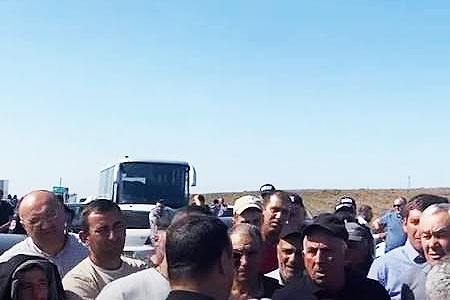
ArmInfo. Residents of the Verin Dvin community in Armenia's Ararat region blocked the Yerevan-Ashtarak highway due to problems selling tomatoes after state subsidies were discontinued.
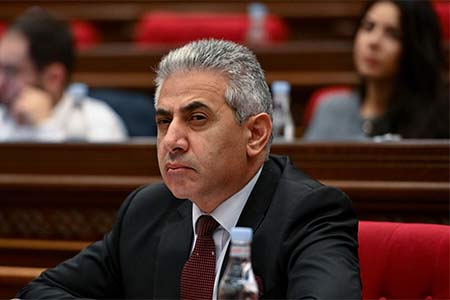
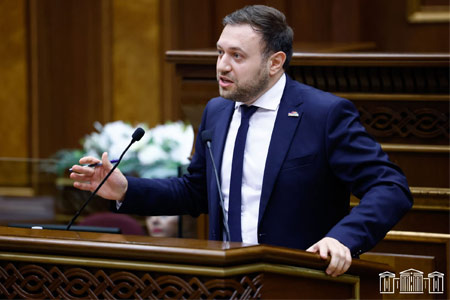
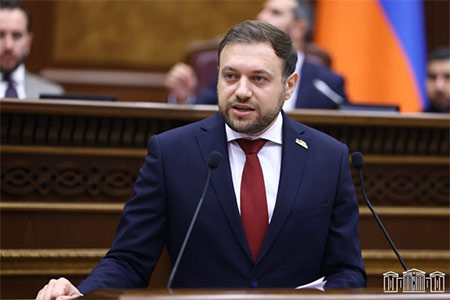
Strong Armenia faction MP Harutyun Mnatsakanyan, who arrived at the scene, pointed out in a conversation with journalists that these same tomatoes are selling for 550 drams in supermarkets, while local producers can't even sell their produce for 80-100 drams. "Meanwhile, they have to pay workers over 1,000 drams for just an hour of picking vegetables. And they spend 20,000 drams on transporting the harvest. After that, residents deliver the tomatoes to the market in Ovtashat, but they don't sell," Mnatsakanyan said. He said he arrived at the scene to understand the situation and what steps could be taken. One of the protesters showed off boxes of tomatoes loaded into his car. He said he hasn't been able to sell his harvest for three days.
It's worth noting that this isn't the first time residents have blocked the road. A similar protest took place back in July of this year.
At that time, Armenian Economy Minister Gevorg Papoyan assured that there would be no further problems purchasing tomatoes. On July 31, he recalled the temporary restrictions imposed by the Armenian government on the import of tomatoes and tomato paste and assured that the state would assist local tomato producers in organizing exports.
As a reminder, Russia introduced gradual restrictions on the import of Armenian agricultural products in April. The official reasons cited were sanitary and phytosanitary violations and a lack of safety oversight by authorized Armenian agencies. The real reason for the restrictions, however, is the Armenian leadership's overt anti-Russian moves against the backdrop of Yerevan's policy of rapprochement with the European Union. These "sanctions" have already led to a reduction in trade turnover: in the first five months of 2026, mutual trade volumes between Armenia and Russia fell by 21.5% compared to the same period last year. Difficulties have arisen in agricultural exports: due to the blockage of supplies during the summer peak season, exports of Armenian fruits, vegetables, and flowers showed a sharp drop of 74.5%. According to experts, financial losses to businesses amount to tens of millions of dollars, threatening the mass bankruptcy of hundreds of greenhouses and farms.




















 Expert: The arrest of opposition figures in Armenia for social media posts is a systematic attempt to intimidate the public and suppress dissent.
 Azerbaijani Studies Expert: While Azerbaijan Prepares Its Generation for War, Aliyev’s Aide Calls on Armenia to Prepare Armenian Society for “Peace”
 Turkologist: Azerbaijan will never, under any circumstances, stop pressuring the Armenian people
 Political scientist: We need to move away from the question of "when" and replace it with more important questions
 International Law Specialist: Azerbaijan intends to initiate legal proceedings against Armenia by sentencing Armenian prisoners
 Dmitry Medvedev predicted a Ukrainian-like fate for Armenia amid the country`s shift in foreign policy
 Russian Security Council: In Armenia, they want to force Russian asset owners to dispose of their assets
 Zakharova: Russia ready to discuss with Armenia the prospects for expanding military cooperation as part of a review of bilateral ties
 Tevanyan: Armenia, like Ukraine and Moldova, is being drawn into the EU’s global war
 Yerevan City Hall is considering introducing a valet parking system in the city
 Expert: The circus surrounding the “Albanization” of Armenian culture in the presence of foreign ambassadors in occupied Artsakh is genocide
 Political scientist: If Russian-Armenian relations are destroyed, Turkey will take Russia`s place
 Political scientist: The Armenian public is simply obliged to significantly change the entire content of public discourse and struggle
 Cross tattoos are being removed from the skin of Christian prisoners in Azerbaijan by fire, according to a human rights activist.
 Zakharova: Armenia`s likely introduction of visas with Russia will be a step against Yerevan itself
 Putin: Armenia`s recognition of Karabakh as part of Azerbaijan in Prague has given Russia`s position on this issue an ambivalent character
 Putin: Armenia`s adoption of the law on EU accession means an announcement of its withdrawal from the Eurasian Economic Union