
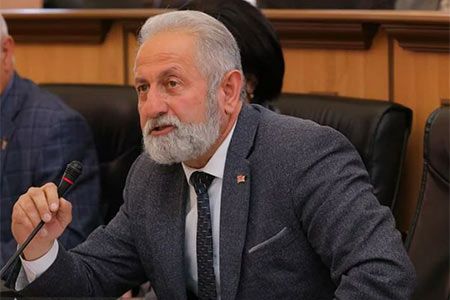
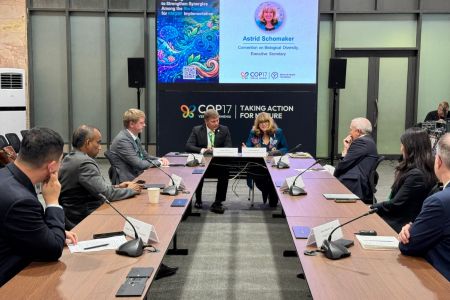
ArmInfo. While emphasizing the importance of preserving biological diversity, sustainable use of natural resources and effective public participation in environmental decision-making, the authorities of Artsakh express deep concern over the environmental and biocultural consequences of the forced displacement of the Armenian population of Artsakh. This was stated in the message of Acting Speaker of the National Assembly of Artsakh Gagik Baghunts to the Parties to the Convention on Biological Diversity, delegates, and participants of the CBD COP17 conference.
He recalled that in September 2023, approximately 120,000 Armenians were forcibly displaced from Artsakh and resettled in Armenia.
The parliamentarian noted that the displacement led not only to the loss of homes, property, and livelihoods, but also to the severing of ties formed over generations between communities and the natural, cultural, and social environments of their historical places of residence.
"The forced removal of the bearers of this knowledge could jeopardize its continued use and the possibility of its transmission to future generations, which also impacts environmental protection opportunities." Traditional agriculture, irrigation and water supply systems, forests and pastures, sacred sites, and the cultural customs associated with rural settlements collectively form a unique biocultural system. Its destruction means the loss of biocultural diversity," Bagunts noted.
In this context, he noted that the Convention on Biological Diversity emphasizes the importance of preserving traditional knowledge and experience that contribute to the conservation and sustainable use of biodiversity, as well as the participation and consent of those who hold it. He noted that the Kunming-Montreal Global Biodiversity Framework, adopted in 2022, emphasizes the need for the effective participation of indigenous peoples and local communities in biodiversity-related decision-making, as well as respect for their rights.
"In this context, it is necessary to consider the traditional knowledge and experience of Armenians displaced from Artsakh as the region's indigenous population." Taking into account the above, we call on Parties to the Convention on Biological Diversity and COP-17 participants to: pay due attention to the biocultural consequences of the forced displacement of Armenians in Artsakh; ensure the meaningful participation of displaced communities in the development of environmental studies, conservation initiatives, and ecosystem restoration programs; emphasize the interrelationship between environmental objectives and the protection of human rights; and continue to discuss the protection of the rights of displaced populations within the framework of relevant international mechanisms, taking into account the need to protect rights related to housing, property, cultural heritage, and the natural environment.
We call on COP-17 participants to consider this issue in the context of the interrelationship between biodiversity conservation, cultural continuity, and human rights, as well as in the context of the right of the Armenians of Artsakh to a collective, unimpeded, and safe return to their historical homeland," Baghunts said.











 Opinion: The development of the Amulsar mine near the resort town of Jermuk is the beginning of an environmental disaster in Armenia
 Expert: The arrest of opposition figures in Armenia for social media posts is a systematic attempt to intimidate the public and suppress dissent.
 The Artsakh Public Council expressed outrage at the UN Secretary-General`s behavior
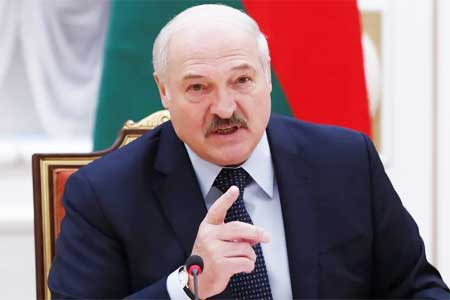 Lukashenko called for Armenia to assume the CIS presidency in 2029
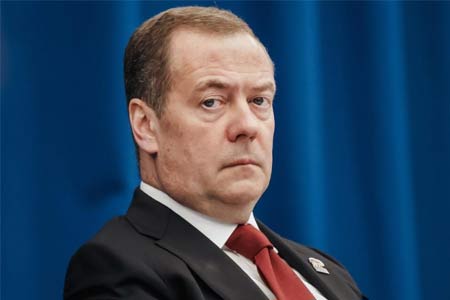 Dmitry Medvedev predicted a Ukrainian-like fate for Armenia amid the country`s shift in foreign policy
 Russian Security Council: In Armenia, they want to force Russian asset owners to dispose of their assets
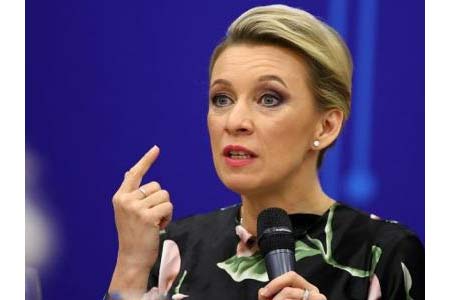 Zakharova: Russia ready to discuss with Armenia the prospects for expanding military cooperation as part of a review of bilateral ties
 Tevanyan: Armenia, like Ukraine and Moldova, is being drawn into the EU’s global war
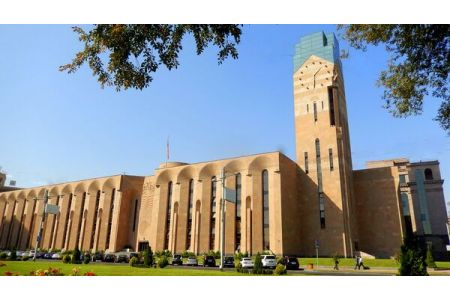 Yerevan City Hall is considering introducing a valet parking system in the city
 Expert: The circus surrounding the “Albanization” of Armenian culture in the presence of foreign ambassadors in occupied Artsakh is genocide
 Political scientist: If Russian-Armenian relations are destroyed, Turkey will take Russia`s place
 Political scientist: The Armenian public is simply obliged to significantly change the entire content of public discourse and struggle
 Cross tattoos are being removed from the skin of Christian prisoners in Azerbaijan by fire, according to a human rights activist.
 Zakharova: Armenia`s likely introduction of visas with Russia will be a step against Yerevan itself
 Putin: Armenia`s recognition of Karabakh as part of Azerbaijan in Prague has given Russia`s position on this issue an ambivalent character
 Putin: Armenia`s adoption of the law on EU accession means an announcement of its withdrawal from the Eurasian Economic Union