

ArmInfo. On the sixth anniversary of the end of the 44-day war in 2020, initiated by Azerbaijan against Artsakh, public and political figures are visiting the Yerablur military pantheon to honor the memory of the fallen.
On the night of November 9-10, 2020, a trilateral statement was signed by the leaders of Russia, Armenia, and Azerbaijan, ending hostilities in the Nagorno-Karabakh conflict zone.
In an interview with journalists, Artsakh National Assembly Member Metaxe Hakobyan stated that November 9 was a day of shame and unprecedented betrayal, when the country's authorities, striving to maintain their "seat," sacrificed an entire generation. She emphasized that the statement of November 9, 2020, came as a shock to many. "Even then, its contents were perceived as a de facto definition of the terms of capitulation, as well as evidence that the Armenian authorities were abdicating responsibility for what was happening in Artsakh. At that moment, it became clear that the decisions made would entail serious consequences," Hakobyan noted.
The MP also recalled that after signing the statement, Armenian Prime Minister Nikol Pashinyan shifted responsibility for the current situation to a third party—the Russian President, although, as Hakobyan noted, the Russian side initially acted as a mediator. In her opinion, subsequent events confirmed that the signed document was beneficial only to Azerbaijan, which continues to cite the agreements reached, making demands, including regarding Armenia's sovereign territories. "On November 9, the shooting stopped, and we called it the end of the war." "However, with this very document, the Armenian authorities gave Azerbaijan the opportunity to unilaterally exploit the agreements reached and, in effect, continue the war without firing a shot in the diplomatic arena," Hakobyan stated.
The MP separately commented on the statements made by the Armenian authorities regarding the return of Armenian prisoners of war. In particular, she noted that, in speaking about this, the Armenian authorities again refer to the need to appeal to a third party. Meanwhile, according to Hakobyan, humanitarian issues, including the return of Armenian prisoners of war held in Azerbaijan, must be resolved without any preconditions and not depend on the outcome of the peace process.
Hakobyan called such statements by the authorities manipulation, noting that they personally appeal to various international figures with the question of the return of the prisoners. "In response, we receive clarification that this issue is directly within the competence of the Armenian authorities and its resolution is not particularly difficult given the corresponding political will. "The Armenian leadership knows what actions need to be taken, but is not using the available opportunities to resolve this issue," the Artsakh MP believes.
In this regard, she emphasized that she considers not only the events of November 9 a disgrace, but also the very fact that the country ended up under the leadership of people who allowed it to happen. "Armenian society has not learned the proper lessons, since otherwise the current government would have already been held accountable for its actions," Hakobyan concluded.
It is noteworthy that on November 8, the day when the enemy celebrates its victory over the Armenian people, representatives of diplomatic missions from the countries of the Collective West visited Victory Park and held some kind of event in memory of those killed in the conflicts. This is despite the fact that no events are held in Armenia on November 8, and there are no mentions of any commemorative dates in the calendar. Let us recall that on the night of September 27, 2020, the Azerbaijani Armed Forces, in tandem with Turkey, committed military aggression against Artsakh. During the bloody hostilities that lasted 44 days, on the night of November 9-10, 2020, a statement was signed with the mediation of Russia on the cessation of hostilities and the deployment of Russian peacekeepers to Artsakh. As a result of the 2020 aggression, Shushi and several districts of Artsakh were lost. Several thousand soldiers were killed, more than 10,000 sons of the Armenian people became disabled, and thousands of Artsakh residents lost their homes.









 Orientalist: In 2026, Baku made special efforts to achieve greater diplomatic effect on the issue of victory over Artsakh
 Expert: Official Yerevan should not base its calculations in relations with Ankara on the "crack" in the Turkish-Azerbaijani alliance
 International expert: Trump is entering a "lame duck" period of rule
 Political scientist: The failure of the mission to adopt a new Armenian Constitution could raise the question of Pashinyan`s resignation.
 Opinion: Russia`s involvement in the Organization of Turkic States may increase its international weight, but will force a redistribution of political influence within it
 Lavrov: Armenia will not be expelled from the CSTO
 Drmeyan: The ECHR rejected Azerbaijan`s appeal in the case of Artsakh Defense Army Major Hayk Toroyan
 "Strong Armenia": The brawl in parliament was staged to distract public attention from Pashinyan`s failed foreign policy
 Zakharova commented on the scandalous epithets of the governor of Armenia`s Shirak region about "Ivanov"
 Nikolai Bordyuzha proposed excluding Armenia from the CSTO.
 The participation of Artsakh ensembles in an international festival in Vienna was cancelled following the intervention of several foreign embassies
 Expert: It`s time for Armenia to move away from uncertainty and choose between West and East
 The Armenian Foreign Minister commented on the country`s return to work within the CSTO.
 The Artsakh Public Council expressed outrage at the UN Secretary-General`s behavior
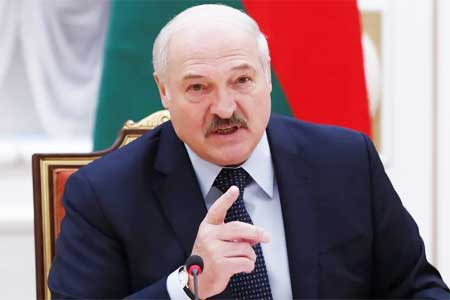 Lukashenko called for Armenia to assume the CIS presidency in 2029
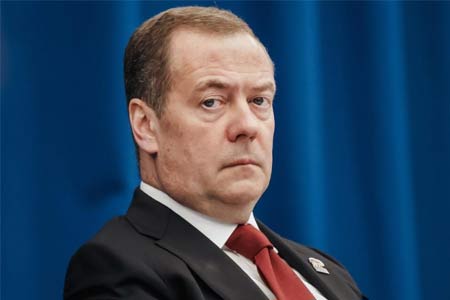 Dmitry Medvedev predicted a Ukrainian-like fate for Armenia amid the country`s shift in foreign policy
 Russian Security Council: In Armenia, they want to force Russian asset owners to dispose of their assets
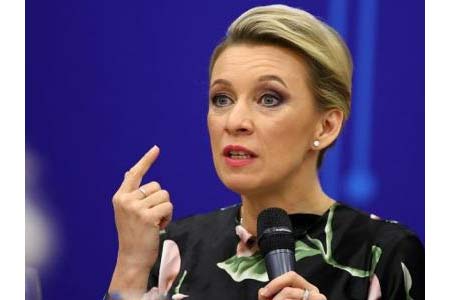 Zakharova: Russia ready to discuss with Armenia the prospects for expanding military cooperation as part of a review of bilateral ties
 Tevanyan: Armenia, like Ukraine and Moldova, is being drawn into the EU’s global war
 Yerevan City Hall is considering introducing a valet parking system in the city