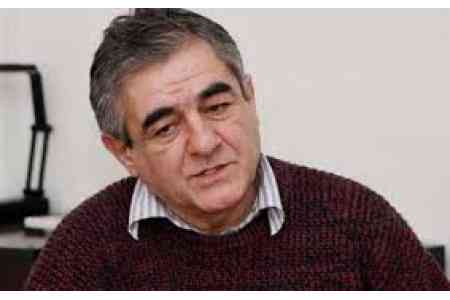
ArmInfo. No one in Armenia expressed the opinion that the document signed in Washington is not a peace treaty. Political scientist Manvel Sargsyan wrote about this on his Facebook page.
According to him, when the Treaty on Peace and Interstate Relations between Armenia and Azerbaijan was initialed in Washington on August 8, many thought that peace was very close. Naturally, everything that happened in the US capital, Sargsyan continued, should have been perceived in Armenia through the prism of expectations of peace. Therefore, the text of this treaty, published on August 11, should have exceeded all expectations.
"But what is the 17-point draft treaty really, and what actually happened in the US capital on August 8? I once quoted statements at the level of senior officials in Azerbaijan that Armenia should correctly understand the essence of this document. They say that this is a document that clearly spells out the conditions on the basis of which we will negotiate with Armenia. However, no one in Armenia has ever expressed the opinion that this is not a peace treaty, that yes, Azerbaijan is offering us to sign a preliminary document on the basis of which we will negotiate. No one in Armenia has said this, but Azerbaijan constantly insists on this. This is one of the points that is very important to emphasize, and secondly, these conditions are very simple: Armenia must recognize the legitimacy of all actions taken by Azerbaijan since 2020. It is not for nothing that Baku says: "Let's sign this," and then about the main issues, and in this published text there is no main issue. It is not for nothing that Azerbaijan initialed it, it did this so that there would be no further changes. In other words, in this and this is the political significance of the initialed document," the political scientist emphasized.
On August 8, Armenian Prime Minister Nikol Pashinyan and Azerbaijani President Ilham Aliyev signed a joint "peace declaration" in Washington. It provides for a joint appeal to the Organization for Security and Cooperation in Europe (OSCE) to terminate the OSCE Minsk process and related structures, as well as the creation of a transport corridor through Armenian territory that will connect Azerbaijan with its Nakhchivan exclave. The TRIPP (Trump Route for International Peace and Prosperity) project, a 42-km road in southern Armenia that will hand over control of the road to the United States for 99 years, according to experts, is capable of significantly changing the geopolitical situation in the South Caucasus. On the same day, the Foreign Ministers of Armenia and Azerbaijan initialed a peace agreement, which consists of 17 articles. The preamble of the document states that the Republic of Armenia and the Republic of Azerbaijan, recognizing the urgent need to establish a just, comprehensive and lasting peace in the region, striving to promote the achievement of this goal through the establishment of interstate relations, guided by the Charter of the United Nations, the Declaration on Principles of International Law concerning Friendly Relations and Cooperation among States in accordance with the Charter of the United Nations (1970), the Final Act of the Helsinki Conference on Security and Cooperation in Europe (1975) and the Almaty Declaration of December 21, 1991, and striving to develop relations based on the norms and principles enshrined in the said documents, expressing mutual will to establish good- neighborly relations among themselves, agreed to establish peace and interstate relations.





















 Expert: Funeral of assassinated Khamenei became Iran`s diplomatic inventory of its contacts
 Armenian expert explains how Yerevan`s history is being rewritten in Azerbaijan
 Pashinyan removed from INNOPROM guest list
 Zakharova: Armenia`s pro-EU pivot poses economic security risks to EAEU member states
 It`s time for South Caucasus countries to think of South Caucasus as single, unified region - RA premier
  Pashinyan: Armenia and Azerbaijan should leave each other alone
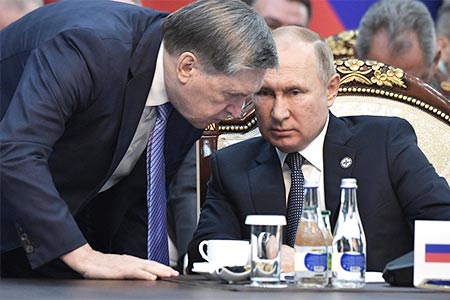 Moscow sees situation with Armenia as attempt to attack Russia-involving integration associations - Russian presidential aid
 Zakharova: Armenia views relations with Russia as tool for financially securing reorientation toward EU
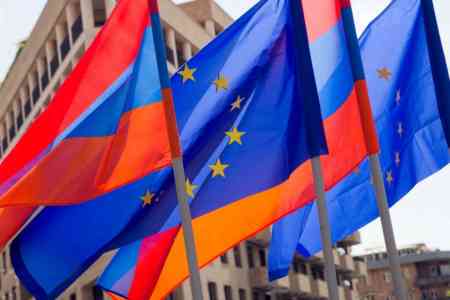 The Armenian Minister of Justice and the EU Ambassador discussed visa liberalization issues for Yerevan.
 Azerbaijan`s aggressive plans against Armenia became possible in wake of Pashinyan`s decisions on Artsakh - expert
  Zakharova: Russia sent a note of protest to Armenia over the act of vandalism at the "Mother Armenia" memorial in Gyumri
 Samvel Karapetyan proposes creating a post-election opposition coalition
 Artsakh`s Cultural Heritage Ombudsman called on Moscow to respond to destruction of WWII monuments by Azerbaijan in occupied NKR
 Dutch Prime Minister expresses his support for Armenia`s democratic reform and economic diversification agenda
 Heritage: It`s time for Armenia`s opposition to present people with legitimate alternative to power
 RA Security Council Sec, Assistant to President of Azerbaijan hold negotiations in Dilijan