

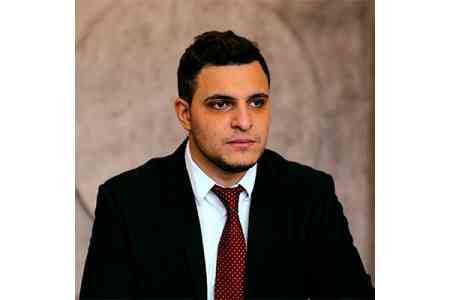
ArmInfo. Azerbaijan's anti-Armenian rhetoric will continue to develop at a new pace fueled by the euphoria of recent successes. This is according to orientalist Sergey Melkonyan, commenting on Azerbaijani President Ilham Aliyev' speech in the occupied Artsakh Karvachar.
The expert recalled that on August 21, Ilham Aliyev gave a speech in Karvachar that went beyond the usual conversation with residents. In this vein, the orientalist suggested paying attention to the Azerbaijani leader's main messages. "Firstly, that Russia was deliberately pumping up Armenia and Nagorno-Karabakh to contain Azerbaijan. In his opinion, the Armenian side did not have enough funds to buy weapons. Therefore, "some countries" transferred weapons to the Armenian side for free so that it could keep Nagorno-Karabakh under control. It is clear that "some" countries mean Russia, as at that time it was Yerevan's main partner in military-technical cooperation," he noted. According to Melokonyan, the second message is that Armenian diplomacy was successful. He noted that, according to Aliyev, "France, Russia and America, instead of resolving the conflict, made efforts to freeze it," which allowed Nagorno-Karabakh to be kept by the Armenian side. "This statement coincides with the one Aliyev made in 2016: behind closed doors, pressure is being put on Baku to recognize Nagorno-Karabakh," the expert said According to him, the third thesis is that Baku perceived the trilateral statement of November 2020 as an act of capitulation, that is, Baku did not perceive this document as a step towards "peaceful coexistence" and "searching for a peace formula", but as a success in pressuring Armenia.
"Azerbaijan would have paid a high price for continuing the war to take Karvachar. One cannot disagree with him here. But the statement that "Karvachar was taken without a single shot" is manipulative. There were many shots. But the Azerbaijani army systematically failed in its attempts to take anything in 2020," the orientalist added.
Melkonyan also stated that squeezing Armenians and Russian peacekeepers out of Nagorno-Karabakh is part of Baku's "targeted policy." The political scientist noted that this is how military operations to capture heights in Nagorno-Karabakh, as well as the Lachin corridor, were called after the 2020 war ("the capture of important strategic points from November 2020 to September 2023, the operations "Farrukh", "Gyrkhgyz", "Sarybaba" - all this is our glorious history, and all this was part of our targeted policy").
"Therefore, the comments that were made during that period in the spirit of "Yerevan recognized Nagorno- Karabakh as part of Azerbaijan" or "there were clashes and skirmishes, as a result of which control over the positions passed to the Azerbaijani Armed Forces" are completely untenable. The signed Statements are an act of capitulation of Armenia and peace depends on Azerbaijan. Such passages at the level of the head of state clearly demonstrate how the "peace process" is perceived by Baku: as the legitimization of the fulfillment of its demands by Armenia in the logic of "capitulation," and not "building peace," Melkonyan noted.
Another thesis of Aliyev, the expert named the statements that Azerbaijan should be ready for war at any moment. "Aliyev referred to the build-up of military potential, an increase in the number of personnel, the purchase of modern equipment as necessary steps to prepare for war. If there is a "peace process" with Armenia, then Azerbaijan can only fight with three other neighbors - Russia, Iran or Georgia. And here the question is: against whom is Azerbaijan preparing for war," the orientalist asked. According to him, in general, the militant rhetoric indicating that "Azerbaijan will never forget anything" contrasts sharply with the narrative about the need to "turn the page." "All this suggests that Baku does not plan to live in peace. Anti-Armenian rhetoric will continue to develop at a new pace due to the maintenance of euphoria from new successes. Aliyev's statement is an admission that all of Baku's steps were aimed at undermining the trilateral statement of November 2020," the expert concluded.












 Political Scientist: As long as the opposition remains silent, Pashinyan can use Plan B and secure a constitutional majority
 US-Iranian memorandum more beneficial for Iran from political and economic perspective - expert
  Political analyst: While Pashinyan pledges peace with Azerbaijan, Baku continues promoting the "Western Azerbaijan" project
 Political analyst: In light of new realities, Yerevan may propose advancing peace process with Baku without constitutional referendum
 It`s time for South Caucasus countries to think of South Caucasus as single, unified region - RA premier
  Pashinyan: Armenia and Azerbaijan should leave each other alone
 Moscow sees situation with Armenia as attempt to attack Russia-involving integration associations - Russian presidential aid
 Zakharova: Armenia views relations with Russia as tool for financially securing reorientation toward EU
 The Armenian Minister of Justice and the EU Ambassador discussed visa liberalization issues for Yerevan.
 Azerbaijan`s aggressive plans against Armenia became possible in wake of Pashinyan`s decisions on Artsakh - expert
  Zakharova: Russia sent a note of protest to Armenia over the act of vandalism at the "Mother Armenia" memorial in Gyumri
 Samvel Karapetyan proposes creating a post-election opposition coalition
 Artsakh`s Cultural Heritage Ombudsman called on Moscow to respond to destruction of WWII monuments by Azerbaijan in occupied NKR
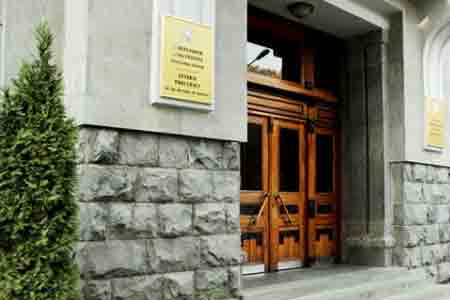 Prosecutor General`s Office petitions Central Electoral Commission for criminal prosecution of Robert Kocharyan
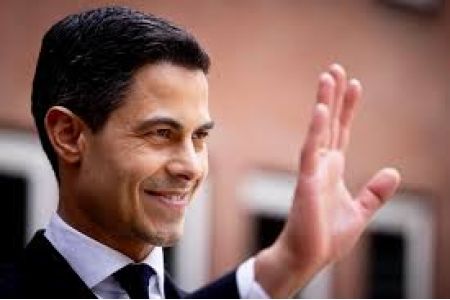 Dutch Prime Minister expresses his support for Armenia`s democratic reform and economic diversification agenda
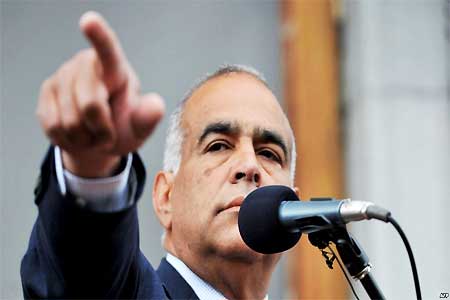 Heritage: It`s time for Armenia`s opposition to present people with legitimate alternative to power
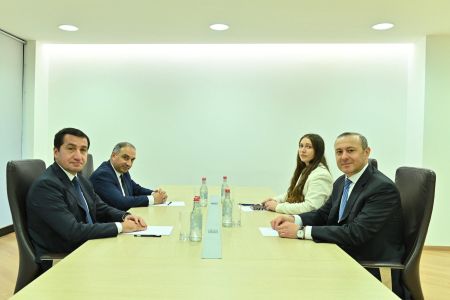 RA Security Council Sec, Assistant to President of Azerbaijan hold negotiations in Dilijan
  CEC Neutralizes PAP: Three Political Forces to Enter Armenian Parliament Following Election Vote
 Elections in Armenia were accompanied by unprecedented pressure on opposition, RF MFA spokesperson claims