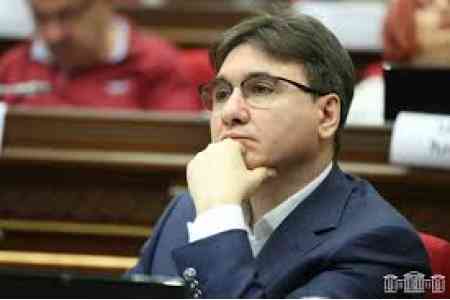
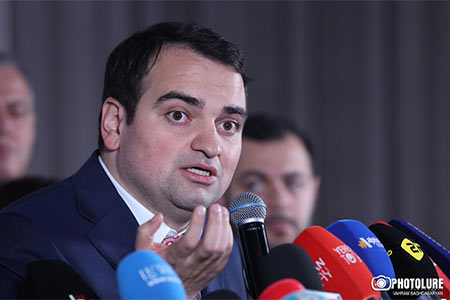
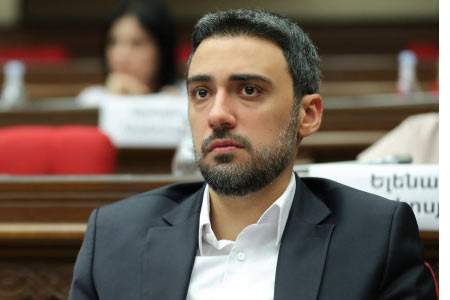
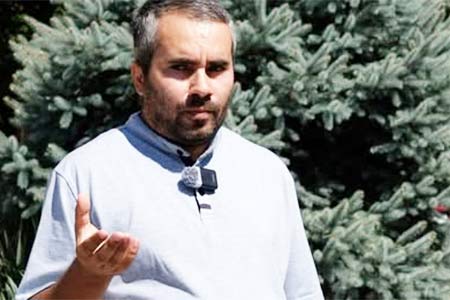
ArmInfo. In the context of the changed regional reality, it is necessary to develop new conceptual approaches in all relations, including Armenian-Turkish relations, as noted in an article by Armen Gevorgyan, former Deputy Prime Minister of the Republic of Armenia and Member of the National Assembly from the opposition "Armenia" faction, who presented new narratives in Armenian-Turkish relations as part of the "Armenia Proposal" initiative.
According to the MP, these approaches must be based on the concept of historical dignity and national responsibility, combining respect for memory with the need for strategic common sense. In the Armenian public consciousness, Gevorgyan emphasized, relations with Turkey have never been a simple diplomatic matter. It pertains to the realm of moral memory, the fate of the people, and responsibility to past and future generations.
"The memory of the Armenian Genocide and the memory of the people of Artsakh cannot disappear amidst changing political and geopolitical interests. This is precisely why new narratives of Armenian-Turkish relations must unite memory and common sense, without losing vigilance, without weakening will, without harboring illusions. They are called upon to liberate Armenian memory from the narrow circle of opposition and restore its creative power and political stature, transforming this memory into a source of new national self-awareness and dignity. Within the framework of the doctrine of "+1" security accumulation, we must be able to make the transition from the memory of pain to the memory of dignity. This does not mean abandoning the past. It means transforming memory into strength, focus, and political maturity," the politician emphasized.
He added that the Armenian people inevitably face the question of how to remain faithful to historical truth while simultaneously preventing the past from blocking the path to the future. The answer to this question should not be a call to "start from scratch." "History cannot be undone, tragedy cannot be nullified, justice cannot be exchanged. The Armenian Genocide is not a subject for debate or an instrument of oppression. It is the historical truth and the moral core of our national memory. But Armenian history is not only a history of trials. It is also a history of creativity, culture, spiritual fortitude, and labor. Nations survive not only through trials, but also through creation, preservation, and affirmation. Armenians made a significant contribution to the formation of the cultural, economic, and intellectual image of the Ottoman Empire and modern Turkey. The labor, skill, and spiritual culture of Armenians have become an integral part of the region's history, reflecting the richness of its civilizational heritage. This truth is as great as the memory of a crime. It returns us to the firm position and voice of a nation-creator, not simply a victim.
Recognizing this reality is not a manifestation of goodwill, but an act of maturity and historical honesty. This creates the basis for dialogue based on mutual respect. Today, we must prioritize our creative potential and cultural heritage. We preserve memory not to accuse, but to preserve the truth. Not for revenge, but for the sake of life and the future. We have every right to speak out about the need to preserve the Armenian historical and cultural heritage on the territory of modern Turkey, to talk about the preservation of Armenian shrines and monuments, about access to archives, about scholarly dialogue and programs for the preservation of Armenian monastic complexes, cemeteries and old quarters. It is also important to support Armenian communities in Turkey, the programs that reveal the role and contribution of Armenians to the history of the region. Armenia and Turkey can implement joint educational, research and cultural initiatives aimed at studying and restoring the Armenian historical presence. This is a form of respect for our memory and our identity. We must ensure that the security of Armenia and respect for our memory are not words, but reality. This can also be achieved through border infrastructure projects, cultural and tourist initiatives. It is important to understand that this is necessary not only for Armenians, but also for Turks," the oppositionist concluded.











 Armenian Analyst: One of the Key Tasks of the United Opposition is to Form Effective Mechanisms to Contain the Armenian Authorities
 Armenian expert: Could modern Azerbaijan even exist without Russian and Soviet modernization?
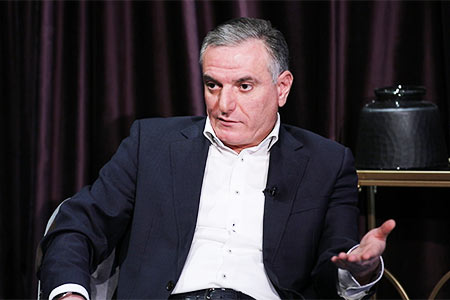 South Caucasus is entering a new phase of turbulence - ex-official
  Zatulin: Pashinyan was eager to get back to Russia because he actually lost the elections
 Human rights activist Ruben Melikyan dismissed from YSU
 Pashinyan removed from INNOPROM guest list
 Zakharova: Armenia`s pro-EU pivot poses economic security risks to EAEU member states
 It`s time for South Caucasus countries to think of South Caucasus as single, unified region - RA premier
  Pashinyan: Armenia and Azerbaijan should leave each other alone
 Moscow sees situation with Armenia as attempt to attack Russia-involving integration associations - Russian presidential aid
 Zakharova: Armenia views relations with Russia as tool for financially securing reorientation toward EU
 The Armenian Minister of Justice and the EU Ambassador discussed visa liberalization issues for Yerevan.
 Azerbaijan`s aggressive plans against Armenia became possible in wake of Pashinyan`s decisions on Artsakh - expert
  Zakharova: Russia sent a note of protest to Armenia over the act of vandalism at the "Mother Armenia" memorial in Gyumri
 Samvel Karapetyan proposes creating a post-election opposition coalition
 Artsakh`s Cultural Heritage Ombudsman called on Moscow to respond to destruction of WWII monuments by Azerbaijan in occupied NKR