
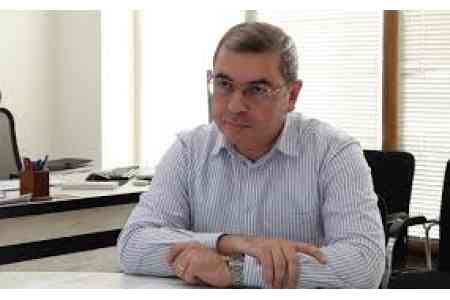
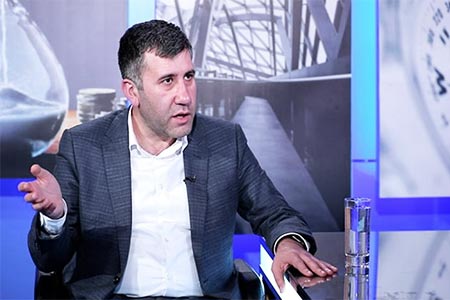
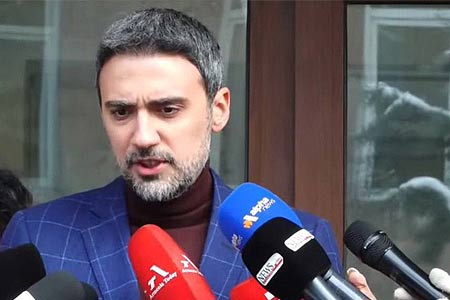
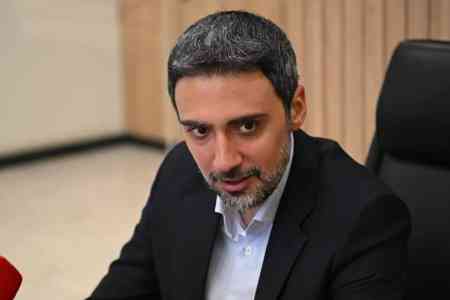
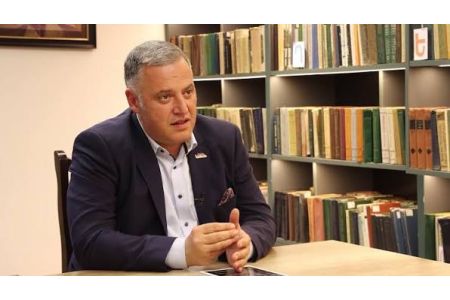
ArmInfo. By introducing the Universal Health Insurance system, the Armenian government is primarily addressing its own election goals, as stated by David Ananyan, former head of the State Revenue Committee, former Deputy Minister of Finance of Armenia, economist, and member of the "Wings of Unity" political initiative, in an interview with an ArmInfo correspondent. Ananyan, who served as Deputy Minister of Finance from October 2016 to May 2018, overseeing tax policy at the Ministry of Finance, and as Chairman of the State Revenue Committee of the Republic of Armenia from May 2018 to June 2020, notes that the introduction of compulsory health insurance (CHI) has been discussed by the Armenian Cabinet for several years.
The government has been working on the reform for at least five to six years, but experts have consistently rejected it in its current form.
"When I worked in the government, I opposed this system because it represented an unjustified additional tax burden on citizens in the tax system, and in fiscal terms in general. There is a fiscal rule: we do not have a principle of interrelatedness between revenues and expenses; that is, our programs are financed from incoming revenues on a priority basis, that is, if you provide budget revenue and direct it directly to health insurance, this directly contradicts the budget rule. Based on this, we considered the implementation of compulsory health insurance to be inappropriate," the economist clarifies.
Now the current government has gone even further and decided to legislate a reduction in monthly deductions from salaries to the Zinapa military insurance fund and redirect these funds to compulsory health insurance. Apparently, they believed that the fund was already financially secured for a certain period of time and, therefore, these funds could be redirected to other purposes. In doing so, they want to disguise the increase in the tax burden. Furthermore, they are ignoring one social objective while trying to solve another.
Therefore, the expert believes, the authorities are dishonest with the people and are concealing the truth to the last. And the people need to be told that from now on, funds sent to the Zinapa Fund will be used for health insurance. "This is a disguised, unsuccessful reform, aimed at achieving its short-term goals, namely, by the 2026 parliamentary elections," Ananyan emphasizes.
The tax expert notes that both he and the political initiative "Wings of Unity" advocate for the Canadian model of implementing health insurance. This model entails public funding, ensuring universal access to basic health services, with the possibility of supplementary private insurance. In this case, it will be necessary to redistribute budget resources, clarify priorities, and pursue a path of consolidating budget revenues and expenditures, which is neither easy nor quick. However, this does not mean that the government should impose an additional tax burden on citizens, the expert is convinced.
Furthermore, an important aspect of the Canadian health insurance model is its emphasis on preventative medicine. Meanwhile, in Armenia, the healthcare system is constantly busy "putting out fires" rather than addressing their causes. "Thus, looking at data for January-October of this year, we see that approximately 80% of healthcare system expenditures are allocated to treatment, with only the remainder going to prevention. Meanwhile, we must reverse this trend," Ananyan notes. "So we need to reconsider the ideology of the healthcare system as a whole, since compulsory medical insurance cannot be implemented based on such a distorted ideology," David Ananyan concludes.















 Armenian experts, leading Turkish think tanks discuss prospects for expanding cooperation
  Political Scientist: As long as the opposition remains silent, Pashinyan can use Plan B and secure a constitutional majority
 US-Iranian memorandum more beneficial for Iran from political and economic perspective - expert
  Political analyst: While Pashinyan pledges peace with Azerbaijan, Baku continues promoting the "Western Azerbaijan" project
 Zakharova: Armenia`s pro-EU pivot poses economic security risks to EAEU member states
 It`s time for South Caucasus countries to think of South Caucasus as single, unified region - RA premier
  Pashinyan: Armenia and Azerbaijan should leave each other alone
 Moscow sees situation with Armenia as attempt to attack Russia-involving integration associations - Russian presidential aid
 Zakharova: Armenia views relations with Russia as tool for financially securing reorientation toward EU
 The Armenian Minister of Justice and the EU Ambassador discussed visa liberalization issues for Yerevan.
 Azerbaijan`s aggressive plans against Armenia became possible in wake of Pashinyan`s decisions on Artsakh - expert
  Zakharova: Russia sent a note of protest to Armenia over the act of vandalism at the "Mother Armenia" memorial in Gyumri
 Samvel Karapetyan proposes creating a post-election opposition coalition
 Artsakh`s Cultural Heritage Ombudsman called on Moscow to respond to destruction of WWII monuments by Azerbaijan in occupied NKR
 Prosecutor General`s Office petitions Central Electoral Commission for criminal prosecution of Robert Kocharyan
 Dutch Prime Minister expresses his support for Armenia`s democratic reform and economic diversification agenda
 Heritage: It`s time for Armenia`s opposition to present people with legitimate alternative to power
 RA Security Council Sec, Assistant to President of Azerbaijan hold negotiations in Dilijan
  CEC Neutralizes PAP: Three Political Forces to Enter Armenian Parliament Following Election Vote