
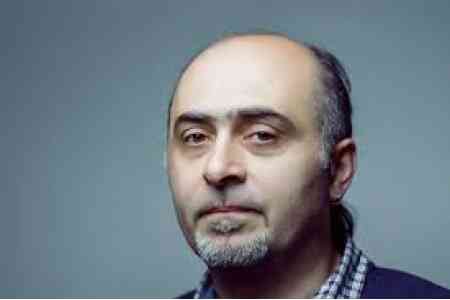
ArmInfo. With parliamentary elections in Armenia scheduled for June 7, 2026, approaching, political forces are increasingly using social media for campaigning, writes information security expert Samvel Martirosyan in his analysis of Meta platforms-Facebook and Instagram. He notes that these platforms remain the most visited and politicized in Armenia.
The expert explained that in recent years, Meta has divided advertising into two types, separating them into those related to public issues, politics, and elections. He added that advertisers are required to provide clear information and public reporting on these criteria on a separate platform-the Meta Ad Library. "This library allows for the study of general trends and events in Armenia, providing data since June 2022. Since then, a total of $262,496 (more than 99 million drams - ed.) has been spent on advertising targeting Armenia," Martirosyan noted. He noted that if we analyze expenses over the past 90 days, we see that they are disproportionately large compared to total spending after 2022. He explained that the exact amount of expenses cannot be calculated, as Meta denotes ads costing less than $100 as "?100." "However, if we consider all types of advertising from the minimum to the maximum-from $0 to $100-then the spending on political advertising over the past three months alone amounts to a minimum of $50,469 and a maximum of $98,269 (more than 37 million drams - ed.)," the expert noted.
Among the active advertisers, according to the expert, are officials and state institutions such as the Armenian government, the Yerevan Municipality, the Ministry of Internal Affairs, Yerevan Mayor Tigran Avinyan, and the Prime Minister's Chief of Staff Taron Chakhoyan.
"Over the past 90 days, the ruling Civil Contract party has placed the most ads, totaling $3,697 (just under 1.5 million drams). The most prominent among them was Argishti Mekhakyan, head of the Vagharshapat community in the Armavir region, who placed 75 ads totaling $11,220 (over 4 million drams - ed.). However, he has now stopped placing ads, and his activity has decreased ahead of the elections," Martirosyan continued.
Presenting the overall data, Martirosyan noted that over the past 90 days, the CIVIC news agency placed 19 ads totaling $2,274 (over 800,000 drams - ed.); the Union of Informed Citizens NGO placed 20 ads totaling $899 (over 300,000 drams - ed.); FIP, which also belongs to the NGO, placed 60 ads totaling $590 (over 200,000 drams - ed.); the Public Radio of Armenia placed 26 ads totaling $577 (over 200,000 drams - ed.); and the 7or news agency placed one ad totaling $168 (over 63,000 drams - ed.).
The expert then presented the advertising costs of opposition forces. Thus, according to an analysis, the "Po-Nashi" movement, led by Russian businessman of Armenian descent Samvel Karapetyan, spent $8,392.23 (more than 3 million drams - ed.) on advertising over the past three months. "Specifically, in just the last seven days, the movement has invested $3,339 (more than 1 million drams - ed.) in advertising campaigns. The "Country for Life" party also actively advertised, spending approximately $6,000 (more than 2 million drams - ed.) on the pages of various representatives during the same period. Interestingly, since the beginning of 2022, the party has invested a total of $10,207 (more than 3 million drams - ed.), and party leader Mane Tandilyan spent $10,168 on her page," the expert noted. According to Martirosyan, the "Ayakve" civic initiative stands out for its significant advertising volume: $3,328 (over 1 million drams - ed.) for 418 ads over three months. "This represents approximately 17% of the total number of ads on the platform. Over 500 pages present on the platform during this period posted a total of 2,373 ads," the expert noted by way of comparison.
He also noted that currently, only "Ayakve" actively uses advertising targeting, placing different ads for different audiences based on gender, age, and other factors. "In contrast, other political forces often employ a universal approach to advertising, targeting a broad audience," Martirosyan explained.
Speaking about new players in the political arena, he drew attention to the "Wings of Unity" initiative, headed by former Armenian Ombudsman Arman Tatoyan. As Martirosyan noted, the initiative posted five ads, but all were blocked by Meta. Martirosyan suggested that the initiative's social media specialist was not fully aware of the rules and restrictions regarding political advertising and predicted that this situation would soon be rectified.
The expert also noted that the situation has begun to change in the last 30 days: for example, the ruling Civil Contract party has reduced its advertising investments, while the "Our Way" movement, the "Ayakve" civic initiative, and the "Country for Life" party remain the leaders in advertising. Martirosyan expressed confidence that significant investments will be made in political advertising in the coming months. However, he cautioned that most advertising budgets will remain opaque. He noted that the upcoming elections will likely be characterized by the active participation of social media influencers, which will create additional difficulties in tracking expenses.
The expert explained that many of these expenses will remain in a "gray area." "This means that financing can be provided in cash or through transfers from individual entrepreneurs (IE) to other IEs, as well as from limited liability companies (LLC) to IEs," the expert concluded.







 Opinion: The development of the Amulsar mine near the resort town of Jermuk is the beginning of an environmental disaster in Armenia
 Expert: The arrest of opposition figures in Armenia for social media posts is a systematic attempt to intimidate the public and suppress dissent.
 Azerbaijani Studies Expert: While Azerbaijan Prepares Its Generation for War, Aliyev’s Aide Calls on Armenia to Prepare Armenian Society for “Peace”
 Turkologist: Azerbaijan will never, under any circumstances, stop pressuring the Armenian people
 Political scientist: We need to move away from the question of "when" and replace it with more important questions
 Lukashenko called for Armenia to assume the CIS presidency in 2029
 Dmitry Medvedev predicted a Ukrainian-like fate for Armenia amid the country`s shift in foreign policy
 Russian Security Council: In Armenia, they want to force Russian asset owners to dispose of their assets
 Zakharova: Russia ready to discuss with Armenia the prospects for expanding military cooperation as part of a review of bilateral ties
 Tevanyan: Armenia, like Ukraine and Moldova, is being drawn into the EU’s global war
 Yerevan City Hall is considering introducing a valet parking system in the city
 Expert: The circus surrounding the “Albanization” of Armenian culture in the presence of foreign ambassadors in occupied Artsakh is genocide
 Political scientist: If Russian-Armenian relations are destroyed, Turkey will take Russia`s place
 Political scientist: The Armenian public is simply obliged to significantly change the entire content of public discourse and struggle
 Cross tattoos are being removed from the skin of Christian prisoners in Azerbaijan by fire, according to a human rights activist.
 Zakharova: Armenia`s likely introduction of visas with Russia will be a step against Yerevan itself
 Putin: Armenia`s recognition of Karabakh as part of Azerbaijan in Prague has given Russia`s position on this issue an ambivalent character
 Putin: Armenia`s adoption of the law on EU accession means an announcement of its withdrawal from the Eurasian Economic Union
 Aram Vardevanyan: Public demands solutions, not apology scandals in Parliament