

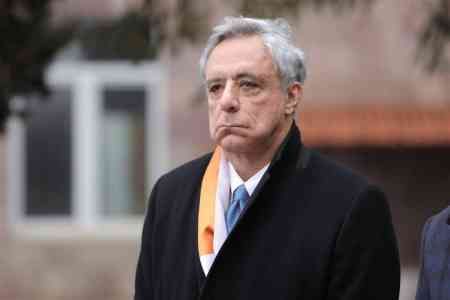
ArmInfo. Russian President Vladimir Putin delivered a message that was both diplomatic and politically damaging at a meeting with Armenian Prime Minister Nikol Pashinyan in Moscow yesterday, according to former Armenian Foreign Minister Vartan Oskanyan. "This was no ordinary official meeting. In a carefully crafted public speech, Putin delivered a message that was both diplomatic and politically damaging," the diplomat noted.
According to him, by touching on Armenia's economic ties, security issues, mentioning Nagorno-Karabakh, Pashinyan's unrealistic expectations for relations with the European Union, and even hinting at the upcoming elections, he not only summarized bilateral relations and regional issues; he clearly drew a contrast between what Armenia had, what it had lost, and what it still stands to lose. "Putin's preface was essentially a verdict on Pashinyan. Putting aside the diplomatic language, the message was clear: you don't seem to understand what you're doing, you're on the wrong path, and if you continue in this vein, you will cause the Armenian people incomparably more harm than you already have. For a moment, I even expected Putin to ask Pashinyan what he was wearing on his jacket," Oskanyan added.
According to him, it was presumably a map of Armenia. "Pashinyan wore this map to emphasize that the Nagorno-Karabakh issue is closed. But who wears a map on their chest? Has anyone ever seen the leader of another country do something like that? A flag, yes, but a map? Imagine the opposite: Putin wears a map of Russia, including Donbas, at international meetings," the former Armenian Foreign Minister continued. Oskanyan suggested that what Pashinyan is trying to convey with this symbol has the exact opposite effect.
According to him, this map, right on Pashinyan's chest, serves as a constant reminder to the Armenian people that Nagorno-Karabakh was lost in vain, precisely during his reign, due to his grave mistakes. "Furthermore, when a leader wears a map of his country on his chest, it reveals yet another internal mistrust: that this territory is also unstable and indefensible, that it too can be lost, and that it must be held on to, to convince yourself and others that at least it can be preserved. Because you are rightly afraid that you don't even know how to preserve it," the diplomat concluded.
It should be noted that Putin and Pashinyan held talks in Moscow on April 1. The meeting took place in a rather tense atmosphere, with the parties exchanging mutual grievances. The Russian leader emphasized Moscow's position on Yerevan's claims against the CSTO, the Nagorno-Karabakh issue, Yerevan's integration into the EU, and further cooperation with the Eurasian Economic Union. The position on the construction of the nuclear power plant and the persecution of Russian businessman Samvel Karapetyan in Armenia was also conveyed. Pashinyan, in turn, assured the friendly nature of bilateral relations, recalled the grievances against the CSTO, attempted to shift responsibility for the surrender of Artsakh to Russia, and stated that Russian citizens will not be able to participate in political processes in Armenia.




 Political Scientist: As long as the opposition remains silent, Pashinyan can use Plan B and secure a constitutional majority
 US-Iranian memorandum more beneficial for Iran from political and economic perspective - expert
  Political analyst: While Pashinyan pledges peace with Azerbaijan, Baku continues promoting the "Western Azerbaijan" project
 Political analyst: In light of new realities, Yerevan may propose advancing peace process with Baku without constitutional referendum
 Present-day geopolitical competition shifts from territorial control to infrastructure flows
 Azerbaijan`s aggressive plans against Armenia became possible in wake of Pashinyan`s decisions on Artsakh - expert
 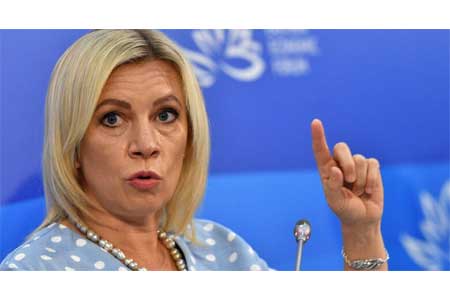 Zakharova: Russia sent a note of protest to Armenia over the act of vandalism at the "Mother Armenia" memorial in Gyumri
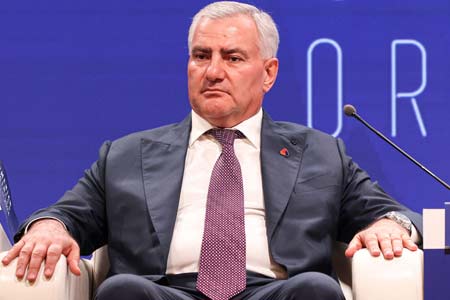 Samvel Karapetyan proposes creating a post-election opposition coalition
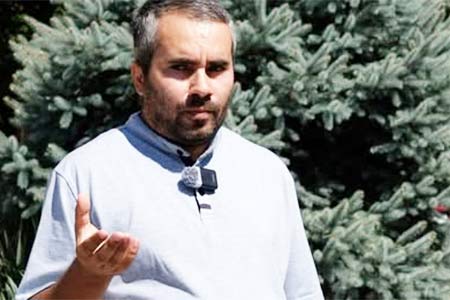 Artsakh`s Cultural Heritage Ombudsman called on Moscow to respond to destruction of WWII monuments by Azerbaijan in occupied NKR
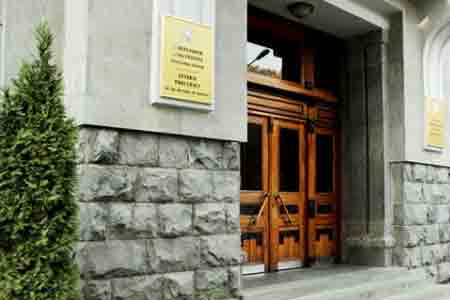 Prosecutor General`s Office petitions Central Electoral Commission for criminal prosecution of Robert Kocharyan
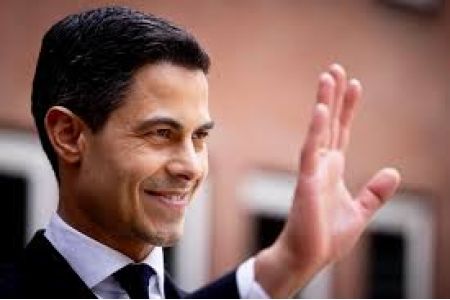 Dutch Prime Minister expresses his support for Armenia`s democratic reform and economic diversification agenda
 Heritage: It`s time for Armenia`s opposition to present people with legitimate alternative to power
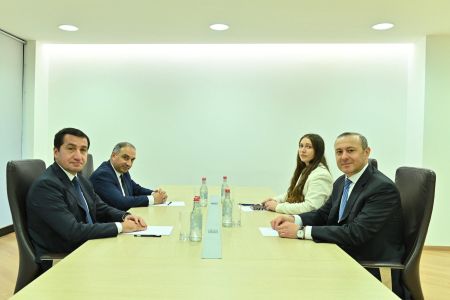 RA Security Council Sec, Assistant to President of Azerbaijan hold negotiations in Dilijan
 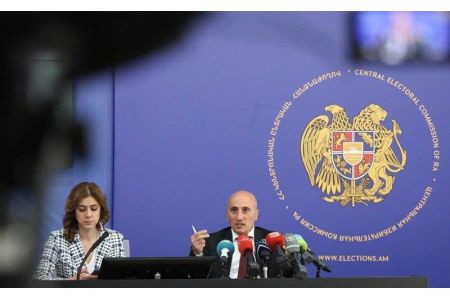 CEC Neutralizes PAP: Three Political Forces to Enter Armenian Parliament Following Election Vote
 Expert: Even OSCE observers recorded numerous violations during elections in Armenia
  Moscow to await official results of Armenian elections - Peskov